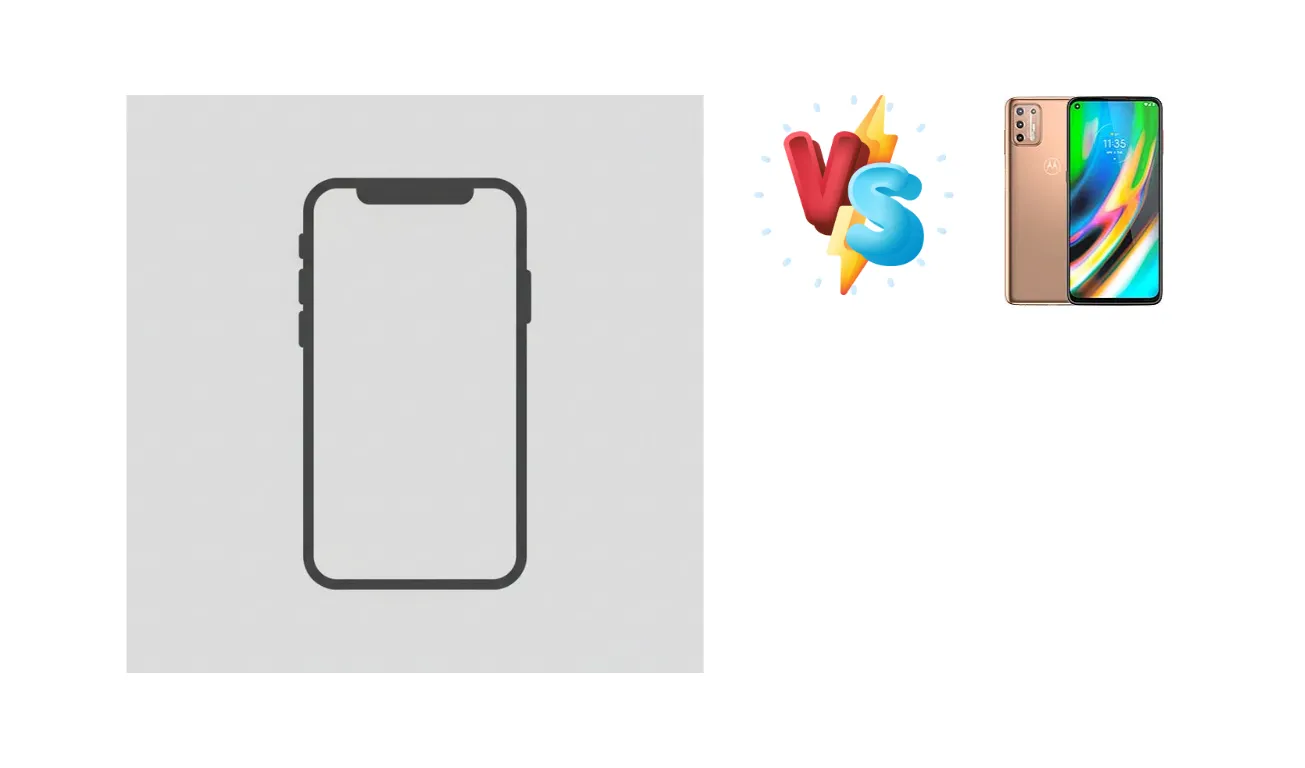
The Realme 7 and Motorola Moto G9 Plus represent compelling options in the crowded budget smartphone space. Both aim to deliver a solid experience without breaking the bank, but they take different approaches. The Realme 7 prioritizes gaming prowess with its MediaTek Helio G95, while the Moto G9 Plus leans towards all-day battery life and a more refined software experience. This comparison dives deep into the specifics to determine which phone best suits your needs.
🏆 Quick Verdict
For users prioritizing gaming and faster charging, the Realme 7 is the clear winner. Its Helio G95 chipset offers a performance edge, and the 30W charging significantly reduces downtime. However, the Moto G9 Plus provides slightly better battery endurance and a potentially smoother software experience, making it a strong contender for everyday users.
| Network |
|---|
| 2G bands | GSM 850 / 900 / 1800 / 1900 - SIM 1 & SIM 2 | GSM 850 / 900 / 1800 / 1900 |
| 3G bands | HSDPA 850 / 900 / 1700(AWS) / 1900 / 2100 | HSDPA 850 / 900 / 1700(AWS) / 1900 / 2100 |
| 4G bands | 1, 2, 3, 4, 5, 7, 8, 20, 28, 38, 40, 41 | 1, 2, 3, 4, 5, 7, 8, 12, 17, 28, 66 Brazil |
| Speed | HSPA, LTE-A | HSPA, LTE |
| Technology | GSM / HSPA / LTE | GSM / HSPA / LTE |
| Launch |
|---|
| Announced | 2020, October 07 | 2020, September 07. Released 2020, September 07 |
| Status | Available. Released 2020, October 21 | Discontinued |
| Body |
|---|
| Build | Glass front (Gorilla Glass 3), plastic back, plastic frame | Glass front, plastic back, plastic frame |
| Dimensions | 162.3 x 75.4 x 9.4 mm (6.39 x 2.97 x 0.37 in) | 170 x 78.1 x 9.7 mm (6.69 x 3.07 x 0.38 in) |
| SIM | Dual SIM (Nano-SIM, dual stand-by) | · Nano-SIM· Nano-SIM + Nano-SIM |
| Weight | 196.5 g (6.95 oz) | 223 g (7.87 oz) |
| Display |
|---|
| Protection | Corning Gorilla Glass 3 | - |
| Resolution | 1080 x 2400 pixels, 20:9 ratio (~405 ppi density) | 1080 x 2400 pixels, 20:9 ratio (~386 ppi density) |
| Size | 6.5 inches, 102.0 cm2 (~83.4% screen-to-body ratio) | 6.81 inches, 112.0 cm2 (~84.3% screen-to-body ratio) |
| Type | IPS LCD, 90Hz, 480 nits (typ) | IPS LCD, HDR10 |
| Platform |
|---|
| CPU | Octa-core (2x2.05 GHz Cortex-A76 & 6x2.0 GHz Cortex-A55) | Octa-core (2x2.2 GHz Kryo 470 Gold & 6x1.8 GHz Kryo 470 Silver) |
| Chipset | Mediatek Helio G95 (12 nm) | Qualcomm SDM730 Snapdragon 730G (8 nm) |
| GPU | Mali-G76 MC4 | Adreno 618 |
| OS | Android 10, Realme UI | Android 10, upgradable to Android 11 |
| Memory |
|---|
| Card slot | microSDXC (dedicated slot) | microSDXC (uses shared SIM slot) |
| Internal | 64GB 4GB RAM, 64GB 6GB RAM, 128GB 8GB RAM | 64GB 4GB RAM, 128GB 4GB RAM, 128GB 6GB RAM |
| | UFS 2.1 | - |
| Main Camera |
|---|
| Features | LED flash, HDR, panorama | LED flash, HDR, panorama |
| Quad | 48 MP, f/1.8, 26mm (wide), 1/2.0", 0.8µm, PDAF
8 MP, f/2.3, 119˚, 16mm (ultrawide), 1/4.0", 1.12µm
2 MP, f/2.4, (macro)
2 MP, f/2.4, (depth) | 64 MP, f/1.8, 26mm (wide), 1/1.73", 0.8µm, PDAF
8 MP, f/2.2, 118˚ (ultrawide), 1/4.0", 1.12µm
2 MP (macro)
Auxiliary lens |
| Video | 4K@30fps, 1080p@30/60/120fps, gyro-EIS | 4K@30fps, 1080p@30/60/120fps, gyro-EIS |
| Selfie camera |
|---|
| Features | Panorama | HDR |
| Single | 16 MP, f/2.1, 26mm (wide), 1/3.1", 1.0µm | 16 MP, f/2.0, 29mm (standard) |
| Video | 1080p@30/120fps | 1080p@30fps |
| Sound |
|---|
| 3.5mm jack | Yes | Yes |
| 35mm jack | - | Yes |
| Loudspeaker | Yes | Yes |
| Comms |
|---|
| Bluetooth | 5.0, A2DP, LE | 5.0, A2DP, LE |
| NFC | Yes | Yes |
| Positioning | GPS, GLONASS, BDS | GPS, GLONASS, GALILEO |
| Radio | No | FM radio |
| USB | USB Type-C 2.0, OTG | USB Type-C 2.0 |
| WLAN | Wi-Fi 802.11 a/b/g/n/ac, dual-band, Wi-Fi Direct | Wi-Fi 802.11 a/b/g/n/ac, dual-band, Wi-Fi Direct |
| Features |
|---|
| Sensors | Fingerprint (side-mounted), accelerometer, gyro, proximity, compass | Fingerprint (side-mounted), accelerometer, gyro, proximity |
| Battery |
|---|
| Charging | 30W wired, 50% in 26 min, 100% in 65 min (advertised) | 30W wired |
| Type | Li-Po 5000 mAh, non-removable | Li-Po 5000 mAh |
| Misc |
|---|
| Colors | Mist Blue, Mist White | Rose Gold, Indigo Blue |
| Models | RMX2155 | XT2087-1 |
| Price | About 250 EUR | About 300 EUR |
| Tests |
|---|
| Battery life |
Endurance rating 126h
| Endurance rating 136h |
| Camera |
Photo / Video |
Photo / Video |
| Display |
Contrast ratio: 1474:1 (nominal) |
Contrast ratio: 1356:1 (nominal) |
| Loudspeaker |
-25.9 LUFS (Very good)
|
-29.0 LUFS (Average) |
| Performance |
AnTuTu: 292828(v8)
GeekBench: 1681 (v5.1)
GFXBench: 17fps (ES 3.1 onscreen) |
AnTuTu: 253105 (v8)
GeekBench: 1695 (v5.1)
GFXBench: 15fps (ES 3.1 onscreen) |
Realme 7 (Global)
- Faster charging (30W, 65 min to full)
- More powerful chipset for gaming (Helio G95)
- Potentially higher gaming frame rates
- Slightly lower battery endurance (126h)
- Display brightness not specified, potentially lower than Moto G9 Plus
- Software experience may be more aggressive
Motorola Moto G9 Plus
- Longer battery life (136h endurance)
- Brighter display (522 nits)
- More power-efficient chipset (Snapdragon 730G)
- Less powerful chipset for gaming
- Charging speed not explicitly stated, likely slower than Realme 7
- Contrast ratio slightly lower than Realme 7
Display Comparison
Both phones feature displays with similar contrast ratios – 1474:1 for the Realme 7 and 1356:1 for the Moto G9 Plus. However, the Moto G9 Plus boasts a measured peak brightness of 522 nits, a significant advantage over the Realme 7’s unspecified brightness. This translates to better visibility outdoors. While both use LCD panels, the difference in brightness makes the Moto G9 Plus more suitable for users who spend a lot of time in direct sunlight. The Realme 7’s contrast ratio, while nominally higher, doesn’t necessarily translate to a visually superior experience without knowing its peak brightness.
Camera Comparison
Both phones offer a 'Photo / Video' camera experience, but specifics are lacking. Without detailed sensor information, it’s difficult to make a definitive judgment. However, the chipset differences suggest the Snapdragon 730G’s image signal processor (ISP) might offer slightly better image processing capabilities, particularly in low-light conditions. The Realme 7’s gaming-focused chipset may prioritize speed over image quality. The absence of information regarding OIS or sensor sizes makes a detailed comparison impossible, but the Snapdragon 730G’s ISP is generally known for its balanced performance.
Performance
The core difference lies in the chipsets. The Realme 7’s MediaTek Helio G95 (12nm) utilizes a dual-cluster configuration with two Cortex-A76 cores clocked at 2.05 GHz and six Cortex-A55 cores at 2.0 GHz. The Moto G9 Plus employs the Qualcomm Snapdragon 730G (8nm), featuring two Kryo 470 Gold cores at 2.2 GHz and six Kryo 470 Silver cores at 1.8 GHz. The Snapdragon 730G’s 8nm process offers better power efficiency, but the Helio G95’s higher clock speeds on its prime cores provide a noticeable performance boost in gaming scenarios. The Snapdragon 730G’s Adreno 618 GPU is a capable performer, but the Helio G95’s Mali-G76 MC4 GPU is optimized for gaming, giving the Realme 7 an edge in graphically demanding titles.
Battery Life
The Moto G9 Plus claims an endurance rating of 136 hours, slightly exceeding the Realme 7’s 126 hours. While both support 30W wired charging, the Realme 7 advertises faster charging times: 50% in 26 minutes and 100% in 65 minutes. The Moto G9 Plus’s charging speed isn’t explicitly stated. The Snapdragon 730G’s 8nm process contributes to better power efficiency, potentially offsetting the Realme 7’s faster charging. Users prioritizing all-day battery life will likely favor the Moto G9 Plus, while those who frequently need to top up their phone will appreciate the Realme 7’s speed.
Buying Guide
Buy the Realme 7 (Global) if you need a phone primarily for mobile gaming, value fast charging, and don't mind a potentially more aggressive software experience. Buy the Motorola Moto G9 Plus if you prefer longer battery life, a cleaner Android implementation, and prioritize overall stability over raw performance. Consider the Moto G9 Plus if you frequently use your phone for media consumption and appreciate a brighter display.
Frequently Asked Questions
❓ Does the Realme 7’s Helio G95 chipset throttle under sustained gaming loads?
The Helio G95 is known to generate more heat than the Snapdragon 730G. While the Realme 7 includes cooling solutions, prolonged gaming sessions at maximum settings may lead to some throttling, reducing performance over time. However, the initial burst performance is still higher than the Moto G9 Plus.
❓ How does the software experience differ between Realme UI and Motorola’s near-stock Android?
Realme UI is heavily customized with features and pre-installed apps, offering a more feature-rich experience but potentially feeling bloated to some users. Motorola’s software is closer to stock Android, providing a cleaner, faster, and more streamlined experience with fewer pre-installed apps and faster updates.
❓ Is the 30W charging on both phones compatible with Power Delivery (PD) chargers?
While both support 30W charging, neither phone explicitly advertises Power Delivery (PD) compatibility. It's likely they use proprietary charging protocols, meaning you'll get the fastest charging speeds with the included charger. Using a PD charger may still work, but at a slower rate.