
Razer Phone 2 vs. Sony Xperia XZ Premium: A Detailed Comparison for Power Users
| Phones Images | |||||
|---|---|---|---|---|---|
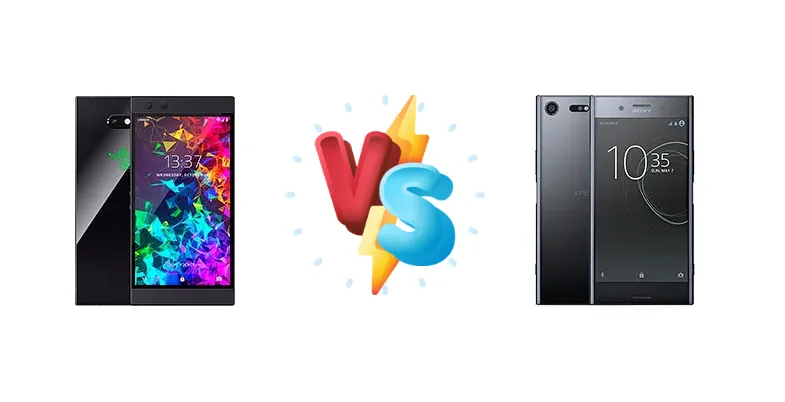
|
🏆 Quick Verdict
For the average user in 2024, the Razer Phone 2 offers a slightly better value proposition due to its focus on features that still hold relevance for gaming and media consumption. While the Sony Xperia XZ Premium boasts a marginally better battery endurance rating, the Razer Phone 2’s higher contrast ratio and gaming-centric design give it a slight edge.
| PHONES | ||
|---|---|---|
| Phone Names | Razer Phone 2 | Sony Xperia XZ Premium |
| Network | ||
|---|---|---|
| 2G bands | GSM 850 / 900 / 1800 / 1900 | GSM 850 / 900 / 1800 / 1900 - SIM 1 & SIM 2 - G8142 |
| 3G bands | HSDPA 850 / 900 / 1700(AWS) / 1800 / 1900 / 2100 | HSDPA 800 / 850 / 900 / 1700(AWS) / 1900 / 2100 - G8141, G8142 |
| 4G bands | 1, 2, 3, 4, 5, 7, 8, 12, 13, 14, 17, 18, 19, 20, 26, 28, 29, 30, 32, 38, 39, 40, 41, 48, 66, 71 | 1, 2, 3, 4, 5, 7, 8, 12, 13, 17, 19, 20, 26, 28, 29, 32, 38, 39, 40, 41 - G8141, G8142 |
| Speed | HSPA 42.2/5.76 Mbps, LTE (5CA) Cat18 1200/150 Mbps | HSPA 42.2/5.76 Mbps, LTE (2CA) Cat16 1024/150 Mbps |
| Technology | GSM / CDMA / HSPA / LTE | GSM / HSPA / LTE |
| CDMA 800 & TD-SCDMA | - | |
| Launch | ||
|---|---|---|
| Announced | 2018, October. Released 2018, October | 2017, February 27. Released 2017, June 18 |
| Status | Discontinued | Discontinued |
| Body | ||
|---|---|---|
| Build | Glass front (Gorilla Glass 5), aluminum back, aluminum frame | Glass front (Gorilla Glass 5), glass back (Gorilla Glass 5), aluminum/plastic frame |
| Dimensions | 158.5 x 79 x 8.5 mm (6.24 x 3.11 x 0.33 in) | 156 x 77 x 7.9 mm (6.14 x 3.03 x 0.31 in) |
| SIM | Nano-SIM | · Nano-SIM (G8141)· Nano-SIM + Nano-SIM (G8142) |
| Weight | 220 g (7.76 oz) | 195 g (6.88 oz) |
| IP67 dust/water resistant (up to 1m for 30 mins) RGB Illuminated Razer Chroma Logo on the back | IP68 dust/water resistant (up to 1.5m for 30 mins) | |
| Display | ||
|---|---|---|
| Protection | Corning Gorilla Glass 5, oleophobic coating | Corning Gorilla Glass 5 |
| Resolution | 1440 x 2560 pixels, 16:9 ratio (~513 ppi density) | 3840 x 2160 pixels, 16:9 ratio (~807 ppi density) |
| Size | 5.72 inches, 90.2 cm2 (~72.0% screen-to-body ratio) | 5.46 inches, 82.2 cm2 (~68.4% screen-to-body ratio) |
| Type | IGZO IPS LCD, 120Hz, 580 nits (typ) | IPS LCD, HDR10 |
| Wide Colour Gamut | Runs at 1080 x 1920 pixels except for select use cases Triluminos display X-Reality Engine | |
| Platform | ||
|---|---|---|
| CPU | Octa-core (4x2.8 GHz Kryo 385 Gold & 4x1.7 GHz Kryo 385 Silver) | Octa-core (4x2.45 GHz Kryo & 4x1.9 GHz Kryo) |
| Chipset | Qualcomm SDM845 Snapdragon 845 (10 nm) | Qualcomm MSM8998 Snapdragon 835 (10 nm) |
| GPU | Adreno 630 | Adreno 540 |
| OS | Android 8.1 (Oreo), upgradable to Android 9.0 (Pie) | Android 7.1 (Nougat), upgradable to Android 9.0 (Pie) |
| Memory | ||
|---|---|---|
| Card slot | microSDXC (dedicated slot) | microSDXC (uses shared SIM slot) - dual SIM model only |
| Internal | 64GB 8GB RAM | 64GB 4GB RAM |
| UFS 2.1 | UFS 2.1 | |
| Main Camera | ||
|---|---|---|
| Dual | 12 MP, f/1.8, 25mm (wide), 1/2.55", 1.4µm, dual pixel PDAF, OIS 12 MP, f/2.6, 1/3.1", 1.0µm, 2x optical zoom | - |
| Features | Dual-LED dual-tone flash, panorama, HDR | Laser AF, color spectrum sensor, LED flash, panorama, HDR |
| Single | - | 19 MP, f/2.0, 25mm (wide), 1/2.3", predictive PDAF |
| Video | 4K@30/60fps, 1080p@30/30/60/120fps, stereo sound rec. | 4K@30fps, 1080p@30fps (gyro-EIS), 720p@960fps, HDR |
| Selfie camera | ||
|---|---|---|
| Single | 8 MP, f/2.0 | 13 MP, f/2.0, 22mm (wide), 1/3.1", 1.12µm |
| Video | 1080p@30/60fps | 1080p@30fps |
| Sound | ||
|---|---|---|
| 3.5mm jack | No | Yes |
| 35mm jack | No | Yes |
| Loudspeaker | Yes, with Dolby Atmos stereo speakers (THX-certified amplifiers) | Yes, with stereo speakers |
| 24-bit/192kHz audio | 24-bit/192kHz audio | |
| Comms | ||
|---|---|---|
| Bluetooth | 5.0, A2DP, LE | 5.0, A2DP, aptX HD, LE |
| NFC | Yes | Yes |
| Positioning | GPS | GPS, GLONASS, BDS, GALILEO |
| Radio | No | No |
| USB | USB Type-C | USB Type-C 3.1, OTG |
| WLAN | Wi-Fi 802.11 a/b/g/n/ac, dual-band, Wi-Fi Direct | Wi-Fi 802.11 a/b/g/n/ac, dual-band, Wi-Fi Direct, DLNA |
| Features | ||
|---|---|---|
| Sensors | Fingerprint (side-mounted), accelerometer, gyro, proximity, compass | Fingerprint (side-mounted, region dependent), accelerometer, gyro, proximity, barometer, compass |
| Battery | ||
|---|---|---|
| Charging | 18W wired, QC4 15W wireless | 18W wired, QC3 |
| Type | Li-Po 4000 mAh, non-removable | Li-Ion 3230 mAh, non-removable |
| Misc | ||
|---|---|---|
| Colors | Mirror back, Rugged satin | Luminous Chrome, Deepsea Black, Bronze Pink, Rosso |
| Models | - | G8142, G8141, SO-04K, SO-04J |
| Price | About 850 EUR | About 320 EUR |
| Tests | ||
|---|---|---|
| Audio quality | Noise -93.4dB / Crosstalk -92.8dB | Noise -90.6dB / Crosstalk -92.6dB |
| Battery life | Endurance rating 70h | Endurance rating 72h |
| Camera | Photo / Video | Photo / Video |
| Display | Contrast ratio: 948 (nominal), 2.932 (sunlight) | Contrast ratio: 1238:1 (nominal), 2.877 (sunlight) |
| Loudspeaker | Voice 78dB / Noise 78dB / Ring 86dB | Voice 62dB / Noise 65dB / Ring 71dB |
| Performance | AnTuTu: 286076 (v7) GeekBench: 9110 (v4.4) GFXBench: 22fps (ES 3.1 onscreen) | GeekBench: 5460 (v4.4), 1603 (v5.1) GFXBench: 25fps (ES 3.1 onscreen) |
Razer Phone 2
- 120Hz Display for smoother visuals
- Wireless Charging for added convenience
- More Powerful Snapdragon 845 Chipset
- Slightly lower battery endurance rating
- Gaming-focused aesthetic may not appeal to everyone
Sony Xperia XZ Premium
- Slightly higher nominal display contrast ratio
- Sony’s established camera expertise
- Potentially better low-light camera performance
- Lacks a high refresh rate display
- No wireless charging support
Display Comparison
Both devices feature impressive displays, but with different strengths. The Sony Xperia XZ Premium boasts a nominal contrast ratio of 1238:1, slightly higher than the Razer Phone 2’s 948, suggesting deeper blacks and more vibrant colors in ideal conditions. However, the Razer Phone 2’s display excels in sunlight readability, achieving a contrast ratio of 2.932 compared to the Xperia’s 2.877. Crucially, the Razer Phone 2’s 120Hz refresh rate, absent on the Xperia XZ Premium, delivers a significantly smoother visual experience, particularly noticeable in fast-paced games and scrolling. This difference is a major differentiator for users sensitive to motion blur.
Camera Comparison
Both phones feature capable camera systems, but approach image capture differently. While both are listed as offering Photo/Video capabilities, detailed sensor information is missing. Sony historically prioritizes natural color reproduction and detail preservation, while Razer’s camera implementation likely leans towards a more vibrant, gaming-focused aesthetic. The Xperia XZ Premium’s camera benefits from Sony’s image processing expertise, potentially offering superior dynamic range and low-light performance. Without specific sensor details, it’s difficult to definitively declare a winner, but Sony’s established camera reputation gives it a slight advantage.
Performance
The Razer Phone 2 utilizes the Qualcomm Snapdragon 845, built on a 10nm process, while the Sony Xperia XZ Premium features the older Snapdragon 835, also on a 10nm process. The 845 offers a performance uplift, with its octa-core CPU (4x2.8 GHz Kryo 385 Gold & 4x1.7 GHz Kryo 385 Silver) clocking higher than the Xperia’s (4x2.45 GHz Kryo & 4x1.9 GHz Kryo). This translates to faster app loading times and smoother multitasking on the Razer Phone 2. While both phones likely share similar RAM configurations, the newer chipset in the Razer Phone 2 provides a more future-proofed experience, especially for demanding applications and games.
Battery Life
The Sony Xperia XZ Premium claims a slightly better endurance rating of 72 hours compared to the Razer Phone 2’s 70 hours. However, this difference is marginal and likely influenced by software optimization and usage patterns. Both devices support 18W wired charging with Quick Charge technology, but the Razer Phone 2 adds the convenience of 15W wireless charging, a feature absent on the Xperia XZ Premium. The inclusion of Quick Charge 4 (QC4) on the Razer Phone 2 also suggests potentially faster charging speeds compared to the Xperia’s Quick Charge 3 (QC3) implementation.
Buying Guide
Buy the Razer Phone 2 if you prioritize a high refresh rate display for smoother gaming and scrolling, and appreciate features geared towards mobile gaming. Buy the Sony Xperia XZ Premium if you value a more refined multimedia experience, particularly if you prioritize camera quality and a slightly longer battery life, and prefer Sony’s image processing style.