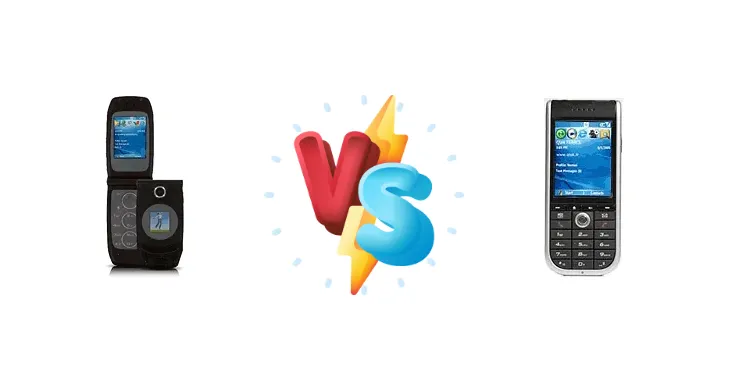
The Qtek 8500 and 8310 represent a pivotal moment in the evolution of mobile computing, offering early adopters a glimpse into the potential of Windows Mobile. Both devices, released around the same time, aimed to bridge the gap between PDAs and smartphones. However, despite sharing a core chipset, subtle differences in design and potentially software implementation set them apart, making a direct comparison valuable for collectors and those interested in mobile history.
🏆 Quick Verdict
For the average user interested in experiencing early Windows Mobile, the Qtek 8310 likely offers a slightly better value proposition. While both share the same 200MHz OMAP 850 processor, the 8310’s potentially more refined software experience and slightly more compact form factor make it a more practical daily driver, assuming both are in similar condition.
| Network |
|---|
| 2G bands | GSM 850 / 900 / 1800 / 1900 | GSM 850 / 900 / 1800 / 1900 |
| EDGE | Class 10 | Class 10 |
| GPRS | Class 10 | Class 10 |
| Technology | GSM | GSM |
| Launch |
|---|
| Announced | 2006, February | 2005, August |
| Status | Discontinued | Discontinued |
| Body |
|---|
| Dimensions | 98.5 x 51.4 x 15.8 mm (3.88 x 2.02 x 0.62 in) | 107.5 x 46 x 17.5 mm (4.23 x 1.81 x 0.69 in) |
| SIM | Mini-SIM | Mini-SIM |
| Weight | 99 g (3.49 oz) | 106 g (3.74 oz) |
| Display |
|---|
| Resolution | 240 x 320 pixels, 4:3 ratio (~182 ppi density) | 240 x 320 pixels, 4:3 ratio (~182 ppi density) |
| Size | 2.2 inches, 34 x 45 mm, 15.0 cm2 (~29.6% screen-to-body ratio) | 2.2 inches, 34 x 45 mm, 15.0 cm2 (~30.3% screen-to-body ratio) |
| Type | TFT, 65K colors | TFT, 65K colors |
| | Second external 1.2-inch TFT display, 65K colors (128 x 128 pixels) | 5-way navigation button |
| Platform |
|---|
| CPU | 200 MHz ARM926EJ-S | 200 MHz ARM926EJ-S |
| Chipset | TI OMAP 850 | TI OMAP 850 |
| OS | Microsoft Windows Mobile 5.0 Smartphone | Microsoft Windows Mobile 5.0 Smartphone |
| Memory |
|---|
| Card slot | microSD (dedicated slot) | MiniSD |
| Internal | 64MB RAM, 64MB ROM | 64MB RAM, 64/128MB ROM |
| Main Camera |
|---|
| Single | 1.3 MP | 1.3 MP |
| Video | Yes | Yes |
| Sound |
|---|
| 3.5mm jack | No | No |
| 35mm jack | No | No |
| Alert types | Vibration; Downloadable polyphonic, MP3 ringtones | Vibration; Downloadable polyphonic, MP3 ringtones, composer |
| Loudspeaker | Yes | Yes |
| | - | 2.5 mm audio jack |
| Comms |
|---|
| Bluetooth | 1.2 | Yes |
| Infrared port | - | Yes |
| Positioning | No | No |
| Radio | No | No |
| USB | 1.1 | Proprietary |
| WLAN | No | Wi-Fi 802.11b |
| Features |
|---|
| Browser | WAP 2.0/xHTML, HTML (PocketIE) | WAP 2.0/xHTML, HTML (PocketIE) |
| | Pocket Office
Voice memo
MP3/AAC player
Predictive text input | MP3/AAC player
Predictive text input
Organizer |
| Battery |
|---|
| Stand-by | - | Up to 250 h |
| Talk time | - | Up to 5 h |
| Type | Removable Li-Ion 750 mAh battery | Removable Li-Ion 1150 mAh battery |
| Misc |
|---|
| Colors | Stylish black | - |
| Price | About 190 EUR | - |
Qtek 8500
- Potentially larger screen for improved readability.
- May offer a more substantial and durable build.
- Larger size could accommodate a slightly larger battery.
- Likely less pocketable due to larger size.
- May be heavier and less comfortable to hold for extended periods.
- Potentially higher price point at launch.
Qtek 8310
- More compact and pocketable design.
- Potentially more refined software experience.
- Likely lighter and more comfortable to hold.
- Smaller screen may be less ideal for reading and multitasking.
- Potentially less robust build quality.
- May have a slightly smaller battery capacity.
Display Comparison
Both the Qtek 8500 and 8310 utilize displays suited for the era – likely resistive touchscreen LCDs. Given the lack of specific display specifications, it’s reasonable to assume the 8500’s larger physical size translates to a slightly larger display area, potentially improving readability for tasks like email and document viewing. However, the 8310’s smaller size may result in a higher pixel density, offering a marginally sharper image. Neither device will approach the color accuracy or brightness of modern displays.
Camera Comparison
Information regarding camera specifications for both devices is scarce. It’s highly probable that both the Qtek 8500 and 8310 feature low-resolution cameras, likely VGA (0.3MP) or potentially 1.3MP, primarily intended for basic photo capture and video calls. Image quality will be poor by modern standards, with limited detail and dynamic range. The presence of a camera was more of a novelty feature at this time than a primary selling point.
Performance
The shared TI OMAP 850 chipset, featuring a 200 MHz ARM926EJ-S CPU, dictates a similar performance profile for both devices. Real-world performance will be constrained by the limitations of the processor and the Windows Mobile operating system. The OMAP 850 was adequate for basic tasks like contact management, calendar scheduling, and simple applications, but struggles with multitasking or demanding software. RAM capacity, a critical factor in Windows Mobile performance, is not specified, but likely limited, further restricting multitasking capabilities. Thermal management is unlikely to be a significant concern given the low power consumption of the OMAP 850.
Battery Life
Battery life on both devices will be heavily dependent on usage patterns and network connectivity. The OMAP 850’s low power consumption suggests reasonable standby times, but active use, particularly with wireless features enabled, will quickly deplete the battery. Specific battery capacities are unavailable, but given the device sizes, they likely range between 1000mAh and 1500mAh. Charging times will be significant compared to modern smartphones, likely requiring several hours for a full charge.
Buying Guide
Buy the Qtek 8500 if you prioritize a larger screen for easier readability and potentially a more robust build quality, appealing to users who valued a substantial feel in their devices. Buy the Qtek 8310 if you prefer a more pocketable form factor and potentially a more polished software experience, catering to users who prioritized portability and ease of use in their early smartphone experience.
Frequently Asked Questions
❓ Will these devices work on modern cellular networks?
No. The Qtek 8500 and 8310 support 2G and potentially early 3G networks. Modern cellular networks (4G, 5G) are incompatible. They are primarily collectible items and will not function as daily drivers without significant modification and access to legacy network infrastructure.
❓ What type of storage does the Qtek 8500 and 8310 use, and is it expandable?
These devices likely utilize a combination of internal ROM and potentially a Secure Digital (SD) card slot for storage expansion. The amount of internal ROM is likely limited, making an SD card essential for storing applications, contacts, and other data. SD card capacity limitations of the era will apply.
❓ Can I install modern apps on these devices?
No. The Qtek 8500 and 8310 run Windows Mobile, a legacy operating system. Modern applications are not compatible. While some enthusiasts have attempted to port limited functionality, full compatibility is not possible.