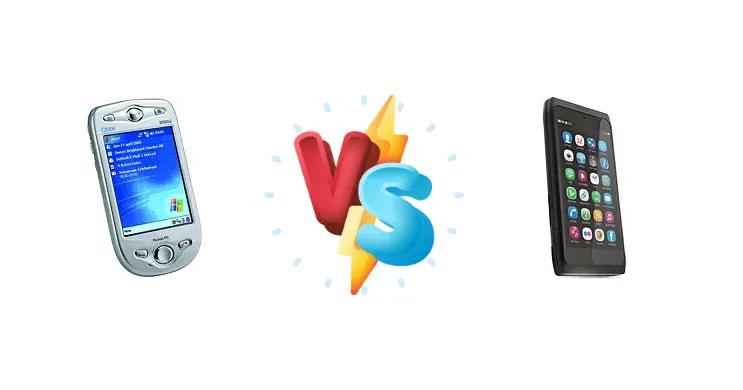
The Qtek 2020i and Nokia N950 represent distinct approaches to early smartphone processing. The 2020i, leveraging Intel's Bulverde, aimed to bring x86 architecture to the mobile space, while the N950 embraced the ARM-based TI OMAP 3630. This comparison dissects their core differences and assesses which chipset offered a superior experience given the technological landscape of their time.
🏆 Quick Verdict
For the average user seeking responsiveness, the Nokia N950 with its 1.0 GHz Cortex-A8 OMAP 3630 is the clear winner. While the Qtek 2020i's Intel Bulverde offered novelty, the ARM architecture's efficiency and optimized software support resulted in a smoother, more practical user experience.
| Network |
|---|
| 2G bands | GSM 900 / 1800 / 1900 | GSM 850 / 900 / 1800 / 1900 |
| 3G bands | - | HSDPA 850 / 900 / 1700 / 1900 / 2100 |
| EDGE | No | - |
| GPRS | Class 10 | - |
| Speed | - | HSPA 14.4/5.76 Mbps |
| Technology | GSM | GSM / HSPA |
| Launch |
|---|
| Announced | 2004, Q2 | 2011, June |
| Status | Discontinued | Discontinued |
| Body |
|---|
| Dimensions | 130 x 70 x 18 mm, 105 cc (5.12 x 2.76 x 0.71 in) | - |
| Keyboard | - | QWERTY |
| SIM | Mini-SIM | Mini-SIM |
| Weight | 190 g (6.70 oz) | - |
| Display |
|---|
| Resolution | 240 x 320 pixels, 4:3 ratio (~114 ppi density) | 480 x 854 pixels, 16:9 ratio (~245 ppi density) |
| Size | 3.5 inches, 53 x 71 mm, 37.9 cm2 (~41.7% screen-to-body ratio) | 4.0 inches, 44.1 cm2 |
| Type | TFT resistive touchscreen, 65K colors | LCD |
| | 5-way navigation button
Downloadable logos | - |
| Platform |
|---|
| CPU | Intel Bulverde 520 MHz | 1.0 GHz Cortex-A8 |
| Chipset | - | TI OMAP 3630 |
| GPU | - | PowerVR SGX530 |
| OS | Microsoft Windows Mobile 2003 SE PocketPC | MeeGo 1.2 Harmattan OS |
| Memory |
|---|
| Card slot | SDIO/MMC | No |
| Internal | 128MB RAM, 128MB ROM | 8.5GB user available, 1GB RAM |
| Main Camera |
|---|
| Features | - | Dual-LED flash |
| Single | 1.3 MP | 12 MP, AF |
| Video | Yes | Yes |
| Selfie camera |
|---|
| Single | - | Yes |
| | No | - |
| Sound |
|---|
| 3.5mm jack | No | Yes |
| 35mm jack | No | Yes |
| Alert types | Vibration; Downloadable polyphonic, MP3 ringtones | - |
| Loudspeaker | Yes | Yes |
| Comms |
|---|
| Bluetooth | Yes | 2.1, A2DP, EDR |
| Infrared port | Yes | - |
| Positioning | No | GPS, A-GPS; Ovi Maps |
| Radio | No | No |
| USB | Proprietary | microUSB 2.0 |
| WLAN | Wi-Fi 802.11b | Wi-Fi 802.11 b/g/n |
| Features |
|---|
| Browser | WAP 2.0/xHTML, HTML (PocketIE) | WAP 2.0/xHTML, HTML, RSS feeds |
| Sensors | - | Accelerometer, proximity, compass |
| | Microsoft ActiveSync
MP3 player
Predictive text input | MP3/WAV/eAAC+/WMA/FLAC player
MP4/H.264/WMV player
Document viewer (Word, Excel, PowerPoint, PDF viewer)
Video/photo editor
Predictive text input (Swype) |
| Battery |
|---|
| Stand-by | Up to 168 h | - |
| Talk time | Up to 4 h | - |
| Type | Removable Li-Ion 1300 mAh battery | Removable Li-Ion 1320 mAh battery |
| Misc |
|---|
| Colors | Silver | Black |
| SAR | - | 0.80 W/kg (head) 1.24 W/kg (body) |
Qtek 2020i
- Historical significance: Represents Intel's attempt to enter the mobile processor market.
- x86 architecture: Potential for compatibility with desktop software (though limited in practice).
- Novelty factor: Unique for its time.
- Lower performance due to emulation overhead.
- Potentially shorter battery life due to x86 architecture's power consumption.
- Software compatibility issues.
Nokia N950
- Native ARM architecture: Optimized for mobile operating systems.
- Higher clock speed: 1.0 GHz Cortex-A8 provides faster processing.
- Better power efficiency: Longer battery life.
- Smoother user experience: More responsive interface.
- Relatively limited processing power by modern standards.
- Operating system (Maemo/MeeGo) lacked widespread app support.
- Older technology.
Display Comparison
Neither device's display specifications are provided, but given their release timeframe, both likely featured resistive touchscreen technology with relatively low resolutions. The N950, being a later model, may have benefited from slight improvements in panel quality and brightness, but a significant difference is unlikely. The focus here is on processing power, as display technology was a general limitation across the board at this time.
Camera Comparison
Camera specifications are not provided for either device. However, given the era, both likely featured relatively low-resolution cameras with limited features. The image processing capabilities would have been heavily reliant on the chipset's processing power. The N950's more efficient processor could potentially handle image processing tasks slightly faster, but the overall camera experience would have been constrained by the sensor technology available at the time.
Performance
The core difference lies in the CPU architecture. The Qtek 2020i's 520 MHz Intel Bulverde is an x86 processor, requiring emulation layers to run Android effectively. This introduces overhead, diminishing real-world performance. Conversely, the Nokia N950's 1.0 GHz Cortex-A8, built on the ARM architecture, enjoys native compatibility with the operating system (likely a variant of Maemo or MeeGo). The Cortex-A8's higher clock speed, combined with its architectural efficiency, translates to faster application loading, smoother multitasking, and a more responsive user interface. The Bulverde's x86 architecture, while powerful in desktop environments, struggled with power efficiency in a mobile context, potentially leading to shorter battery life and thermal throttling.
Battery Life
Battery capacity data is unavailable. However, the Intel Bulverde's x86 architecture is known to be less power-efficient than ARM. This suggests the Qtek 2020i would likely have experienced shorter battery life compared to the Nokia N950, even with a similarly sized battery. The N950's OMAP 3630's power efficiency would have allowed for longer usage times between charges.
Buying Guide
Buy the Qtek 2020i if you are a collector interested in the historical significance of Intel's foray into mobile processors and are willing to accept potential software compatibility issues. Buy the Nokia N950 if you prioritize a more stable, responsive user experience and appreciate the benefits of a mature ARM-based platform, even with the limitations of early smartphone technology.
Frequently Asked Questions
❓ Did the Intel Bulverde chipset in the Qtek 2020i suffer from significant thermal throttling?
Given the x86 architecture's power consumption and the limited thermal management capabilities of early smartphones, it's highly likely the Qtek 2020i experienced thermal throttling under sustained load. This would have resulted in reduced performance during demanding tasks like gaming or video playback.
❓ What operating system did the Nokia N950 run, and how did that impact app availability?
The Nokia N950 ran MeeGo, a Linux-based operating system. While innovative, MeeGo failed to gain widespread adoption, resulting in a limited app ecosystem compared to Android or iOS. This meant users had fewer app choices available to them.
❓ Could the Qtek 2020i run Android apps natively, or did it require emulation?
The Qtek 2020i required emulation to run Android apps. The Intel Bulverde processor is based on the x86 architecture, which is incompatible with the ARM architecture that Android was originally designed for. This emulation layer introduced performance overhead and potential compatibility issues.