
Polestar Phone vs Xiaomi 14T Pro: Which Flagship Reigns Supreme?
| Phones Images | |||||
|---|---|---|---|---|---|
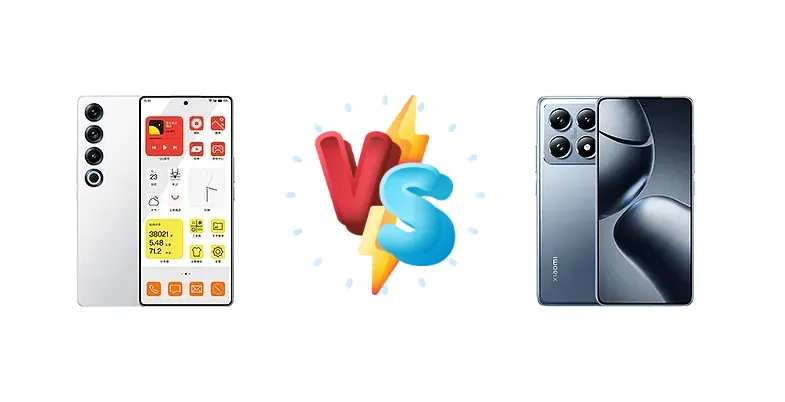
|
🏆 Quick Verdict
For users prioritizing raw charging speed and sustained performance under load, the Xiaomi 14T Pro emerges as the winner. Its 120W charging and Dimensity 9300+ chipset offer a compelling advantage, despite the Polestar Phone's strong Snapdragon foundation. However, the Polestar Phone's software experience and potential for optimization shouldn't be dismissed.
| PHONES | ||
|---|---|---|
| Phone Names | Polestar Phone | Xiaomi 14T Pro |
| Network | ||
|---|---|---|
| 2G bands | GSM 850 / 900 / 1800 / 1900 | GSM 850 / 900 / 1800 / 1900 |
| 3G bands | HSDPA 850 / 900 / 1900 / 2100 | HSDPA 800 / 850 / 900 / 1700(AWS) / 1900 / 2100 |
| 4G bands | LTE | 1, 2, 3, 4, 5, 7, 8, 12, 13, 17, 18, 19, 20, 25, 26, 28, 32, 38, 39, 40, 41, 42, 48, 66 |
| 5G bands | SA/NSA | 1, 2, 3, 5, 7, 8, 12, 20, 25, 26, 28, 38, 40, 41, 48, 66, 75, 77, 78 SA/NSA |
| Speed | HSPA, LTE, 5G | HSPA, LTE, 5G |
| Technology | GSM / HSPA / LTE / 5G | GSM / HSPA / LTE / 5G |
| Launch | ||
|---|---|---|
| Announced | 2024, April 24 | 2024, September 26 |
| Status | Available. Released 2024, April 24 | Available. Released 2024, September 26 |
| Body | ||
|---|---|---|
| Build | - | Glass front (Gorilla Glass 5), aluminum frame, glass back (Panda X) |
| Dimensions | 165 x 74.4 x 8 mm (6.50 x 2.93 x 0.31 in) | 160.4 x 75.1 x 8.4 mm (6.31 x 2.96 x 0.33 in) |
| SIM | Nano-SIM + Nano-SIM | · Nano-SIM + eSIM· eSIM + eSIM· Nano-SIM + Nano-SIM |
| Weight | 214 g (7.55 oz) | 209 g (7.37 oz) |
| Display | ||
|---|---|---|
| Protection | Titan Glass 2.0 | Corning Gorilla Glass 5 |
| Resolution | 1368 x 3192 pixels, 21:9 ratio (~511 ppi density) | 1220 x 2712 pixels, 20:9 ratio (~446 ppi density) |
| Size | 6.79 inches, 107.7 cm2 (~87.7% screen-to-body ratio) | 6.67 inches, 107.4 cm2 (~89.1% screen-to-body ratio) |
| Type | LTPO AMOLED, 1B colors, 120Hz, HDR10+, 600 nits (typ), 1250 nits (HBM) | AMOLED, 68B colors, 144Hz, 3840Hz PWM, Dolby Vision, HDR10+, 1600 nits (HBM), 4000 nits (peak) |
| Platform | ||
|---|---|---|
| CPU | Octa-core (1x3.3 GHz Cortex-X4 & 3x3.2 GHz Cortex-A720 & 2x3.0 GHz Cortex-A720 & 2x2.3 GHz Cortex-A520) | Octa-core (1x3.4 GHz Cortex-X4 & 3x2.85 GHz Cortex-X4 & 4x2.0 GHz Cortex-A720) |
| Chipset | Qualcomm SM8650-AB Snapdragon 8 Gen 3 (4 nm) | Mediatek Dimensity 9300+ (4 nm) |
| GPU | Adreno 750 | Immortalis-G720 MC12 |
| OS | Polestar OS | Android 14, HyperOS |
| Memory | ||
|---|---|---|
| Card slot | No | No |
| Internal | 1TB 16GB RAM | 256GB 12GB RAM, 512GB 12GB RAM, 512GB 16GB RAM, 1TB 12GB RAM |
| Main Camera | ||
|---|---|---|
| Features | Ring-LED flash, panorama, HDR | Leica lens, Ultra HDR, LED flash, HDR, panorama |
| Triple | 50 MP, f/1.9, 24mm (wide), 1/1.3", 1.2µm, PDAF, OIS 10 MP, f/2.1, 72mm (periscope telephoto), PDAF, OIS, 3x optical zoom 13 MP, f/2.4, 15mm, 122˚ (ultrawide) | 50 MP, f/1.6, 23mm (wide), 1/1.31", 1.2µm, PDAF, OIS 50 MP, f/2.0, 60mm (telephoto), 1/2.88", 0.61µm, PDAF, 2.6x optical zoom 12 MP, f/2.2, 15mm (ultrawide), 1/3.06", 1.12µm |
| Video | 8K, 4K, 1080p; gyro-EIS | 8K@24/30fps, 4K@24/30/60fps, 1080p@30/60/120/240/960fps, gyro-EIS, 10-bit Rec. 2020, HDR10+ |
| Selfie camera | ||
|---|---|---|
| Features | HDR | HDR |
| Single | 32 MP, f/2.5, (wide), 1/3.14", 0.7µm | 32 MP, f/2.0, 25mm (wide), 1/3.44", 0.64µm |
| Video | Yes | 4K@30fps, 1080p@30/60fps, HDR10+ |
| Sound | ||
|---|---|---|
| 35mm jack | No | No |
| Loudspeaker | Yes, with stereo speakers | Yes, with stereo speakers |
| Comms | ||
|---|---|---|
| Bluetooth | 5.4, A2DP, LE | 5.4, A2DP, LE, LHDC |
| Infrared port | Yes | Yes |
| NFC | Yes | Yes (market/region dependent) |
| Positioning | GPS (L1+L5), GLONASS (G1), BDS (B1I+B1c+B2a), GALILEO (E1+E5a), QZSS (L1+L5), NavIC (L5) | GPS (L1+L5), BDS (B1I+B1C+B2a+B2b), GALILEO (E1+E5a+E5b), QZSS (L1+L5), NavIC (L5), GLONASS |
| Radio | No | No |
| USB | USB Type-C, OTG | USB Type-C 2.0, OTG |
| WLAN | Wi-Fi 802.11 а/b/g/n/ac/6e/7, dual-band | Wi-Fi 802.11 a/b/g/n/ac/6e/7, dual-band, Wi-Fi Direct |
| Features | ||
|---|---|---|
| Sensors | Fingerprint (under display, ultrasonic), accelerometer, gyro, proximity, compass, barometer | Fingerprint (under display, optical), accelerometer, gyro, proximity, compass |
| Battery | ||
|---|---|---|
| Charging | 80W wired, PD3 PPS, QC4+ 50W wireless 10W reverse wireless | 120W wired, PD3.0, QC4, 100% in 19 min 50W wireless, 100% in 45 min |
| Type | 5050 mAh | Li-Po 5000 mAh |
| Misc | ||
|---|---|---|
| Colors | White | Titan Gray, Titan Blue, Titan Black |
| Models | - | 2407FPN8EG |
| Price | - | $ 550.00 / £ 498.00 / € 539.99 |
| SAR EU | - | 0.99 W/kg (head) 1.00 W/kg (body) |
Polestar Phone
- Potentially cleaner software experience
- Qualcomm Snapdragon 8 Gen 3 efficiency
- 50W wireless charging
- Charging speed is slower than Xiaomi 14T Pro
- Display brightness likely lower than Xiaomi 14T Pro
- Camera specs currently unknown
Xiaomi 14T Pro
- 120W wired charging (19 minutes to full)
- MediaTek Dimensity 9300+ with aggressive core count
- High peak display brightness (1228 nits)
- MediaTek chipsets sometimes have software optimization issues
- Potential for higher thermal throttling under sustained load
Display Comparison
The Xiaomi 14T Pro takes an early lead with its measured peak brightness of 1228 nits, ensuring excellent visibility even in direct sunlight. While the Polestar Phone's display specifications are not provided, the 14T Pro's brightness advantage is significant. Both devices likely utilize high refresh rate panels, but the 14T Pro's brightness and potential for LTPO technology (common in this segment) give it an edge. Color accuracy and calibration will be key differentiators, but without data on the Polestar Phone, the Xiaomi 14T Pro currently holds the advantage.
Camera Comparison
Without detailed camera specifications for the Polestar Phone, a direct comparison is limited. However, the Xiaomi 14T Pro is expected to feature a high-resolution main sensor (likely 50MP or higher) with optical image stabilization (OIS). The Polestar Phone will need a comparable sensor and image processing pipeline to compete. Lens apertures and sensor sizes will be crucial; larger sensors generally capture more light, resulting in better low-light performance. The inclusion of advanced features like computational photography and 8K video recording will also be important differentiators. We'll need to see sample images from both devices to assess their image quality and processing styles.
Performance
Both the Polestar Phone and Xiaomi 14T Pro are powered by 4nm chipsets, but their architectures differ significantly. The Polestar Phone utilizes the Qualcomm Snapdragon 8 Gen 3, featuring a 1x3.3 GHz Cortex-X4 prime core, while the Xiaomi 14T Pro employs the MediaTek Dimensity 9300+ with a 1x3.4 GHz Cortex-X4 and *three* additional Cortex-X4 cores. This core configuration suggests the Dimensity 9300+ may offer superior multi-core performance. The Snapdragon 8 Gen 3's efficiency gains are noteworthy, potentially leading to better thermal management during sustained tasks. However, the Dimensity 9300+'s aggressive core count could translate to higher peak performance, particularly in optimized applications. Both devices feature ample RAM, likely LPDDR5x, but thermal throttling will be the deciding factor in real-world gaming scenarios.
Battery Life
The Xiaomi 14T Pro's 120W wired charging is a game-changer, promising a full charge in just 19 minutes. This is significantly faster than the Polestar Phone's 80W charging, even with PD3 PPS and QC4+ support. The 14T Pro also offers 50W wireless charging, matching the Polestar Phone. The Xiaomi 14T Pro's active use score of 12:32h provides a concrete benchmark, but battery life is heavily dependent on usage patterns. While the Polestar Phone's battery capacity is unknown, the Xiaomi 14T Pro's faster charging mitigates concerns about potentially lower capacity. The 10W reverse wireless charging on both devices is a convenient feature for topping up accessories.
Buying Guide
Buy the Polestar Phone if you value a potentially cleaner software experience and are deeply embedded in the Polestar ecosystem, potentially benefiting from future integrations. Buy the Xiaomi 14T Pro if you demand the fastest possible charging, consistently high frame rates in demanding games, and a proven track record of MediaTek's performance optimizations. The 14T Pro is the clear choice for power users.