
Polestar Phone vs Samsung Galaxy S24 Ultra: A Detailed Comparison of Flagship Power
| Phones Images | |||||
|---|---|---|---|---|---|
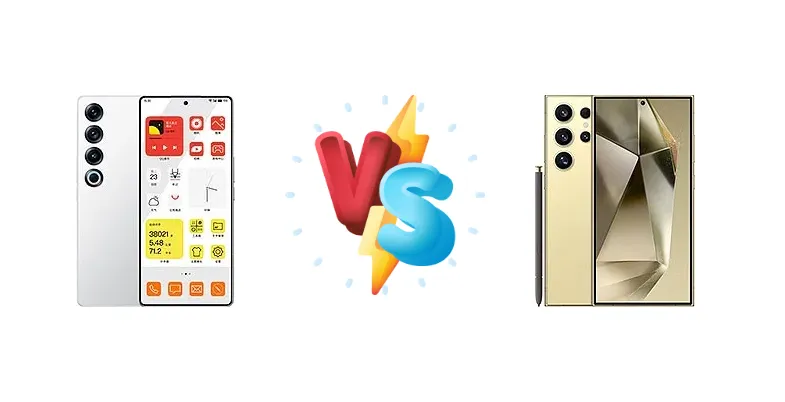
|
🏆 Quick Verdict
For users prioritizing absolute charging speed and peak performance, the Polestar Phone is the clear winner. Its 80W wired charging significantly outperforms the S24 Ultra’s 45W, and the nearly identical Snapdragon 8 Gen 3 chipset offers comparable processing power. However, the Samsung Galaxy S24 Ultra’s superior battery life and brighter display make it the better choice for all-day users.
| PHONES | ||
|---|---|---|
| Phone Names | Polestar Phone | Samsung Galaxy S24 Ultra |
| Network | ||
|---|---|---|
| 2G bands | GSM 850 / 900 / 1800 / 1900 | GSM 850 / 900 / 1800 / 1900 |
| 3G bands | HSDPA 850 / 900 / 1900 / 2100 | HSDPA 850 / 900 / 1700(AWS) / 1900 / 2100 |
| 4G bands | LTE | 1, 2, 3, 4, 5, 7, 8, 12, 13, 17, 18, 19, 20, 25, 26, 28, 32, 38, 39, 40, 41, 66 - International |
| 5G bands | SA/NSA | 1, 2, 3, 5, 7, 8, 12, 20, 25, 26, 28, 38, 40, 41, 66, 75, 77, 78 SA/NSA/Sub6 - International |
| Speed | HSPA, LTE, 5G | HSPA, LTE (up to 7CA), 5G |
| Technology | GSM / HSPA / LTE / 5G | GSM / CDMA / HSPA / EVDO / LTE / 5G |
| Launch | ||
|---|---|---|
| Announced | 2024, April 24 | 2024, January 17 |
| Status | Available. Released 2024, April 24 | Available. Released 2024, January 24 |
| Body | ||
|---|---|---|
| Build | - | Glass front (Corning Gorilla Armor), glass back (Corning Gorilla Armor), titanium frame (grade 2) |
| Dimensions | 165 x 74.4 x 8 mm (6.50 x 2.93 x 0.31 in) | 162.3 x 79 x 8.6 mm (6.39 x 3.11 x 0.34 in) |
| SIM | Nano-SIM + Nano-SIM | · Nano-SIM + Nano-SIM + eSIM + eSIM (max 2 at a time) - INT· Nano-SIM + eSIM + eSIM (max 2 at a time) - USA· Nano-SIM + Nano-SIM - CN |
| Weight | 214 g (7.55 oz) | 232 g or 233 g (8.18 oz) |
| Display | ||
|---|---|---|
| Protection | Titan Glass 2.0 | Corning Gorilla Armor |
| Resolution | 1368 x 3192 pixels, 21:9 ratio (~511 ppi density) | 1440 x 3120 pixels, 19.5:9 ratio (~505 ppi density) |
| Size | 6.79 inches, 107.7 cm2 (~87.7% screen-to-body ratio) | 6.8 inches, 113.5 cm2 (~88.5% screen-to-body ratio) |
| Type | LTPO AMOLED, 1B colors, 120Hz, HDR10+, 600 nits (typ), 1250 nits (HBM) | Dynamic LTPO AMOLED 2X, 120Hz, HDR10+, 2600 nits (peak) |
| Platform | ||
|---|---|---|
| CPU | Octa-core (1x3.3 GHz Cortex-X4 & 3x3.2 GHz Cortex-A720 & 2x3.0 GHz Cortex-A720 & 2x2.3 GHz Cortex-A520) | 8-core (1x3.39GHz Cortex-X4 & 3x3.1GHz Cortex-A720 & 2x2.9GHz Cortex-A720 & 2x2.2GHz Cortex-A520) |
| Chipset | Qualcomm SM8650-AB Snapdragon 8 Gen 3 (4 nm) | Qualcomm SM8650-AC Snapdragon 8 Gen 3 (4 nm) |
| GPU | Adreno 750 | Adreno 750 (1 GHz) |
| OS | Polestar OS | Android 14, up to 7 major Android upgrades, One UI 8.0 |
| Memory | ||
|---|---|---|
| Card slot | No | No |
| Internal | 1TB 16GB RAM | 256GB 12GB RAM, 512GB 12GB RAM, 1TB 12GB RAM |
| Main Camera | ||
|---|---|---|
| Features | Ring-LED flash, panorama, HDR | Laser AF, LED flash, auto-HDR, panorama |
| Quad | - | 200 MP, f/1.7, 24mm (wide), 1/1.3", 0.6µm, multi-directional PDAF, OIS 10 MP, f/2.4, 67mm (telephoto), 1/3.52", 1.12µm, PDAF, OIS, 3x optical zoom 50 MP, f/3.4, 111mm (periscope telephoto), 1/2.52", 0.7µm, PDAF, OIS, 5x optical zoom 12 MP, f/2.2, 13mm, 120˚ (ultrawide), 1/2.55", 1.4µm, dual pixel PDAF, Super Steady video |
| Triple | 50 MP, f/1.9, 24mm (wide), 1/1.3", 1.2µm, PDAF, OIS 10 MP, f/2.1, 72mm (periscope telephoto), PDAF, OIS, 3x optical zoom 13 MP, f/2.4, 15mm, 122˚ (ultrawide) | - |
| Video | 8K, 4K, 1080p; gyro-EIS | 8K@24/30fps, 4K@30/60/120fps, 1080p@30/60/120/240fps, HDR10+, stereo sound rec., gyro-EIS |
| Selfie camera | ||
|---|---|---|
| Features | HDR | HDR, HDR10+ |
| Single | 32 MP, f/2.5, (wide), 1/3.14", 0.7µm | 12 MP, f/2.2, 26mm (wide), 1/3.2", 1.12µm, dual pixel PDAF |
| Video | Yes | 4K@30/60fps, 1080p@30fps |
| Sound | ||
|---|---|---|
| 35mm jack | No | No |
| Loudspeaker | Yes, with stereo speakers | Yes, with stereo speakers |
| Comms | ||
|---|---|---|
| Bluetooth | 5.4, A2DP, LE | 5.3, A2DP, LE |
| Infrared port | Yes | - |
| NFC | Yes | Yes |
| Positioning | GPS (L1+L5), GLONASS (G1), BDS (B1I+B1c+B2a), GALILEO (E1+E5a), QZSS (L1+L5), NavIC (L5) | GPS, GLONASS, BDS, GALILEO, QZSS |
| Radio | No | No |
| USB | USB Type-C, OTG | USB Type-C 3.2, DisplayPort 1.2, OTG |
| WLAN | Wi-Fi 802.11 а/b/g/n/ac/6e/7, dual-band | Wi-Fi 802.11 a/b/g/n/ac/6e/7, tri-band, Wi-Fi Direct |
| Features | ||
|---|---|---|
| Sensors | Fingerprint (under display, ultrasonic), accelerometer, gyro, proximity, compass, barometer | Fingerprint (under display, ultrasonic), accelerometer, gyro, proximity, compass, barometer |
| Battery | ||
|---|---|---|
| Charging | 80W wired, PD3 PPS, QC4+ 50W wireless 10W reverse wireless | 45W wired, PD3.0, 65% in 30 min 15W wireless (Qi) 4.5W reverse wireless |
| Type | 5050 mAh | Li-Ion 5000 mAh |
| Misc | ||
|---|---|---|
| Colors | White | Titanium Black, Titanium Gray, Titanium Violet, Titanium Yellow, Titanium Blue, Titanium Green, Titanium Orange |
| Models | - | SM-S928B, SM-S928B/DS, SM-S928U, SM-S928U1, SM-S928W, SM-S928N, SM-S9280, SM-S928E, SM-S928E/DS |
| Price | - | $ 514.94 / C$ 929.99 / £ 630.00 / € 658.53 / ₹ 84,999 |
| SAR | - | 1.26 W/kg (head) 0.62 W/kg (body) |
| SAR EU | - | 1.06 W/kg (head) 1.30 W/kg (body) |
Polestar Phone
- Significantly faster 80W wired charging
- Potentially higher peak performance due to aggressive tuning
- 50W wireless charging and 10W reverse wireless charging
- Missing battery capacity information
- Camera specs are unknown, making it difficult to assess quality
- Potential for thermal throttling under sustained load
Samsung Galaxy S24 Ultra
- Excellent 13:49h battery life in active use
- Brighter 1447 nit display for outdoor visibility
- Mature camera system with advanced features
- Slower 45W wired charging
- Lower wireless charging speeds (15W)
- Slightly lower CPU clock speeds compared to Polestar Phone
Display Comparison
The Samsung Galaxy S24 Ultra boasts a significantly brighter display, reaching a measured 1447 nits. While the Polestar Phone’s display specs are not provided, Samsung’s panel technology is known for its color accuracy and outdoor visibility. The S24 Ultra’s higher peak brightness is particularly beneficial for users who frequently use their phones in direct sunlight. The absence of PWM frequency data for the Polestar Phone raises questions about potential flicker, a concern for users sensitive to screen flicker, while Samsung typically employs high PWM frequencies to mitigate this issue.
Camera Comparison
Detailed camera specs for the Polestar Phone are missing, making a direct comparison challenging. However, the Samsung Galaxy S24 Ultra is expected to feature a sophisticated camera system with advanced image processing capabilities. The S24 Ultra’s camera system likely includes features like enhanced night mode, improved zoom capabilities, and professional-grade video recording options. Without knowing the Polestar Phone’s sensor sizes, apertures, and OIS implementation, it’s difficult to assess its photographic capabilities, but it will need to deliver exceptional image quality to compete with Samsung’s established camera prowess.
Performance
Both devices are powered by the Qualcomm SM8650-AB/AC Snapdragon 8 Gen 3 (4nm), but subtle CPU clock speed differences exist. The S24 Ultra’s CPU reaches 3.39GHz on its prime core, slightly exceeding the Polestar Phone’s 3.3 GHz. While seemingly minor, this, combined with slightly higher clock speeds on the A720 cores (3.1GHz vs 3.2GHz), could translate to marginal performance gains in sustained workloads. However, both phones utilize the same architecture, meaning real-world differences will likely be minimal. Thermal management will be crucial; the 4nm process should provide good efficiency, but the Polestar Phone’s potentially more aggressive performance tuning could lead to more throttling under prolonged stress.
Battery Life
The Samsung Galaxy S24 Ultra demonstrates impressive battery endurance, achieving 13 hours and 49 minutes of active use. The Polestar Phone’s battery capacity is unknown, but its 80W wired charging capability is a significant advantage. This allows for a potentially much faster recharge time compared to the S24 Ultra’s 45W charging, which reaches 65% in 30 minutes. The Polestar Phone also offers 50W wireless charging and 10W reverse wireless charging, significantly outpacing the S24 Ultra’s 15W wireless and 4.5W reverse wireless capabilities. While the S24 Ultra excels in longevity, the Polestar Phone prioritizes rapid replenishment.
Buying Guide
Buy the Polestar Phone if you need the fastest possible charging speeds, frequently engage in demanding tasks like gaming, and value a streamlined software experience. Buy the Samsung Galaxy S24 Ultra if you prioritize all-day battery life, a brighter and more versatile display, and a more mature ecosystem of features and accessories. The S24 Ultra is the safer, more polished choice, while the Polestar Phone is a riskier, but potentially more rewarding, option for power users.