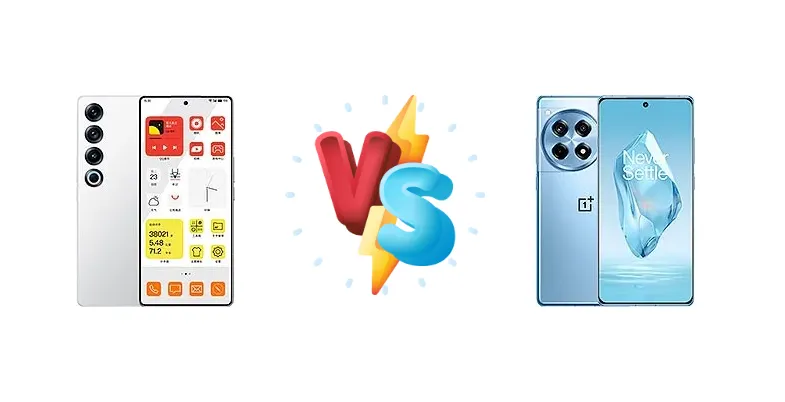
The Polestar Phone arrives as a newcomer aiming for the high-end with the latest Snapdragon 8 Gen 3, while the OnePlus 12R represents a refined approach to the flagship-killer formula, leveraging the proven Snapdragon 8 Gen 2 and prioritizing fast charging and battery endurance. This comparison dissects the key differences to help you choose the right device.
🏆 Quick Verdict
For users prioritizing raw processing power and future-proofing, the Polestar Phone’s Snapdragon 8 Gen 3 is the clear winner. However, the OnePlus 12R delivers exceptional value with its 100W charging, impressive 14:32h active use battery life, and a more mature software experience, making it the better choice for most users.
| Network |
|---|
| 2G bands | GSM 850 / 900 / 1800 / 1900 | GSM 850 / 900 / 1800 / 1900 |
| 3G bands | HSDPA 850 / 900 / 1900 / 2100 | HSDPA 850 / 900 / 1700(AWS) / 1900 / 2100 |
| 4G bands | LTE | 1, 2, 3, 4, 5, 7, 8, 12, 17, 18, 19, 20, 26, 28, 32, 38, 39, 40, 41, 66 |
| 5G bands | SA/NSA | 1, 2, 3, 5, 7, 8, 12, 20, 28, 38, 40, 41, 66, 77, 78 SA/NSA |
| Speed | HSPA, LTE, 5G | HSPA, LTE, 5G |
| Technology | GSM / HSPA / LTE / 5G | GSM / CDMA / HSPA / LTE / 5G |
| Launch |
|---|
| Announced | 2024, April 24 | 2024, January 23 |
| Status | Available. Released 2024, April 24 | Available. Released 2024, February 06 |
| Body |
|---|
| Build | - | Glass front (Gorilla Glass Victus 2), aluminum frame, glass back |
| Dimensions | 165 x 74.4 x 8 mm (6.50 x 2.93 x 0.31 in) | 163.3 x 75.3 x 8.8 mm (6.43 x 2.96 x 0.35 in) |
| SIM | Nano-SIM + Nano-SIM | · Nano-SIM + Nano-SIM + eSIM (max 2 at a time)· Nano-SIM + Nano-SIM |
| Weight | 214 g (7.55 oz) | 207 g (7.30 oz) |
| Display |
|---|
| Protection | Titan Glass 2.0 | Corning Gorilla Glass Victus 2 |
| Resolution | 1368 x 3192 pixels, 21:9 ratio (~511 ppi density) | 1264 x 2780 pixels (~450 ppi density) |
| Size | 6.79 inches, 107.7 cm2 (~87.7% screen-to-body ratio) | 6.78 inches, 111.7 cm2 (~90.9% screen-to-body ratio) |
| Type | LTPO AMOLED, 1B colors, 120Hz, HDR10+, 600 nits (typ), 1250 nits (HBM) | LTPO4 AMOLED, 1B colors, 120Hz, HDR10+, Dolby Vision, 1600 nits (HBM), 4500 nits (peak) |
| Platform |
|---|
| CPU | Octa-core (1x3.3 GHz Cortex-X4 & 3x3.2 GHz Cortex-A720 & 2x3.0 GHz Cortex-A720 & 2x2.3 GHz Cortex-A520) | Octa-core (1x3.2 GHz Cortex-X3 & 2x2.8 GHz Cortex-A715 & 2x2.8 GHz Cortex-A710 & 3x2.0 GHz Cortex-A510) |
| Chipset | Qualcomm SM8650-AB Snapdragon 8 Gen 3 (4 nm) | Qualcomm SM8550-AB Snapdragon 8 Gen 2 (4 nm) |
| GPU | Adreno 750 | Adreno 740 |
| OS | Polestar OS | Android 14, up to 3 major Android upgrades, OxygenOS 15 |
| Memory |
|---|
| Card slot | No | No |
| Internal | 1TB 16GB RAM | 128GB 8GB RAM, 256GB 8GB RAM, 256GB 12GB RAM, 256GB 16GB RAM |
| Main Camera |
|---|
| Features | Ring-LED flash, panorama, HDR | Laser AF, color spectrum sensor, LED flash, HDR, panorama |
| Triple | 50 MP, f/1.9, 24mm (wide), 1/1.3", 1.2µm, PDAF, OIS
10 MP, f/2.1, 72mm (periscope telephoto), PDAF, OIS, 3x optical zoom
13 MP, f/2.4, 15mm, 122˚ (ultrawide) | 50 MP, f/1.8, 24mm (wide), 1/1.56", 1.0µm, multi-directional PDAF, OIS
8 MP, f/2.2, 16mm, 112˚ (ultrawide), 1/4.0", 1.12µm
2 MP (macro) |
| Video | 8K, 4K, 1080p; gyro-EIS | 4K@30/60fps, 1080p@30/60/120/240fps, gyro-EIS, OIS |
| Selfie camera |
|---|
| Features | HDR | HDR, panorama |
| Single | 32 MP, f/2.5, (wide), 1/3.14", 0.7µm | 16 MP, f/2.4, 26mm (wide), 1/3", 1.0µm |
| Video | Yes | 1080p@30fps, gyro-EIS |
| Sound |
|---|
| 35mm jack | No | No |
| Loudspeaker | Yes, with stereo speakers | Yes, with stereo speakers |
| Comms |
|---|
| Bluetooth | 5.4, A2DP, LE | 5.3, A2DP, LE, aptX HD |
| Infrared port | Yes | Yes |
| NFC | Yes | Yes |
| Positioning | GPS (L1+L5), GLONASS (G1), BDS (B1I+B1c+B2a), GALILEO (E1+E5a), QZSS (L1+L5), NavIC (L5) | GPS, GALILEO, GLONASS, BDS, QZSS |
| Radio | No | No |
| USB | USB Type-C, OTG | USB Type-C 2.0 |
| WLAN | Wi-Fi 802.11 а/b/g/n/ac/6e/7, dual-band | Wi-Fi 802.11 a/b/g/n/ac/6/7, dual-band |
| Features |
|---|
| Sensors | Fingerprint (under display, ultrasonic), accelerometer, gyro, proximity, compass, barometer | Fingerprint (under display, optical), accelerometer, gyro, proximity, compass |
| Battery |
|---|
| Charging | 80W wired, PD3 PPS, QC4+
50W wireless
10W reverse wireless | 100W wired, 100% in 26 min |
| Type | 5050 mAh | Li-Ion 5500 mAh |
| Misc |
|---|
| Colors | White | Iron Gray, Cool Blue, Electric Violet, Sunset Dune |
| Models | - | CPH2609, CPH2585, CPH2611 |
| Price | - | € 410.84 / $ 399.95 / £ 649.00 |
| SAR | - | 1.19 W/kg (head) 0.82 W/kg (body) |
Polestar Phone
- Latest Snapdragon 8 Gen 3 for top-tier performance
- 50W Wireless Charging and 10W Reverse Wireless Charging
- Potential for advanced camera features
- Battery life potentially lower than OnePlus 12R
- Charging speed slower than OnePlus 12R
- Unknown display specifications
OnePlus 12R
- Exceptional 14:32h active use battery life
- Ultra-fast 100W wired charging (26 min 0-100%)
- Bright 1181 nit display
- Older Snapdragon 8 Gen 2 chipset
- May lack cutting-edge camera features
- No wireless charging
Display Comparison
The OnePlus 12R boasts a bright display, peaking at 1181 nits, ensuring excellent visibility even in direct sunlight. While the Polestar Phone’s display specifications are currently unknown, the OnePlus 12R sets a high bar for outdoor readability. The 12R’s panel likely utilizes LTPO technology, enabling adaptive refresh rates for improved power efficiency, a feature we expect to see in the Polestar Phone as well to compete effectively. Bezels and color accuracy will be key differentiators once the Polestar Phone’s display specs are fully revealed.
Camera Comparison
Without detailed camera specifications for the Polestar Phone, it’s difficult to make a direct comparison. However, the OnePlus 12R’s camera system is expected to be solid, focusing on a capable main sensor with OIS. The Polestar Phone will need to offer a competitive sensor size and image processing pipeline to stand out. We anticipate the Polestar Phone will lean into computational photography to enhance image quality, but the OnePlus 12R’s established algorithms provide a strong baseline. The inclusion of a telephoto lens on the Polestar Phone would be a significant advantage.
Performance
The Polestar Phone’s Snapdragon 8 Gen 3 (4nm) represents a significant leap over the OnePlus 12R’s Snapdragon 8 Gen 2 (4nm). The Gen 3 features a new CPU architecture with the Cortex-X4 prime core clocked at 3.3 GHz, promising substantial gains in single-core performance compared to the 12R’s Cortex-X3 at 3.2 GHz. The Gen 3 also benefits from architectural improvements in the Cortex-A720 and A520 cores, enhancing multi-core performance and efficiency. While the 12R’s LPDDR5x RAM is fast, the Gen 3’s integrated memory controller and overall system-on-chip efficiency will likely translate to smoother multitasking and sustained performance under heavy load. Thermal management will be crucial; the Gen 3’s increased power demands require a robust cooling solution to prevent throttling.
Battery Life
The OnePlus 12R excels in battery performance, achieving an impressive 14 hours and 32 minutes of active use. This is complemented by its blazing-fast 100W wired charging, capable of fully charging the device in just 26 minutes. The Polestar Phone offers 80W wired charging, PD3 PPS, and QC4+, which is still very fast, but slower than the 12R. It also adds the convenience of 50W wireless charging and 10W reverse wireless charging. The Polestar Phone’s battery capacity is currently unknown, but it will need to be optimized to compete with the 12R’s endurance, especially given the Snapdragon 8 Gen 3’s higher power consumption.
Buying Guide
Buy the Polestar Phone if you demand the absolute best performance for demanding tasks like video editing, high-end gaming, or running complex applications. Buy the OnePlus 12R if you prioritize all-day battery life, incredibly fast charging, and a balanced experience without sacrificing significant performance, all at a potentially lower price point.
Frequently Asked Questions
❓ Will the Snapdragon 8 Gen 3 in the Polestar Phone get noticeably hotter than the Snapdragon 8 Gen 2 in the OnePlus 12R during extended gaming sessions?
The Snapdragon 8 Gen 3 is more powerful, and therefore generates more heat. While Qualcomm has made improvements to thermal management, the Polestar Phone will likely require a more sophisticated cooling system to prevent throttling during prolonged, demanding gaming. The OnePlus 12R’s Gen 2 is known for its efficient thermal performance.
❓ Does the OnePlus 12R’s lack of wireless charging significantly impact the user experience for those accustomed to it?
For users heavily reliant on wireless charging, the OnePlus 12R’s omission is a notable drawback. However, the incredibly fast 100W wired charging mitigates this to some extent, providing a full charge in under 30 minutes. The Polestar Phone offers 50W wireless charging as a direct counterpoint.
❓ How does the CPU architecture difference (Cortex-X4 vs Cortex-X3) translate to real-world app loading and multitasking speeds?
The Cortex-X4 in the Polestar Phone’s Snapdragon 8 Gen 3 offers a measurable improvement in single-core performance compared to the Cortex-X3 in the OnePlus 12R. This translates to snappier app launches, smoother scrolling, and faster response times in applications that heavily rely on single-core processing. Multitasking will also benefit from the Gen 3’s improved core efficiency.