
Polestar Phone vs. Motorola Edge 40 Pro: A Deep Dive into Performance and Charging
| Phones Images | |||||
|---|---|---|---|---|---|
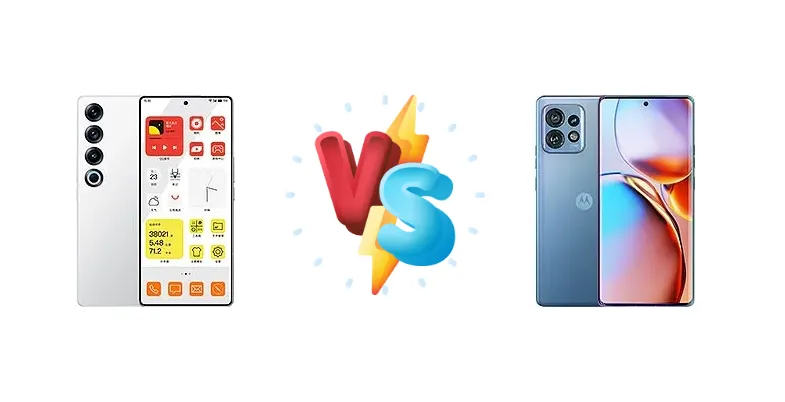
|
🏆 Quick Verdict
For users prioritizing raw processing power and future-proofing, the Polestar Phone’s Snapdragon 8 Gen 3 is the clear winner. However, the Motorola Edge 40 Pro’s significantly faster wired charging and comparable battery endurance make it a compelling choice for those who value convenience and minimizing downtime.
| PHONES | ||
|---|---|---|
| Phone Names | Polestar Phone | Motorola Edge 40 Pro |
| Network | ||
|---|---|---|
| 2G bands | GSM 850 / 900 / 1800 / 1900 | GSM 850 / 900 / 1800 / 1900 |
| 3G bands | HSDPA 850 / 900 / 1900 / 2100 | HSDPA 850 / 900 / 1700(AWS) / 1900 / 2100 |
| 4G bands | LTE | 1, 2, 3, 4, 5, 7, 8, 12, 13, 17, 18, 19, 20, 25, 26, 28, 32, 38, 39, 40, 41, 42, 43, 48, 66 |
| 5G bands | SA/NSA | 1, 2, 3, 5, 7, 8, 20, 28, 38, 40, 41, 66, 77, 78 SA/NSA/Sub6 |
| Speed | HSPA, LTE, 5G | HSPA, LTE, 5G |
| Technology | GSM / HSPA / LTE / 5G | GSM / HSPA / LTE / 5G |
| Launch | ||
|---|---|---|
| Announced | 2024, April 24 | 2023, April 04 |
| Status | Available. Released 2024, April 24 | Available. Released 2023, April 04 |
| Body | ||
|---|---|---|
| Build | - | Glass front (Gorilla Glass Victus), glass back (Gorilla Glass Victus), aluminum frame |
| Dimensions | 165 x 74.4 x 8 mm (6.50 x 2.93 x 0.31 in) | 161.2 x 74 x 8.6 mm (6.35 x 2.91 x 0.34 in) |
| SIM | Nano-SIM + Nano-SIM | Nano-SIM + eSIM |
| Weight | 214 g (7.55 oz) | 199 g (7.02 oz) |
| - | IP68 dust/water resistant (up to 1.5m for 30 min) | |
| Display | ||
|---|---|---|
| Protection | Titan Glass 2.0 | Corning Gorilla Glass Victus |
| Resolution | 1368 x 3192 pixels, 21:9 ratio (~511 ppi density) | 1080 x 2400 pixels, 20:9 ratio (~394 ppi density) |
| Size | 6.79 inches, 107.7 cm2 (~87.7% screen-to-body ratio) | 6.67 inches, 108.0 cm2 (~90.5% screen-to-body ratio) |
| Type | LTPO AMOLED, 1B colors, 120Hz, HDR10+, 600 nits (typ), 1250 nits (HBM) | OLED, 1B colors, 165Hz, HDR10+, Dolby Vision, 1300 nits (peak) |
| Platform | ||
|---|---|---|
| CPU | Octa-core (1x3.3 GHz Cortex-X4 & 3x3.2 GHz Cortex-A720 & 2x3.0 GHz Cortex-A720 & 2x2.3 GHz Cortex-A520) | Octa-core (1x3.2 GHz Cortex-X3 & 2x2.8 GHz Cortex-A715 & 2x2.8 GHz Cortex-A710 & 3x2.0 GHz Cortex-A510) |
| Chipset | Qualcomm SM8650-AB Snapdragon 8 Gen 3 (4 nm) | Qualcomm SM8550-AB Snapdragon 8 Gen 2 (4 nm) |
| GPU | Adreno 750 | Adreno 740 |
| OS | Polestar OS | Android 13, up to 3 major Android upgrades |
| Memory | ||
|---|---|---|
| Card slot | No | No |
| Internal | 1TB 16GB RAM | 256GB 12GB RAM, 512GB 12GB RAM |
| - | UFS 4.0 | |
| Main Camera | ||
|---|---|---|
| Features | Ring-LED flash, panorama, HDR | Dual-LED flash, panorama, HDR |
| Triple | 50 MP, f/1.9, 24mm (wide), 1/1.3", 1.2µm, PDAF, OIS 10 MP, f/2.1, 72mm (periscope telephoto), PDAF, OIS, 3x optical zoom 13 MP, f/2.4, 15mm, 122˚ (ultrawide) | 50 MP, f/1.8, (wide), 1/1.55", 1.0µm, multi-directional PDAF, OIS 12 MP, f/1.6, (telephoto), 1/2.93", 1.22µm, PDAF, 2x optical zoom 50 MP, f/2.2, 114˚ (ultrawide), 1/2.76", 0.64µm, AF |
| Video | 8K, 4K, 1080p; gyro-EIS | 8K@30fps, 4K@30/60fps, 1080p@30/60/120/240/960fps, 10-bit HDR10+, gyro-EIS |
| Selfie camera | ||
|---|---|---|
| Features | HDR | HDR |
| Single | 32 MP, f/2.5, (wide), 1/3.14", 0.7µm | 60 MP, f/2.2, (wide), 1/2.8", 0.61µm |
| Video | Yes | 4K@30/60fps, 1080p@30/60fps |
| Sound | ||
|---|---|---|
| 3.5mm jack | - | No |
| 35mm jack | No | No |
| Loudspeaker | Yes, with stereo speakers | Yes, with stereo speakers |
| Comms | ||
|---|---|---|
| Bluetooth | 5.4, A2DP, LE | 5.3, A2DP, LE |
| Infrared port | Yes | - |
| NFC | Yes | Yes |
| Positioning | GPS (L1+L5), GLONASS (G1), BDS (B1I+B1c+B2a), GALILEO (E1+E5a), QZSS (L1+L5), NavIC (L5) | GPS, GLONASS, GALILEO, BDS |
| Radio | No | No |
| USB | USB Type-C, OTG | USB Type-C 3.2, OTG, DisplayPort 1.4 |
| WLAN | Wi-Fi 802.11 а/b/g/n/ac/6e/7, dual-band | Wi-Fi 802.11 a/b/g/n/ac/6e/7, tri-band, Wi-Fi Direct |
| Features | ||
|---|---|---|
| Sensors | Fingerprint (under display, ultrasonic), accelerometer, gyro, proximity, compass, barometer | Fingerprint (under display, optical), accelerometer, gyro, proximity, compass |
| - | Ready For 3.5 support | |
| Battery | ||
|---|---|---|
| Charging | 80W wired, PD3 PPS, QC4+ 50W wireless 10W reverse wireless | 125W wired, PD3.0, QC5, 50% in 6 min, 100% in 23 min 15W wireless 5W reverse wired 5W reverse wireless |
| Type | 5050 mAh | Li-Po 4600 mAh |
| Misc | ||
|---|---|---|
| Colors | White | Interstellar Black, Lunar Blue |
| Price | - | € 313.87 |
| Tests | ||
|---|---|---|
| Battery life | - | Endurance rating 117h |
| Camera | - | Photo / Video |
| Display | - | Contrast ratio: Infinite (nominal) |
| Loudspeaker | - | -22.6 LUFS (Excellent) |
| Performance | - | AnTuTu: 1273764 (v9) GeekBench: 4896 (v5.1), 5352 (v6) GFXBench: 112fps (ES 3.1 onscreen) |
Polestar Phone
- Latest Snapdragon 8 Gen 3 processor for top-tier performance
- Faster CPU core clock speed (3.3 GHz vs 3.2 GHz)
- 50W Wireless Charging is faster than Motorola's 15W
- Slower wired charging (80W vs 125W)
- Camera specifications currently unknown
- No information on display technology (LTPO, brightness)
Motorola Edge 40 Pro
- Ultra-fast 125W wired charging
- Proven Snapdragon 8 Gen 2 performance
- Long battery endurance (117h)
- Older generation processor
- Slower wireless charging (15W)
- Limited reverse charging options (5W)
Display Comparison
The Motorola Edge 40 Pro boasts a measured peak brightness of 1050 nits, providing excellent visibility in direct sunlight. While the Polestar Phone’s display specifications are currently unavailable, we anticipate a comparable or slightly higher brightness level given its flagship positioning. The Edge 40 Pro’s ‘Infinite’ contrast ratio (nominal) suggests a high-quality OLED panel. Without knowing the Polestar Phone’s panel technology (LTPO or not), it’s difficult to assess potential advantages in refresh rate adaptability and power efficiency. Bezels and color accuracy will be critical differentiators once the Polestar Phone is available for review.
Camera Comparison
Both phones are described as having Photo/Video capabilities, but detailed camera specifications are lacking for the Polestar Phone. The Motorola Edge 40 Pro’s camera system is likely to feature a high-resolution main sensor (details unavailable in the provided data) with Optical Image Stabilization (OIS). Without knowing the Polestar Phone’s sensor size, aperture, and image processing algorithms, a direct comparison is impossible. We can assume both phones will offer a range of shooting modes, but the quality of the final image will depend heavily on the hardware and software implementation. The absence of details regarding the Polestar Phone’s camera system is a significant omission.
Performance
The Polestar Phone’s Snapdragon 8 Gen 3 represents a significant architectural upgrade over the Motorola Edge 40 Pro’s Snapdragon 8 Gen 2. The Gen 3 utilizes a new 1+3+2+2 core configuration with the Cortex-X4 prime core clocked at 3.3 GHz, compared to the Gen 2’s 3.2 GHz Cortex-X3. This translates to a noticeable performance boost in CPU-intensive tasks. The Gen 3 also features improved GPU performance, crucial for gaming. Both chipsets are fabricated on a 4nm process, but the Gen 3’s architectural enhancements should yield better thermal efficiency, potentially reducing throttling during sustained workloads. The Polestar Phone’s use of unspecified LPDDR5x RAM will further contribute to faster data transfer speeds.
Battery Life
The Motorola Edge 40 Pro’s 125W wired charging is a standout feature, capable of charging from 0-100% in just 23 minutes, and reaching 50% in a mere 6 minutes. This is significantly faster than the Polestar Phone’s 80W wired charging, despite supporting PD3 PPS and QC4+. The Edge 40 Pro also offers 15W wireless charging and 5W reverse wired/wireless charging. The Polestar Phone counters with 50W wireless charging and 10W reverse wireless charging. Both devices share an endurance rating of 117 hours, suggesting comparable real-world battery life despite the differing charging speeds. The Edge 40 Pro’s faster charging mitigates any potential concerns about battery drain.
Buying Guide
Buy the Polestar Phone if you demand the absolute best performance for demanding tasks like video editing, high-end gaming, or AI applications. Its Snapdragon 8 Gen 3 offers a tangible leap in processing capability. Buy the Motorola Edge 40 Pro if you prioritize rapid charging and all-day battery life, and want a proven flagship experience without the premium price tag associated with the newest silicon.