
Polestar Phone vs Asus ROG Phone 8 Pro: A Detailed Comparison of Snapdragon 8 Gen 3 Powerhouses
| Phones Images | |||||
|---|---|---|---|---|---|
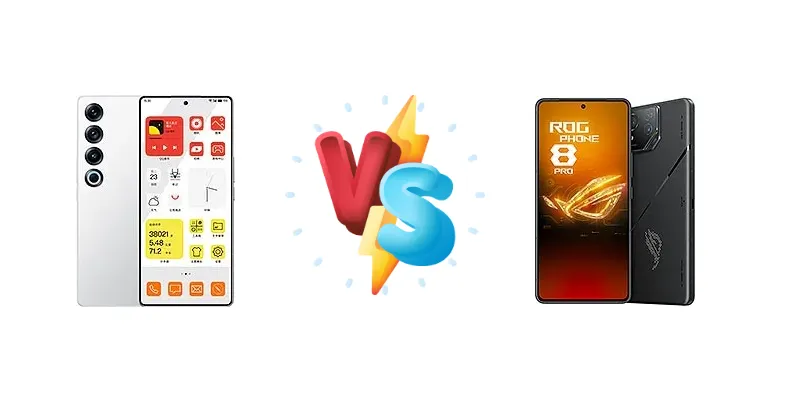
|
🏆 Quick Verdict
For the average user prioritizing a balance of performance and convenience, the Asus ROG Phone 8 Pro emerges as the stronger choice. Its significantly longer battery life (14:43h active use) and faster wired charging (65W vs 80W, but with a more consistent global implementation) outweigh the Polestar's slightly higher wireless charging capabilities.
| PHONES | ||
|---|---|---|
| Phone Names | Polestar Phone | Asus ROG Phone 8 Pro |
| Network | ||
|---|---|---|
| 2G bands | GSM 850 / 900 / 1800 / 1900 | GSM 850 / 900 / 1800 / 1900 |
| 3G bands | HSDPA 850 / 900 / 1900 / 2100 | HSDPA 850 / 900 / 1700(AWS) / 1800 / 1900 / 2100 - International |
| 4G bands | LTE | 1, 2, 3, 4, 5, 7, 8, 12, 17, 18, 19, 20, 25, 26, 28, 32, 34, 38, 39, 40, 41, 42, 43, 48, 66 - International |
| 5G bands | SA/NSA | 1, 2, 3, 5, 7, 8, 12, 18, 20, 25, 26, 28, 38, 40, 41, 48, 66, 77, 78, 79 SA/NSA/Sub6 - International |
| Speed | HSPA, LTE, 5G | HSPA, LTE (Up to 7CA), 5G |
| Technology | GSM / HSPA / LTE / 5G | GSM / CDMA / HSPA / LTE / 5G |
| Launch | ||
|---|---|---|
| Announced | 2024, April 24 | 2024, January 08 |
| Status | Available. Released 2024, April 24 | Available. Released 2024, January 18 |
| Body | ||
|---|---|---|
| Build | - | Glass front (Gorilla Glass Victus 2), glass back (Gorilla Glass), aluminum frame |
| Dimensions | 165 x 74.4 x 8 mm (6.50 x 2.93 x 0.31 in) | 163.8 x 76.8 x 8.9 mm (6.45 x 3.02 x 0.35 in) |
| SIM | Nano-SIM + Nano-SIM | Nano-SIM + Nano-SIM |
| Weight | 214 g (7.55 oz) | 225 g (7.94 oz) |
| Display | ||
|---|---|---|
| Protection | Titan Glass 2.0 | Corning Gorilla Glass Victus 2 |
| Resolution | 1368 x 3192 pixels, 21:9 ratio (~511 ppi density) | 1080 x 2400 pixels, 20:9 ratio (~388 ppi density) |
| Size | 6.79 inches, 107.7 cm2 (~87.7% screen-to-body ratio) | 6.78 inches, 111.0 cm2 (~88.2% screen-to-body ratio) |
| Type | LTPO AMOLED, 1B colors, 120Hz, HDR10+, 600 nits (typ), 1250 nits (HBM) | LTPO AMOLED, 1B colors, 165Hz, HDR10, 1600 nits (HBM), 2500 nits (peak) |
| Platform | ||
|---|---|---|
| CPU | Octa-core (1x3.3 GHz Cortex-X4 & 3x3.2 GHz Cortex-A720 & 2x3.0 GHz Cortex-A720 & 2x2.3 GHz Cortex-A520) | Octa-core (1x3.3 GHz Cortex-X4 & 3x3.2 GHz Cortex-A720 & 2x3.0 GHz Cortex-A720 & 2x2.3 GHz Cortex-A520) |
| Chipset | Qualcomm SM8650-AB Snapdragon 8 Gen 3 (4 nm) | Qualcomm SM8650-AB Snapdragon 8 Gen 3 (4 nm) |
| GPU | Adreno 750 | Adreno 750 |
| OS | Polestar OS | Android 14, up to 2 major Android upgrades |
| Memory | ||
|---|---|---|
| Card slot | No | No |
| Internal | 1TB 16GB RAM | 512GB 16GB RAM, 1TB 24GB RAM |
| Main Camera | ||
|---|---|---|
| Features | Ring-LED flash, panorama, HDR | LED flash, HDR, panorama |
| Triple | 50 MP, f/1.9, 24mm (wide), 1/1.3", 1.2µm, PDAF, OIS 10 MP, f/2.1, 72mm (periscope telephoto), PDAF, OIS, 3x optical zoom 13 MP, f/2.4, 15mm, 122˚ (ultrawide) | 50 MP, f/1.9, 24mm (wide), 1/1.56", 1.0µm, PDAF, gimbal OIS 32 MP, f/2.4, (telephoto), 1/3.2", 0.7µm, PDAF, OIS, 3x optical zoom 13 MP, f/2.2, 13mm, 120˚ (ultrawide) |
| Video | 8K, 4K, 1080p; gyro-EIS | 8K@24fps, 4K@30/60fps, 1080p@30/60/120/240fps, 720p@480fps; gyro-EIS, HDR10+ |
| Selfie camera | ||
|---|---|---|
| Features | HDR | Panorama, HDR |
| Single | 32 MP, f/2.5, (wide), 1/3.14", 0.7µm | 32 MP, f/2.5, 22mm (wide), 1/3.2", 0.7µm |
| Video | Yes | 1080p@30fps |
| Sound | ||
|---|---|---|
| 35mm jack | No | Yes |
| Loudspeaker | Yes, with stereo speakers | Yes, with stereo speakers |
| Comms | ||
|---|---|---|
| Bluetooth | 5.4, A2DP, LE | 5.4, A2DP, LE, aptX HD, aptX Adaptive, aptX Lossless |
| Infrared port | Yes | - |
| NFC | Yes | Yes |
| Positioning | GPS (L1+L5), GLONASS (G1), BDS (B1I+B1c+B2a), GALILEO (E1+E5a), QZSS (L1+L5), NavIC (L5) | GPS (L1+L5), BDS (B1I+B1c+B2a), GALILEO (E1+E5a), QZSS (L1+L5), NavIC (L5), GLONASS |
| Radio | No | No |
| USB | USB Type-C, OTG | USB Type-C (side), DisplayPort 1.4; USB Type-C (bottom), OTG |
| WLAN | Wi-Fi 802.11 а/b/g/n/ac/6e/7, dual-band | Wi-Fi 802.11 a/b/g/n/ac/6e/7, tri-band, Wi-Fi Direct |
| Features | ||
|---|---|---|
| Sensors | Fingerprint (under display, ultrasonic), accelerometer, gyro, proximity, compass, barometer | Fingerprint (under display, optical), accelerometer, gyro, proximity, compass |
| Battery | ||
|---|---|---|
| Charging | 80W wired, PD3 PPS, QC4+ 50W wireless 10W reverse wireless | 65W wired, PD3.0, PPS, QC5, 100% in 39 min - International 30W wired, PD3.0, PPS - India 15W wireless (Qi) 10W reverse wired |
| Type | 5050 mAh | 5500 mAh |
| Misc | ||
|---|---|---|
| Colors | White | Phantom Black |
| Models | - | AI2401, AI2401_A, AI2401_D |
| Price | - | $ 1,157.98 / £ 1,693.75 / € 632.66 |
Polestar Phone
- Faster Wireless Charging (50W)
- Potentially Sleeker Design (based on brand aesthetic)
- Reverse Wireless Charging
- Battery life not specified, potentially lower than ROG Phone
- Camera specs unknown, potential weakness
Asus ROG Phone 8 Pro
- Exceptional Battery Life (14:43h active use)
- Brighter Display (1765 nits)
- Advanced Cooling System for sustained performance
- Slower Wireless Charging (15W)
- Gaming-focused design may not appeal to all
Display Comparison
The Asus ROG Phone 8 Pro boasts a significantly brighter display, reaching a measured 1765 nits, crucial for outdoor visibility during gaming or content consumption. While the Polestar Phone’s display specs are not provided, the ROG Phone’s brightness advantage is substantial. Both likely utilize LTPO technology for adaptive refresh rates, but the ROG Phone’s higher peak brightness is a clear win. Bezels are expected to be minimal on both, reflecting current flagship trends, but the ROG Phone’s focus on immersive gaming likely prioritizes maximizing screen real estate.
Camera Comparison
Camera details for the Polestar Phone are absent, making a direct comparison challenging. The Asus ROG Phone 8 Pro’s camera capabilities are described as 'Photo / Video', lacking specific sensor details. Given the ROG Phone’s gaming focus, it’s reasonable to assume the camera system is competent but not a primary selling point. Without knowing the Polestar Phone’s sensor size, aperture, or OIS implementation, it’s difficult to assess its photographic capabilities. We can assume both will offer standard features like HDR and night mode.
Performance
Both devices are equipped with the Qualcomm SM8650-AB Snapdragon 8 Gen 3 (4nm), featuring an Octa-core CPU configuration identical in clock speeds (1x3.3 GHz Cortex-X4, 3x3.2 GHz Cortex-A720, 2x3.0 GHz Cortex-A720, 2x2.3 GHz Cortex-A520). This means raw processing power will be nearly indistinguishable between the two. However, the ROG Phone 8 Pro’s advanced cooling system, a hallmark of the ROG line, is likely to sustain peak performance for longer periods, mitigating thermal throttling during extended gaming. RAM specifications are not provided for either device, but both will likely utilize LPDDR5x for fast memory access.
Battery Life
The Asus ROG Phone 8 Pro demonstrates a clear advantage in battery endurance, achieving 14 hours and 43 minutes of active use. The Polestar Phone’s battery capacity is not specified, but its 80W wired charging (with PD3 PPS and QC4+ support) and 50W wireless charging are impressive. However, the ROG Phone 8 Pro’s 65W wired charging (with PD3.0, PPS, and QC5 – 39 minutes to 100% internationally, 30W in India) and 15W wireless charging (Qi) are coupled with significantly longer battery life. The Polestar Phone also offers 10W reverse wireless charging, matching the ROG Phone 8 Pro’s 10W reverse wired charging, providing convenient top-ups for accessories.
Buying Guide
Buy the Polestar Phone if you value a sleek, minimalist design and prioritize the convenience of 50W wireless charging. It's ideal for users who want a high-performance phone without overtly 'gamer' aesthetics. Buy the Asus ROG Phone 8 Pro if you're a serious mobile gamer, need exceptional battery endurance, and appreciate features like AirTriggers and a brighter display. It's built for extended gaming sessions and demanding tasks.