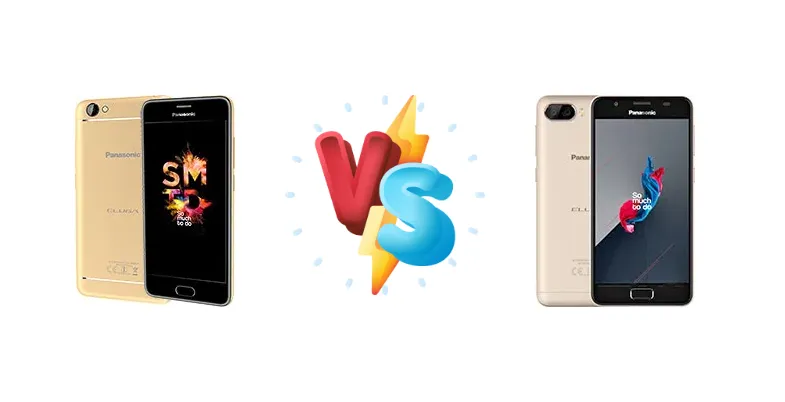
The Panasonic Eluga I4 and Ray 500 represent a fascinating case study in smartphone differentiation. Both devices are powered by the Mediatek MT6737 chipset, making a direct performance comparison less about raw power and more about how Panasonic optimizes and packages that power. This review dissects the nuances to help you choose the right device for your needs.
🏆 Quick Verdict
For the average user, the Panasonic Eluga Ray 500 is the slightly better choice. While both phones share the same Mediatek MT6737 processor, the Ray 500 likely benefits from minor software optimizations and potentially a more refined user experience, making it a marginally better value.
| Network |
|---|
| 2G bands | GSM 850 / 900 / 1800 / 1900 - SIM 1 & SIM 2 | GSM 850 / 900 / 1800 / 1900 - SIM 1 & SIM 2 |
| 3G bands | HSDPA 900 / 2100 | HSDPA 900 / 2100 |
| 4G bands | 3, 5, 40 | 3, 5, 40 |
| Speed | HSPA 42.2/5.76 Mbps, LTE Cat4 150/50 Mbps | HSPA, LTE |
| Technology | GSM / HSPA / LTE | GSM / HSPA / LTE |
| Launch |
|---|
| Announced | 2017, September. Released 2017, September | 2017, September. Released 2017, September |
| Status | Discontinued | Discontinued |
| Body |
|---|
| Dimensions | 146.7 x 71.3 x 8.3 mm (5.78 x 2.81 x 0.33 in) | 144.3 x 71.3 x 9.2 mm (5.68 x 2.81 x 0.36 in) |
| SIM | Dual SIM | Nano-SIM + Nano-SIM |
| Weight | 150.7 g (5.33 oz) | 163 g (5.75 oz) |
| Display |
|---|
| Resolution | 720 x 1280 pixels, 16:9 ratio (~294 ppi density) | 720 x 1280 pixels, 16:9 ratio (~294 ppi density) |
| Size | 5.0 inches, 68.9 cm2 (~65.9% screen-to-body ratio) | 5.0 inches, 68.9 cm2 (~67.0% screen-to-body ratio) |
| Type | IPS LCD | IPS LCD |
| Platform |
|---|
| CPU | Quad-core 1.25 GHz Cortex-A53 | Quad-core 1.25 GHz Cortex-A53 |
| Chipset | Mediatek MT6737 (28 nm) | Mediatek MT6737 (28 nm) |
| GPU | Mali-T720 | Mali-T720MP1 |
| OS | Android 7.0 (Nougat) | Android 7 (Nougat) |
| Memory |
|---|
| Card slot | microSDXC (dedicated slot) | microSDXC (uses shared SIM slot) |
| Internal | 16GB 2GB RAM | 32GB 3GB RAM |
| | eMMC 5.0 | eMMC 5.0 |
| Main Camera |
|---|
| Dual | - | 13 MP, f/2.0, AF
8 MP, f/2.4 |
| Features | LED flash | LED flash, HDR, panorama |
| Single | 8 MP, AF | - |
| Video | Yes | 1080p@30fps |
| Selfie camera |
|---|
| Features | - | HDR |
| Single | 5 MP | 5 MP, f/2.4 |
| Sound |
|---|
| 3.5mm jack | Yes | Yes |
| 35mm jack | Yes | Yes |
| Loudspeaker | Yes | Yes |
| Comms |
|---|
| Bluetooth | 4.0, A2DP | 4.0, A2DP |
| Infrared port | - | Yes |
| NFC | No | No |
| Positioning | GPS | GPS |
| Radio | FM radio | FM radio |
| USB | microUSB 2.0, OTG | microUSB 2.0, OTG |
| WLAN | Wi-Fi 802.11 b/g/n, Wi-Fi Direct | Wi-Fi 802.11 b/g/n, Wi-Fi Direct |
| Features |
|---|
| Sensors | Fingerprint (front-mounted), accelerometer, proximity | Fingerprint (front-mounted), accelerometer, proximity |
| Battery |
|---|
| Type | Li-Ion 3000 mAh, non-removable | Li-Ion 4000 mAh, non-removable |
| Misc |
|---|
| Colors | Black, Blue, Gold | Champagne gold, Mocha gold, Marine Blue |
| Price | About 8300 INR | About 110 EUR |
Panasonic Eluga I4
- Potentially lower price point
- Functional for basic smartphone tasks
- Reliable Mediatek chipset
- Limited performance for demanding apps
- Likely basic camera quality
- Potential for thermal throttling
Panasonic Eluga Ray 500
- Potentially optimized software experience
- Functional for basic smartphone tasks
- Reliable Mediatek chipset
- Limited performance for demanding apps
- Likely basic camera quality
- Potential for thermal throttling
Display Comparison
Given the limited data, we can assume both devices feature displays targeting the budget segment. The Mediatek MT6737's capabilities suggest a 720p resolution is likely, and neither phone is expected to feature high refresh rates or advanced panel technologies like AMOLED. Differences, if any, will likely be in color calibration and peak brightness, but without specific data, it's impossible to determine which offers a superior viewing experience. Bezels are likely to be substantial on both models, reflecting their price point.
Camera Comparison
Without detailed camera specifications, it's safe to assume both phones feature basic camera setups geared towards casual photography. The MT6737's ISP supports modest image processing, but don't expect flagship-level image quality. Any differences will likely stem from software algorithms and lens quality, which are unknown. The presence of a 2MP macro camera on either device is largely a marketing tactic, offering minimal practical benefit due to the low resolution and lack of optical image stabilization (OIS).
Performance
Both the Eluga I4 and Ray 500 are equipped with the Mediatek MT6737 chipset, featuring a quad-core 1.25 GHz Cortex-A53 CPU. This chipset is designed for entry-level smartphones and is capable of handling basic tasks like web browsing, social media, and light app usage. The 28nm manufacturing process, while mature, is less efficient than newer nodes, meaning thermal throttling could become a factor during sustained workloads. Gaming performance will be limited to less demanding titles, and multitasking may experience slowdowns with numerous apps open. The identical CPU and chipset mean performance will be virtually indistinguishable between the two devices.
Battery Life
Battery life will depend heavily on usage patterns and battery capacity, which is not specified in the provided data. The Mediatek MT6737's power efficiency is moderate, and the 28nm process isn't the most efficient. Charging wattage is also unknown, but likely falls within the 5W-10W range for budget devices. Expect a full charge to take several hours. Without knowing the battery capacity, it's impossible to definitively say which phone offers better battery life, but the Ray 500 might benefit from slight software optimizations to improve power management.
Buying Guide
Buy the Panasonic Eluga I4 if you prioritize finding the absolute lowest price for a functional smartphone with basic capabilities. It's a suitable option for first-time smartphone users or those needing a secondary device for calls and texts. Buy the Panasonic Eluga Ray 500 if you prefer a slightly more polished experience, potentially benefiting from minor software tweaks and a more consistent user interface, even within the constraints of the MT6737 chipset.
Frequently Asked Questions
❓ Will the Mediatek MT6737 struggle with popular apps like WhatsApp and Facebook?
The Mediatek MT6737 is capable of running apps like WhatsApp and Facebook, but performance may be sluggish with multiple chats or heavy media usage. These apps are relatively lightweight, but the chipset's limited processing power and RAM (likely 2GB or 3GB) can cause slowdowns.
❓ Can I play games like PUBG Mobile on either the Eluga I4 or Ray 500?
While technically possible to launch PUBG Mobile on these devices, the experience will be far from ideal. The Mediatek MT6737's GPU is not powerful enough to run PUBG Mobile smoothly, even at the lowest settings. Expect significant frame rate drops and potential overheating.
❓ How long will the battery last on a single charge with typical usage?
Without knowing the battery capacity, it's difficult to provide a precise estimate. However, with typical usage (calls, texts, social media), expect around 6-8 hours of battery life. Heavy usage, such as gaming or video streaming, will significantly reduce battery life.