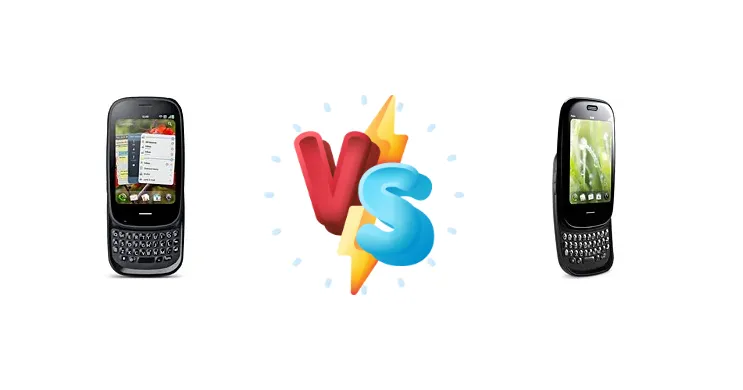
The Palm Pre and Pre Plus represent a fascinating period in smartphone history, offering a unique webOS experience. While both share a similar design language and wireless charging capabilities, a key difference lies under the hood: the Pre 2 boasts a faster 1.0 GHz processor compared to the Pre Plus’s 600 MHz Cortex-A8. This comparison dissects these differences to determine which Palm device best suits your needs.
🏆 Quick Verdict
For most users, the Palm Pre 2 is the superior choice. The 1.0 GHz processor provides a noticeably snappier experience, improving app launch times and multitasking. While both offer wireless charging, the performance uplift of the Pre 2 justifies the potential price premium.
| Network |
|---|
| 2G bands | GSM 850 / 900 / 1800 / 1900 | GSM 850 / 900 / 1800 / 1900 |
| 3G bands | HSDPA 850 / 1900 | HSDPA 2100 |
| Speed | HSPA 7.2/2 Mbps | HSPA 3.6/0.384 Mbps |
| Technology | GSM / HSPA | GSM / HSPA |
| | HSDPA 900 / 2100 | HSDPA 850 / 1900 - for AT&T |
| Launch |
|---|
| Announced | 2010, October. Released 2010, November | 2010, March. Released 2010, May |
| Status | Discontinued | Discontinued |
| Body |
|---|
| Dimensions | 100.7 x 59.6 x 16.9 mm (3.96 x 2.35 x 0.67 in) | 100.5 x 59.5 x 16.9 mm (3.96 x 2.34 x 0.67 in) |
| Keyboard | QWERTY | QWERTY |
| SIM | Mini-SIM | Mini-SIM |
| Weight | 145 g (5.11 oz) | 138 g (4.87 oz) |
| Display |
|---|
| Protection | Corning Gorilla Glass | - |
| Resolution | 320 x 480 pixels, 3:2 ratio (~186 ppi density) | 320 x 480 pixels, 3:2 ratio (~186 ppi density) |
| Size | 3.1 inches, 28.6 cm2 (~47.7% screen-to-body ratio) | 3.1 inches, 28.6 cm2 (~47.9% screen-to-body ratio) |
| Type | TFT | TFT |
| Platform |
|---|
| CPU | 1.0 GHz | 600 MHz Cortex-A8 |
| GPU | - | PowerVR SGX |
| OS | HP webOS 2.0 | Palm webOS 1.3.5 |
| Memory |
|---|
| Card slot | No | No |
| Internal | 16GB 512MB RAM | 16GB 512MB RAM |
| Main Camera |
|---|
| Features | LED flash | LED flash |
| Single | 5 MP | 3.15 MP |
| Video | Yes | Yes |
| Sound |
|---|
| 3.5mm jack | Yes | Yes |
| 35mm jack | Yes | Yes |
| Loudspeaker | Yes | Yes |
| Comms |
|---|
| Bluetooth | 2.1, A2DP, EDR | 2.1, A2DP |
| Positioning | GPS, A-GPS | GPS, A-GPS |
| Radio | - | No |
| USB | microUSB 2.0 | microUSB 2.0 |
| WLAN | Wi-Fi 802.11 b/g | Wi-Fi 802.11 b/g |
| Features |
|---|
| Browser | HTML, Adobe Flash | WAP 2.0 / HTML |
| Sensors | Accelerometer, proximity | Accelerometer |
| Battery |
|---|
| Charging | Wireless | Wireless |
| Stand-by | Up to 350 h | Up to 350 h (2G) / - (3G) |
| Talk time | Up to 5 h 30 min | Up to 4 h (2G) / Up to 4 h (3G) |
| Type | Removable Li-Ion battery | Removable Li-Ion 1150 mAh battery |
| Misc |
|---|
| Colors | Black | Black |
| Price | About 260 EUR | About 170 EUR |
Palm Pre 2
- Faster 1.0 GHz processor for improved performance
- Snappier app launch times and multitasking
- More responsive webOS experience
- Potentially slightly reduced battery life under heavy load
- May command a higher price on the used market
Palm Pre Plus
- More affordable price point
- Efficient Cortex-A8 processor for basic tasks
- Wireless charging convenience
- Slower processor impacts performance
- Noticeably slower app launch times and multitasking
Display Comparison
Both the Palm Pre 2 and Pre Plus feature similar 3.7-inch displays, but detailed specifications regarding brightness, contrast ratios, and color accuracy are unavailable. Given the era, both likely utilize TFT LCD technology. The focus here isn't display quality, but rather the impact of processing power on rendering UI elements and web content on these screens. A faster processor will translate to smoother scrolling and faster page loads, enhancing the perceived visual experience.
Camera Comparison
Detailed camera specifications for both devices are limited. However, given the market segment, it’s safe to assume both feature relatively basic camera systems. The focus isn’t on photographic prowess, but rather the processor’s ability to handle image processing tasks. The Pre 2’s faster processor will likely result in quicker image capture and faster processing of photos, though the overall image quality will be largely determined by the sensor and lens.
Performance
The core difference lies in the CPU. The Palm Pre 2’s 1.0 GHz processor represents a significant 66.7% increase in clock speed over the Pre Plus’s 600 MHz Cortex-A8. While both are single-core processors, the higher clock speed directly impacts application responsiveness and multitasking capabilities. The Cortex-A8 architecture in the Pre Plus, while efficient, is older and less capable of handling complex tasks compared to the Pre 2’s processor. This translates to faster app launch times and a more fluid webOS experience on the Pre 2.
Battery Life
Battery capacity details are unavailable for either device. However, the Pre 2’s faster processor *could* lead to slightly reduced battery life under heavy use. However, the efficiency gains from completing tasks faster may offset this. Both devices share the convenience of wireless charging, a premium feature for the time, allowing for cable-free power replenishment. The impact of the processor on charging speed isn't significant, as wireless charging is limited by the charging pad's output.
Buying Guide
Buy the Palm Pre 2 if you prioritize responsiveness and a smoother user experience, especially if you plan on running multiple applications simultaneously or engaging in more demanding tasks within webOS. Buy the Palm Pre Plus if you are seeking a more budget-friendly entry point into the Palm ecosystem and are willing to trade some performance for cost savings, primarily using the device for basic communication and light web browsing.
Frequently Asked Questions
❓ Will the faster processor in the Palm Pre 2 significantly improve web browsing speed?
Yes, the 1.0 GHz processor in the Pre 2 will noticeably improve web browsing speed. The faster processing power allows for quicker rendering of web pages and smoother scrolling, resulting in a more responsive browsing experience, especially on data-heavy websites.
❓ Is the performance difference between the Pre 2 and Pre Plus noticeable for everyday tasks like email and messaging?
While both devices can handle basic tasks like email and messaging, the Pre 2 offers a smoother and more responsive experience. App switching and launching will be faster on the Pre 2, making everyday use feel less sluggish.
❓ Does the wireless charging feature work with modern Qi chargers?
The Palm Pre and Pre Plus utilize the Palm Touchstone wireless charging standard, which is *not* compatible with the widely adopted Qi standard. You will need a Palm Touchstone charging dock or pad to wirelessly charge these devices.