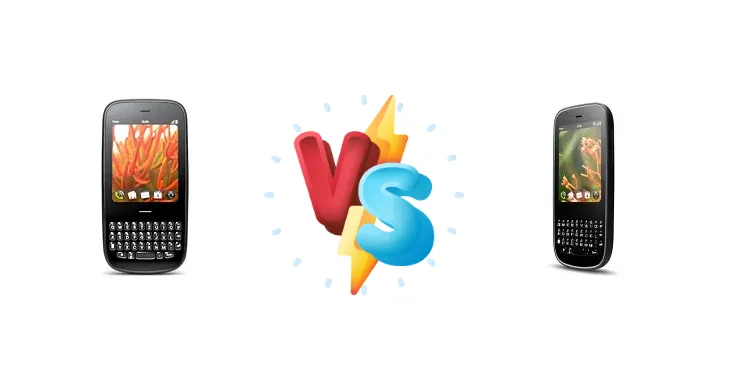
The Palm Pixi and Pixi Plus represent a fascinating period in mobile history – a time when Palm attempted to redefine the smartphone experience with WebOS, focusing on a compact form factor and a unique approach to multitasking. While both devices share a remarkably similar foundation, the Pixi Plus introduces subtle enhancements that warrant a detailed comparison, particularly for those seeking a retro-computing experience or a unique secondary device.
🏆 Quick Verdict
For the average user seeking a functional, compact WebOS device, the Palm Pixi Plus is the better choice. While both share the same Qualcomm MSM7627 chipset and 600 MHz ARM 11 CPU, the Pixi Plus’s inclusion of a slide-out keyboard offers a significant productivity advantage, justifying its slightly higher price point.
| Network |
|---|
| 2G bands | GSM 850 / 900 / 1800 / 1900 | GSM 850 / 900 / 1800 / 1900 |
| 3G bands | HSDPA 2100 | HSDPA 850 / 1900 / 2100 |
| Speed | HSPA 7.2/5.76 Mbps | HSPA 7.2/5.76 Mbps |
| Technology | GSM / HSPA | GSM / HSPA |
| | HSDPA 850 / 1900 - for AT&T | - |
| Launch |
|---|
| Announced | 2010, March. Released 2010, June | 2009, September. Released 2009, Q4 |
| Status | Discontinued | Discontinued |
| Body |
|---|
| Dimensions | 111 x 55 x 10.9 mm (4.37 x 2.17 x 0.43 in) | 111 x 55 x 10.9 mm (4.37 x 2.17 x 0.43 in) |
| Keyboard | QWERTY | QWERTY |
| SIM | Mini-SIM | Mini-SIM |
| Weight | 92.5 g (3.25 oz) | 99.5 g (3.53 oz) |
| Display |
|---|
| Resolution | 320 x 400 pixels (~195 ppi density) | 320 x 400 pixels (~195 ppi density) |
| Size | 2.63 inches, 21.8 cm2 (~35.7% screen-to-body ratio) | 2.63 inches, 21.8 cm2 (~35.7% screen-to-body ratio) |
| Type | TFT, 256K colors | TFT, 256K colors |
| Platform |
|---|
| CPU | 600 MHz ARM 11 | 600 MHz ARM 11 |
| Chipset | Qualcomm MSM7627 | Qualcomm MSM7627 |
| GPU | Adreno 200 | Adreno 200 |
| OS | Palm webOS | Palm webOS |
| Memory |
|---|
| Card slot | No | No |
| Internal | 8GB | 8GB |
| Main Camera |
|---|
| Features | LED flash | LED flash |
| Single | 2 MP | 2 MP |
| Video | Yes | No |
| Sound |
|---|
| 3.5mm jack | Yes | Yes |
| 35mm jack | Yes | Yes |
| Loudspeaker | Yes | Yes |
| Comms |
|---|
| Bluetooth | 2.1, A2DP | 2.1, A2DP |
| Positioning | GPS, A-GPS | GPS, A-GPS |
| Radio | No | No |
| USB | microUSB 2.0 | microUSB 2.0 |
| WLAN | Wi-Fi 802.11 b/g | No |
| Features |
|---|
| Browser | WAP 2.0 / HTML | WAP 2.0 / HTML |
| Sensors | Accelerometer, proximity | Accelerometer, proximity |
| | MP3/WAV/eAAC+ player
MP4/H.264 player
Organizer
Document viewer
Voice memo/dial | MP3/WAV/eAAC+ player
MP4/H.264 player
Organizer
Document viewer
Voice memo/dial |
| Battery |
|---|
| Stand-by | Up to 350 h | Up to 350 h |
| Talk time | Up to 5 h 30 min (2G) / Up to 4 h (3G) | Up to 5 h |
| Type | Removable Li-Ion 1150 mAh battery | Removable Li-Ion 1150 mAh battery |
| Misc |
|---|
| Colors | Black | Black |
| Price | About 210 EUR | About 120 EUR |
| SAR | - | 1.56 W/kg (head) 0.63 W/kg (body) |
Palm Pixi Plus
- Slide-out keyboard enhances text input speed and accuracy.
- Improved productivity for email and note-taking.
- More versatile for extended typing sessions.
- Slightly bulkier than the Palm Pixi.
- Keyboard mechanism may be prone to wear and tear over time.
Palm Pixi
- More compact and pocketable design.
- Sleeker aesthetic without the keyboard.
- Simpler and more minimalist user experience.
- Touchscreen-only input can be slower and less accurate.
- Less suitable for extensive typing tasks.
Display Comparison
Both the Palm Pixi and Pixi Plus feature a 3.2-inch capacitive touchscreen with a resolution of 320x480 pixels. Given the shared specifications, display quality is virtually identical – expect similar color reproduction and viewing angles. Neither device boasts high brightness levels, making outdoor visibility a challenge. The absence of features like LTPO or high refresh rates is unsurprising given the devices’ age and target market.
Camera Comparison
Both devices are equipped with a 2-megapixel camera. Image quality is understandably poor by today’s standards, suitable only for basic snapshots in well-lit conditions. The lack of optical image stabilization (OIS) and a small sensor size contribute to blurry images and limited dynamic range. The camera is best considered a novelty feature rather than a primary function.
Performance
The core of both devices is the Qualcomm MSM7627 chipset, paired with a 600 MHz ARM 11 CPU. This hardware configuration was adequate for WebOS’s relatively lightweight interface at the time, but modern users should expect limited performance. Multitasking, while a WebOS strength, will be constrained by the limited RAM (spec not provided, but likely around 128-256MB). The shared chipset means performance differences will be negligible in most scenarios; however, the Pixi Plus’s keyboard may allow for faster input, indirectly improving perceived performance for text-heavy tasks.
Battery Life
Battery capacity is not specified in the provided data. However, given the low-power chipset and small screen size, both devices likely offer moderate battery life – sufficient for a day of light use. Charging times are also unknown, but likely measured in hours given the older charging technology. The shared hardware suggests similar battery performance between the two models.
Buying Guide
Buy the Palm Pixi Plus if you prioritize text input and efficient multitasking, valuing the physical keyboard for composing emails, notes, or engaging in longer-form communication. Buy the Palm Pixi if you prefer a cleaner, more minimalist aesthetic and are comfortable relying solely on the touchscreen for input, potentially using it as a media consumption or notification hub.
Frequently Asked Questions
❓ Can the Palm Pixi or Pixi Plus run modern apps like WhatsApp or Facebook?
No. The Palm Pixi and Pixi Plus run WebOS, which is no longer actively developed and lacks compatibility with modern Android or iOS applications. While some limited WebOS apps are available, they are significantly different from their contemporary counterparts.
❓ Is it possible to install a custom ROM like LineageOS on either device?
Custom ROM development for the Palm Pixi and Pixi Plus is extremely limited due to the age of the devices and the proprietary nature of the WebOS platform. While some attempts have been made, a stable and fully functional custom ROM is unlikely to be found.
❓ How does the keyboard on the Palm Pixi Plus compare to a modern smartphone keyboard?
The keyboard on the Palm Pixi Plus is significantly smaller and has a different key layout than modern smartphone keyboards. While functional, it requires a period of adjustment and may not be as comfortable for extended typing sessions. It's best suited for quick notes and emails rather than long-form content creation.