
Oukitel WP56 vs. Ulefone Armor 17 Pro: A Deep Dive into Rugged Smartphone Performance
| Phones Images | |||||
|---|---|---|---|---|---|
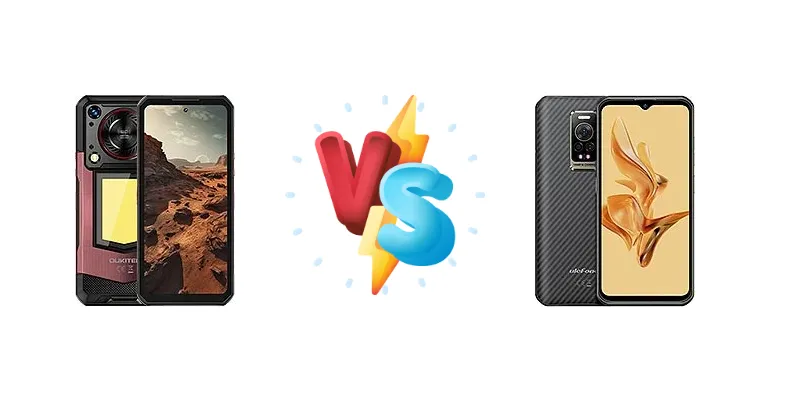
|
🏆 Quick Verdict
For the average user prioritizing sustained performance and longevity, the Oukitel WP56 emerges as the winner. Its Dimensity 7050 chipset, built on a 6nm process, offers a noticeable performance advantage over the Ulefone Armor 17 Pro’s Helio G99, and its impressive 153:33h battery endurance provides peace of mind for extended outdoor use.
| PHONES | ||
|---|---|---|
| Phone Names | Oukitel WP56 | Ulefone Armor 17 Pro |
| Network | ||
|---|---|---|
| 2G bands | GSM 850 / 900 / 1800 / 1900 | GSM 850 / 900 / 1800 / 1900 |
| 3G bands | HSDPA 850 / 900 / 1700(AWS) / 1900 / 2100 | HSDPA 800 / 850 / 900 / 1700(AWS) / 1900 / 2100 |
| 4G bands | 1, 2, 3, 4, 5, 7, 8, 12, 17, 18, 19, 20, 25, 26, 28, 34, 38, 39, 40, 41, 66 | 1, 2, 3, 4, 5, 7, 8, 12, 13, 17, 18, 19, 20, 25, 26, 28, 34, 38, 39, 40, 41, 66 |
| 5G bands | 1, 3, 7, 8, 28, 38, 41, 77, 78 SA/NSA | - |
| Speed | HSPA, LTE, 5G | HSPA, LTE |
| Technology | GSM / HSPA / LTE / 5G | GSM / HSPA / LTE |
| Launch | ||
|---|---|---|
| Announced | 2025, August | 2022, October 31 |
| Status | Available. Released 2025, August | Available. Released 2022, October 31 |
| Body | ||
|---|---|---|
| Dimensions | 172.2 x 81 x 15.3 mm (6.78 x 3.19 x 0.60 in) | 172.7 x 80.4 x 12.5 mm (6.80 x 3.17 x 0.49 in) |
| SIM | Nano-SIM + Nano-SIM | Nano-SIM + Nano-SIM |
| Weight | 524 g (1.16 lb) | 290 g (10.23 oz) |
| - | IP68/IP69K dust/water resistant (up to 1.5m for 30 min) Drop-to-concrete resistance from up to 1.5m MIL-STD-810G compliant | |
| Display | ||
|---|---|---|
| Protection | Corning Gorilla Glass 5, Mohs level 5 | Corning Gorilla Glass 5 |
| Resolution | 1080 x 2460 pixels (~395 ppi density) | 1080 x 2408 pixels, 20:9 ratio (~401 ppi density) |
| Size | 6.8 inches, 109.8 cm2 (~78.7% screen-to-body ratio) | 6.58 inches, 104.3 cm2 (~75.1% screen-to-body ratio) |
| Type | IPS LCD, 120Hz, 550 nits | IPS LCD, 120Hz |
| Platform | ||
|---|---|---|
| CPU | Octa-core (2x2.6 GHz Cortex-A78 & 6x2.0 GHz Cortex-A55) | Octa-core (2x2.2 GHz Cortex-A76 & 6x2.0 GHz Cortex-A55) |
| Chipset | Mediatek Dimensity 7050 (6 nm) | Mediatek Helio G99 (6 nm) |
| GPU | Mali-G68 MC4 | Mali-G57 MC2 |
| OS | Android 15 | Android 12 |
| Memory | ||
|---|---|---|
| Card slot | microSDXC (uses shared SIM slot) | microSDXC (dedicated slot) |
| Internal | 512GB 12GB RAM | 256GB 8GB RAM |
| Main Camera | ||
|---|---|---|
| Dual | 108 MP, f/1.9, (wide), 1/1.8", PDAF 2 MP (macro) | - |
| Features | LED flash, HDR, panorama | Triple-LED flash, HDR, panorama |
| Single | - | 16 MP, f/2.2, (wide), 1.0µm |
| Triple | - | 108 MP, f/1.9, (wide), 1/1.52”, 0.7µm, PDAF 8 MP, f/2.2, 119˚, (ultrawide), 1/4.0", 1.12µm 8 MP, (night vision), 2 infrared night vision lights |
| Video | 4K@30fps | 1440p@30fps, 1080p@30fps |
| Selfie camera | ||
|---|---|---|
| Single | 32 MP, f/2.2, (wide), 1/2.74" | 16 MP, f/2.2, (wide), 1.0µm |
| Video | 1080p@30fps | 1080p@30fps |
| Sound | ||
|---|---|---|
| 3.5mm jack | - | Yes |
| 35mm jack | No | Yes |
| Loudspeaker | Yes (128 dB, 3W peak) | Yes |
| Comms | ||
|---|---|---|
| Bluetooth | 5.2, A2DP, LE | 5.2, A2DP, LE |
| NFC | Yes | Yes |
| Positioning | GPS (L1+L5), GLONASS, GALILEO, BDS | GPS, GLONASS, GALILEO, BDS |
| Radio | FM radio | Wireless FM radio, RDS, recording |
| USB | USB Type-C 2.0, OTG | USB Type-C 2.0, OTG |
| WLAN | Wi-Fi 802.11 a/b/g/n/ac/6, dual-band | Wi-Fi 802.11 a/b/g/n/ac, dual-band |
| Features | ||
|---|---|---|
| Sensors | Fingerprint (side-mounted), accelerometer, gyro, proximity, compass | Fingerprint (side-mounted), accelerometer, gyro, proximity, compass |
| - | MagSafe compatible accessories | |
| Battery | ||
|---|---|---|
| Charging | 45W wired 18W reverse wired | 66W wired, 53% in 15 min 15W wireless Wireless reversed |
| Type | Li-Po 16000 mAh | Li-Po 5380 mAh |
| Misc | ||
|---|---|---|
| Colors | Black, Red | Black |
| Price | - | About 260 EUR |
| EU LABEL | ||
|---|---|---|
| Battery | 153:33h endurance, 1000 cycles | - |
| Energy | Class B | - |
| Free fall | Class A (270 falls) | - |
| Repairability | Class C | - |
Oukitel WP56
- Superior CPU performance with the Dimensity 7050
- Exceptional battery endurance (153:33h)
- 1000 charge cycles promise long-term battery health
- Slower charging speed (45W) compared to the competition
- Lacks wireless charging capabilities
Ulefone Armor 17 Pro
- Ultra-fast 66W wired charging (53% in 15 minutes)
- Convenient wireless and reverse wireless charging
- Potentially lighter weight due to smaller battery
- Less powerful Helio G99 chipset
- Shorter battery life compared to the Oukitel WP56
Display Comparison
Neither device’s display specifications are provided, so a direct comparison is limited. However, given the price points of these rugged phones, we can expect both to utilize IPS LCD panels. The focus here will be on durability and visibility in direct sunlight, a key requirement for rugged devices. Bezels are likely to be substantial on both to contribute to drop protection. Color accuracy is likely to be secondary to robustness.
Camera Comparison
Without detailed camera specifications, a comprehensive comparison is difficult. However, the market segment suggests both phones will prioritize practicality over photographic excellence. We can assume both will feature a main sensor, ultrawide, and potentially a macro lens. The absence of information regarding sensor size or OIS suggests neither phone will excel in low-light photography. Image processing will likely focus on enhancing contrast and saturation for outdoor use. The inclusion of a 2MP macro lens on either device is likely a marketing tactic, offering limited real-world benefit.
Performance
The core difference lies in the chipsets. The Oukitel WP56’s Mediatek Dimensity 7050 (6nm) boasts a more modern architecture with its Cortex-A78 cores clocked at 2.6 GHz, compared to the Ulefone Armor 17 Pro’s Helio G99 (6nm) and its 2.2 GHz Cortex-A76 cores. This translates to a tangible performance advantage for the WP56 in CPU-intensive tasks and gaming. While both utilize a 6nm process, the A78 cores are more efficient and powerful than the A76 cores. The WP56 is likely to exhibit less throttling under sustained load. Both phones feature 6x Cortex-A55 efficiency cores, so multi-tasking performance will be similar, but the WP56 will handle demanding single-threaded applications more effectively.
Battery Life
The Oukitel WP56 claims an impressive 153:33h endurance, suggesting a large battery capacity optimized for longevity. While the exact mAh isn’t specified, this figure indicates superior battery life compared to the Ulefone Armor 17 Pro. The Armor 17 Pro compensates with significantly faster charging: 66W wired, capable of reaching 53% charge in just 15 minutes. The WP56’s 45W charging is respectable, but slower. The Armor 17 Pro also adds 15W wireless charging and reverse wireless charging, offering added convenience. The WP56 offers 18W reverse wired charging. The trade-off is clear: the WP56 prioritizes total runtime, while the Armor 17 Pro prioritizes quick top-ups.
Buying Guide
Buy the Oukitel WP56 if you need a rugged phone capable of handling demanding tasks like gaming or video editing, and value long-term battery life. Its Dimensity 7050 chipset provides a significant performance boost. Buy the Ulefone Armor 17 Pro if you prioritize incredibly fast charging – 66W versus 45W – and appreciate the convenience of wireless charging, even if it means sacrificing some raw processing power.