
Oukitel WP55 Pro vs. Ulefone Power Armor 13: A Deep Dive into Rugged Performance
| Phones Images | |||||
|---|---|---|---|---|---|
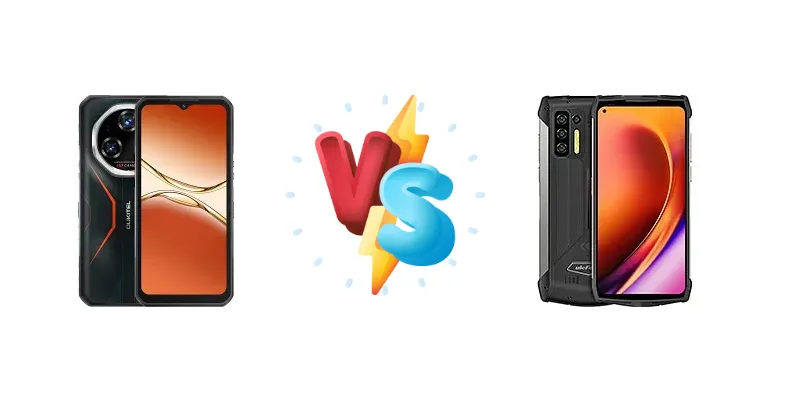
|
🏆 Quick Verdict
For the average user prioritizing performance and future-proofing, the Oukitel WP55 Pro is the clear winner. Its Dimensity 7025 chipset offers a significant performance leap over the Ulefone Power Armor 13’s Helio G95, translating to smoother multitasking and gaming. While the Ulefone offers wireless charging, the WP55 Pro’s endurance and processing power are more compelling.
| PHONES | ||
|---|---|---|
| Phone Names | Oukitel WP55 Pro | Ulefone Power Armor 13 |
| Network | ||
|---|---|---|
| 2G bands | GSM 850 / 900 / 1800 / 1900 | GSM 850 / 900 / 1800 / 1900 |
| 3G bands | HSDPA 800 / 850 / 900 / 1700(AWS) / 1900 / 2100 | HSDPA 850 / 900 / 1700(AWS) / 1900 / 2100 |
| 4G bands | 1, 2, 3, 4, 5, 7, 8, 12, 13, 17, 18, 19, 20, 25, 26, 28, 34, 38, 39, 40, 41, 66, 71 | 1, 2, 3, 4, 5, 7, 8, 12, 13, 17, 18, 19, 20, 25, 26, 28, 38, 40, 66 |
| 5G bands | 1, 2, 3, 5, 7, 8, 12, 20, 28, 38, 40, 41, 66, 71, 77, 78 SA/NSA | - |
| Speed | HSPA, LTE, 5G | HSPA 42.2/11.5 Mbps, LTE Cat12 600/150 Mbps |
| Technology | GSM / HSPA / LTE / 5G | GSM / HSPA / LTE |
| Launch | ||
|---|---|---|
| Announced | 2024, December | 2021, July 22 |
| Status | Available. Released 2025, March 15 | Available. Released 2021, July 26 |
| Body | ||
|---|---|---|
| Dimensions | 172.2 x 81 x 15.3 mm (6.78 x 3.19 x 0.60 in) | 183.7 x 85.4 x 20.8 mm (7.23 x 3.36 x 0.82 in) |
| SIM | Nano-SIM + Nano-SIM | Nano-SIM + Nano-SIM |
| Weight | 360 g (12.70 oz) | 492 g (1.08 lb) |
| - | IP68 dust/water resistant (up to 1.5m for 30 min) Drop-to-concrete resistance from up to 1.2m MIL-STD-810G compliant | |
| Display | ||
|---|---|---|
| Protection | Corning Gorilla Glass 5, Mohs level 5 | Corning Gorilla Glass 3 |
| Resolution | 1080 x 2408 pixels, 20:9 ratio (~400 ppi density) | 1080 x 2400 pixels, 20:9 ratio (~386 ppi density) |
| Size | 6.6 inches, 104.9 cm2 (~75.2% screen-to-body ratio) | 6.81 inches, 112.0 cm2 (~71.4% screen-to-body ratio) |
| Type | IPS LCD, 120Hz, 450 nits | IPS LCD |
| Platform | ||
|---|---|---|
| CPU | Octa-core (2x2.5 GHz Cortex-A78 & 6x2.0 GHz Cortex-A55) | Octa-core (2x2.05 GHz Cortex-A76 & 6x2.0 GHz Cortex-A55) |
| Chipset | Mediatek Dimensity 7025 (6 nm) | Mediatek MT6785V/CD Helio G95 (12 nm) |
| GPU | IMG BXM-8-256 | Mali-G76 MC4 |
| OS | Android 15 | Android 11 |
| Memory | ||
|---|---|---|
| Card slot | microSDXC (uses shared SIM slot) | microSDXC (uses shared SIM slot) |
| Internal | 512GB 16GB RAM | 256GB 8GB RAM |
| Main Camera | ||
|---|---|---|
| Features | LED flash, HDR, panorama | Quad-LED flash, HDR, panorama |
| Penta | - | 48 MP, f/1.8, 26mm (wide), 1/2.0", 0.8µm, PDAF 8 MP, f/2.2, (ultrawide) 2 MP (macro) Auxiliary lens |
| Triple | 108 MP, f/1.9, (wide), 1/1.8", PDAF 8 MP, f/2.2, (night vision), 1/1.78", AF 2 MP (macro) | - |
| Video | 4K@30fps | 4K@30fps, 1080p@30fps |
| Selfie camera | ||
|---|---|---|
| Features | - | HDR, panorama |
| Single | 32 MP, f/2.2, (wide), 1/2.74" | 16 MP, f/2.2 |
| Video | 1080p@30fps | 1080p@30fps |
| Sound | ||
|---|---|---|
| 3.5mm jack | - | Yes |
| 35mm jack | No | Yes |
| Loudspeaker | Yes | Yes |
| Comms | ||
|---|---|---|
| Bluetooth | 5.2, A2DP, LE | 5.0, A2DP, LE |
| NFC | Yes | Yes |
| Positioning | GPS, GLONASS, GALILEO, BDS | GPS, GLONASS, GALILEO, BDS |
| Radio | FM radio | FM radio, RDS, recording |
| USB | USB Type-C 2.0, OTG | - |
| WLAN | Wi-Fi 802.11 a/b/g/n/ac, dual-band | Wi-Fi 802.11 a/b/g/n/ac, dual-band |
| Features | ||
|---|---|---|
| Sensors | Fingerprint (side-mounted), accelerometer, gyro, proximity, compass | Fingerprint (side-mounted), accelerometer, gyro, proximity, compass, baroceptor, coulombmeter |
| - | Infrared distance measure (error range: 1~20m, ±10mm; 20~40m, ±25mm) | |
| Battery | ||
|---|---|---|
| Charging | 33W wired Reverse wired | 33W wired 15W wireless 5W reverse wireless |
| Type | Li-Po 11000 mAh | Li-Po 13200 mAh |
| Misc | ||
|---|---|---|
| Colors | Black, Orange | Black |
| Price | - | About 300 EUR |
| Tests | ||
|---|---|---|
| Battery life | - | Endurance rating 296h |
| Camera | - | Photo / Video |
| Display | - | Contrast ratio: 1306:1 (nominal) |
| Loudspeaker | - | -28.3 LUFS (Average) |
| Performance | - | AnTuTu: 294194 (v8), 351678 (v9) GeekBench: 1610 (v5.1) GFXBench: 18fps (ES 3.1 onscreen) |
| EU LABEL | ||
|---|---|---|
| Battery | 105:49h endurance, 1000 cycles | - |
| Energy | Class B | - |
| Free fall | Class A (270 falls) | - |
| Repairability | Class C | - |
Oukitel WP55 Pro
- Significantly faster processor (Dimensity 7025)
- Exceptional battery endurance (105:49h)
- Longer battery lifespan (1000 charge cycles)
- Lacks wireless charging
- Camera specifications are unknown
Ulefone Power Armor 13
- Wireless charging support (15W)
- Established rugged design
- Reverse wireless charging
- Older, less powerful processor (Helio G95)
- Significantly lower battery endurance (296h)
Display Comparison
Both devices share a 1306:1 contrast ratio, suggesting similar visual pop. However, the Ulefone Power Armor 13 provides a measured peak brightness of 401 nits. While adequate for outdoor visibility, this is a key area where Oukitel could improve with future iterations. The lack of refresh rate information for both devices suggests standard 60Hz panels, which is typical for this segment but lags behind some competitors offering smoother 90Hz or 120Hz displays.
Camera Comparison
Both phones list 'Photo / Video' capabilities, but lack specific details. Without sensor size or aperture information, a direct comparison is difficult. The Ulefone Power Armor 13’s inclusion of wireless charging suggests a slightly higher overall budget, which *could* translate to better image processing, but this is speculative. The prevalence of 2MP macro lenses on both devices suggests they are included for marketing purposes rather than genuine photographic utility. Focusing on the main sensor specifications would be crucial for a meaningful camera comparison.
Performance
The Oukitel WP55 Pro’s Mediatek Dimensity 7025 (6nm) represents a substantial upgrade over the Ulefone Power Armor 13’s Helio G95 (12nm). The Dimensity 7025’s Cortex-A78 cores, clocked at 2.5 GHz, deliver significantly higher single-core performance compared to the G95’s 2.05 GHz Cortex-A76 cores. This translates to faster app loading times and a more responsive user experience. The 6nm process node also contributes to better thermal efficiency, reducing the likelihood of throttling during sustained workloads. The G95 is a capable chip, but it’s showing its age against newer offerings.
Battery Life
The Oukitel WP55 Pro boasts an impressive 105:49h endurance rating, dwarfing the Ulefone Power Armor 13’s 296h (approximately 12:14h). This difference is substantial and indicates significantly longer real-world usage between charges. While both support 33W wired charging, the Ulefone adds 15W wireless and 5W reverse wireless charging, offering added convenience. However, the WP55 Pro’s superior battery life and 1000 charge cycle rating suggest greater long-term reliability and reduced battery degradation.
Buying Guide
Buy the Oukitel WP55 Pro if you need a rugged phone that can handle demanding tasks like video editing, gaming, or running multiple apps simultaneously. Its modern chipset and impressive battery endurance make it ideal for professionals and power users. Buy the Ulefone Power Armor 13 if you prioritize wireless charging convenience and a slightly more mature, established rugged phone design, and your usage is primarily focused on basic communication and light tasks.