
Oukitel WP53 vs Xiaomi Redmi Note 12 Pro 4G: A Deep Dive into Battery, Performance, and Value
| Phones Images | |||||
|---|---|---|---|---|---|
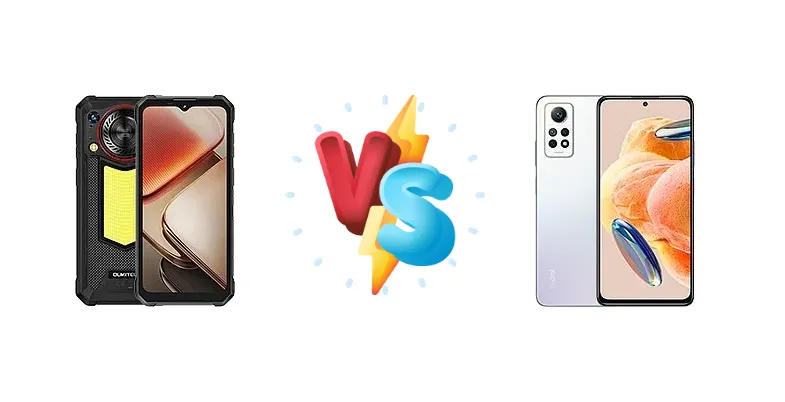
|
🏆 Quick Verdict
For users prioritizing longevity and resilience, the Oukitel WP53 is the clear winner, offering unparalleled battery endurance. However, the Xiaomi Redmi Note 12 Pro 4G excels in performance and convenience with its 67W charging, making it ideal for those who value speed and responsiveness over extended off-grid time.
| PHONES | ||
|---|---|---|
| Phone Names | Oukitel WP53 | Xiaomi Redmi Note 12 Pro 4G |
| Network | ||
|---|---|---|
| 2G bands | GSM 850 / 900 / 1800 / 1900 | GSM 850 / 900 / 1800 / 1900 |
| 3G bands | HSDPA 850 / 900 / 1700(AWS) / 1900 / 2100 | HSDPA 850 / 900 / 1700(AWS) / 1900 / 2100 |
| 4G bands | 1, 2, 3, 4, 5, 7, 8, 12, 17, 18, 19, 20, 25, 26, 28, 38, 40, 41, 66 | 1, 2, 3, 4, 5, 7, 8, 20, 28, 38, 40, 41, 66 |
| Speed | HSPA, LTE | HSPA, LTE |
| Technology | GSM / HSPA / LTE | GSM / HSPA / LTE |
| Launch | ||
|---|---|---|
| Announced | 2025, June | 2023, March 03 |
| Status | Available. Released 2025, June | Available. Released 2023, April 11 |
| Body | ||
|---|---|---|
| Dimensions | 172.2 x 80.5 x 18.5 mm (6.78 x 3.17 x 0.73 in) | 164.2 x 76.1 x 8.1 mm (6.46 x 3.00 x 0.32 in) |
| SIM | Nano-SIM + Nano-SIM | Nano-SIM + Nano-SIM |
| Weight | 388.7 g (13.72 oz) | 201.8 g (7.13 oz) |
| Display | ||
|---|---|---|
| Protection | AGC Dragontrail, Mohs level 5 | - |
| Resolution | 576 x 1280 pixels, 20:9 ratio (~215 ppi density) | 1080 x 2400 pixels, 20:9 ratio (~395 ppi density) |
| Size | 6.52 inches, 102.6 cm2 (~74.0% screen-to-body ratio) | 6.67 inches, 107.4 cm2 (~86.0% screen-to-body ratio) |
| Type | IPS LCD, 400 nits | AMOLED, 120Hz, Dolby Vision, 700 nits (HBM), 1100 nits (peak) |
| Platform | ||
|---|---|---|
| CPU | Octa-core (2x1.8 GHz Cortex-A75 & 6x1.6 GHz Cortex-A55) | Octa-core (2x2.2 GHz Kryo 470 Gold & 6x1.8 GHz Kryo 470 Silver) |
| Chipset | Unisoc T615 (12 nm) | Qualcomm SM7150 Snapdragon 732G (8 nm) |
| GPU | Mali-G57 MP1 | Adreno 618 |
| OS | Android 15 | Android 11, MIUI 13 |
| Memory | ||
|---|---|---|
| Card slot | microSDXC (uses shared SIM slot) | microSDXC (uses shared SIM slot) |
| Internal | 128GB 8GB RAM | 128GB 6GB RAM, 128GB 8GB RAM, 256GB 8GB RAM |
| - | UFS 2.2 | |
| Main Camera | ||
|---|---|---|
| Dual | 13 MP, f/2.2, (wide), 1/2.5", AF Auxiliary lens | - |
| Features | LED flash, HDR, panorama | LED flash, HDR, panorama |
| Quad | - | 108 MP, f/1.9, (wide), 1/1.52", 0.7µm, PDAF 8 MP, 120˚, (ultrawide) 2 MP (macro) Auxiliary lens |
| Video | 1080p@30fps | 4K@30fps, 1080p@30/60fps |
| Selfie camera | ||
|---|---|---|
| Single | 5 MP, f/2.2, (wide) | 16 MP, f/2.4, (wide) |
| Video | 720p@30fps | 1080p@30fps |
| Sound | ||
|---|---|---|
| 3.5mm jack | - | Yes |
| 35mm jack | No | Yes |
| Loudspeaker | Yes (128 dB, 3W peak) | Yes, with stereo speakers |
| Comms | ||
|---|---|---|
| Bluetooth | 5.0, A2DP, LE | 5.0, A2DP, LE |
| Infrared port | - | Yes |
| NFC | Yes | Yes (market/region dependent) |
| Positioning | GPS, GALILEO, GLONASS, BDS | GPS, GLONASS, GALILEO, BDS |
| Radio | FM radio | Unspecified |
| USB | USB Type-C 2.0 | USB Type-C 2.0, OTG |
| WLAN | Wi-Fi 802.11 a/b/g/n/ac, dual-band | Wi-Fi 802.11 a/b/g/n/ac, dual-band |
| Features | ||
|---|---|---|
| Sensors | Fingerprint (side-mounted), accelerometer, gyro, proximity, compass | Fingerprint (side-mounted), accelerometer, gyro, compass |
| Battery | ||
|---|---|---|
| Charging | 18W wired | 67W wired |
| Type | Li-Po 11000 mAh | Li-Po 5000 mAh |
| Misc | ||
|---|---|---|
| Colors | Black, Orange, Green | Star Blue, Graphite Gray, Polar White, Ice blue |
| Models | - | 2209116AG, 2209116AG |
| Price | - | About 150 EUR |
| EU LABEL | ||
|---|---|---|
| Battery | 98:11h endurance, 1200 cycles | - |
| Energy | Class B | - |
| Free fall | Class A (270 falls) | - |
| Repairability | Class C | - |
Oukitel WP53
- Exceptional battery life (98:11h endurance)
- Rugged and durable design
- Long-lasting battery health (1200 charge cycles)
- Slower processor (Unisoc T615)
- Slower charging speed (18W)
Xiaomi Redmi Note 12 Pro 4G
- Faster processor (Snapdragon 732G)
- Significantly faster charging (67W)
- Likely superior display quality
- Shorter battery life compared to WP53
- Less durable build
Display Comparison
While display specifications aren't provided, the Redmi Note 12 Pro 4G, being a more mainstream device, likely features a higher resolution and potentially a higher refresh rate panel. However, the WP53's rugged design may prioritize durability over display finesse. The Redmi's likely AMOLED panel will offer superior contrast compared to a potential IPS LCD on the Oukitel.
Camera Comparison
Without detailed camera specs, it's difficult to make a definitive judgment. However, Xiaomi typically invests heavily in camera technology, suggesting the Redmi Note 12 Pro 4G likely boasts a more capable primary sensor and advanced image processing algorithms. The Oukitel WP53 likely prioritizes durability over camera quality, offering a functional but less refined imaging experience. We can assume the Redmi will have better low-light performance and more versatile shooting modes.
Performance
The Xiaomi Redmi Note 12 Pro 4G’s Qualcomm Snapdragon 732G (8nm) holds a significant architectural advantage over the Oukitel WP53’s Unisoc T615 (12nm). The smaller 8nm process node translates to greater transistor density and improved power efficiency, resulting in better sustained performance and less heat generation. The Snapdragon 732G’s Kryo 470 Gold cores, clocked at 2.2 GHz, also outperform the T615’s Cortex-A75 cores at 1.8 GHz. This means the Redmi Note 12 Pro 4G will handle demanding tasks and gaming more smoothly. The Unisoc T615 focuses on efficiency, making it adequate for everyday tasks, but will struggle with graphically intensive applications.
Battery Life
The Oukitel WP53’s 98:11h endurance is its standout feature, dwarfing what is typical for a phone in this price range. This is coupled with a claimed 1200 charge cycles, indicating exceptional long-term battery health. While the Redmi Note 12 Pro 4G’s battery capacity is unknown, its 67W wired charging is a game-changer, potentially delivering a full charge in under 45 minutes. The WP53’s 18W charging is comparatively slow. The trade-off is clear: the WP53 offers days of use on a single charge, while the Redmi prioritizes rapid replenishment.
Buying Guide
Buy the Oukitel WP53 if you need a phone that can withstand harsh conditions, provides multi-day battery life, and minimizes charging frequency. This is the phone for outdoor enthusiasts, field workers, or anyone who simply wants peace of mind. Buy the Xiaomi Redmi Note 12 Pro 4G if you prefer a smoother, more responsive user experience, appreciate the convenience of incredibly fast charging, and prioritize a more mainstream smartphone aesthetic.