
Oukitel WP50 vs. Doogee S99: A Deep Dive into Rugged Phone Performance and Battery Life
| Phones Images | |||||
|---|---|---|---|---|---|
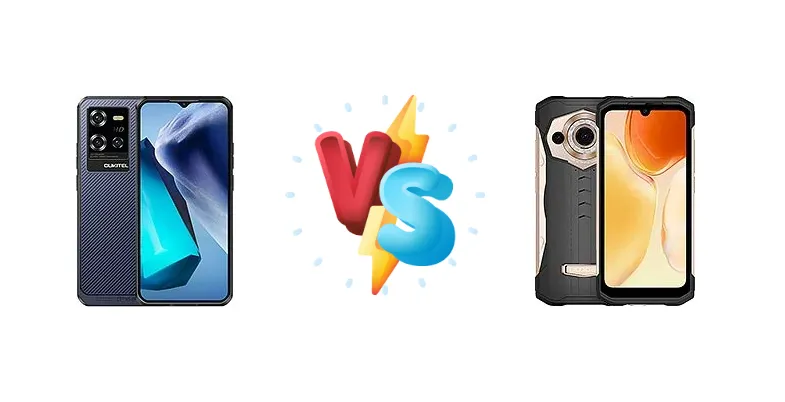
|
🏆 Quick Verdict
For users prioritizing all-day (and multi-day) battery life and sustained performance, the Oukitel WP50 is the better choice. Its Dimensity 6100+ chipset offers superior efficiency. However, if rapid charging and the convenience of wireless power are paramount, the Doogee S99 provides a compelling alternative.
| PHONES | ||
|---|---|---|
| Phone Names | Oukitel WP50 | Doogee S99 |
| Network | ||
|---|---|---|
| 2G bands | GSM 850 / 900 / 1800 / 1900 | GSM 850 / 900 / 1800 / 1900 |
| 3G bands | HSDPA 800 / 850 / 900 / 1700(AWS) / 1900 / 2100 | HSDPA 800 / 850 / 900 / 1700(AWS) / 1900 / 2100 |
| 4G bands | 1, 2, 3, 4, 5, 7, 8, 12, 13, 17, 18, 19, 20, 25, 26, 28, 34, 38, 39, 40, 41, 66, 71 | 1, 2, 3, 4, 5, 7, 8, 12, 13, 17, 18, 19, 20, 25, 26, 28, 34, 38, 39, 40, 41, 66 |
| 5G bands | 1, 2, 3, 5, 7, 8, 20, 28, 38, 41, 66, 77, 78, 79 SA/NSA | - |
| Speed | HSPA, LTE, 5G | HSPA, LTE |
| Technology | GSM / HSPA / LTE / 5G | GSM / CDMA / HSPA / LTE |
| Launch | ||
|---|---|---|
| Announced | 2024, June 17 | 2022, December 05 |
| Status | Available. Released 2024, June | Available. Released 2022, December 05 |
| Body | ||
|---|---|---|
| Dimensions | 172.2 x 80 x 12.4 mm (6.78 x 3.15 x 0.49 in) | 172 x 82 x 15.5 mm (6.77 x 3.23 x 0.61 in) |
| SIM | Nano-SIM | Nano-SIM + Nano-SIM |
| Weight | 281 g (9.91 oz) | - |
| Display | ||
|---|---|---|
| Protection | Corning Gorilla Glass 5, Mohs level 5 | Corning Gorilla Glass |
| Resolution | 720 x 1612 pixels, 20:9 ratio (~267 ppi density) | 1080 x 2340 pixels, 19.5:9 ratio (~409 ppi density) |
| Size | 6.6 inches, 104.6 cm2 (~76.0% screen-to-body ratio) | 6.3 inches, 97.4 cm2 (~69.1% screen-to-body ratio) |
| Type | IPS LCD, 440 nits | IPS LCD |
| Platform | ||
|---|---|---|
| CPU | Octa-core (2x2.2 GHz Cortex-A76 & 6x2.0 GHz Cortex-A55) | Octa-core (2x2.05 GHz Cortex-A76 & 6x2.0 GHz Cortex-A55) |
| Chipset | Mediatek Dimensity 6100+ (6 nm) | Mediatek MT6781 Helio G96 (12 nm) |
| GPU | Mali-G57 MC2 | Mali-G57 MC2 |
| OS | Android 14 | Android 12 |
| Memory | ||
|---|---|---|
| Card slot | No | microSDXC (dedicated slot) |
| Internal | 256GB 4GB RAM | 128GB 8GB RAM |
| Main Camera | ||
|---|---|---|
| Features | LED flash, HDR, panorama | Dual-LED flash, HDR, panorama |
| Triple | 48 MP, f/1.8, (wide), 1/2.0", PDAF 2 MP (macro) Auxiliary lens | 108 MP, f/1.9, (wide), 1/1.52", 0.7µm, PDAF 64 MP, f/1.8, (night vision), 2 infrared night vision lights 16 MP, f/1.8, 130˚ (ultrawide) |
| Video | 1440p@30fps, 1080p@30fps | 1440p@30fps, 1080p@30fps |
| Selfie camera | ||
|---|---|---|
| Single | 8 MP, f/2.2, (wide), 1/4.0" | 32 MP, f/2.0, (wide), 1/2.8", 0.8µm |
| Video | 720p@30fps | 1080p@30fps |
| Sound | ||
|---|---|---|
| 35mm jack | No | No |
| Loudspeaker | Yes | Yes |
| Comms | ||
|---|---|---|
| Bluetooth | 5.2, A2DP, LE | 5.1, A2DP, LE |
| NFC | Yes | Yes (market/region dependent) |
| Positioning | GPS, GALILEO, GLONASS, BDS | GPS, GLONASS, GALILEO, BDS |
| Radio | FM radio | FM radio |
| USB | USB Type-C 2.0, OTG | USB Type-C 2.0, OTG |
| WLAN | Wi-Fi 802.11 a/b/g/n/ac, dual-band | Wi-Fi 802.11 a/b/g/n/ac, dual-band |
| Features | ||
|---|---|---|
| Sensors | Fingerprint (side-mounted), accelerometer, proximity, compass | Fingerprint (side-mounted), accelerometer, gyro, proximity, compass |
| Battery | ||
|---|---|---|
| Charging | 18W wired | 33W wired, 45% in 30 min 15W wireless Reverse wired |
| Type | Li-Po 6500 mAh | 6000 mAh |
| Misc | ||
|---|---|---|
| Colors | Black/Blue | Gold, Black |
| Price | About 290 EUR | About 250 EUR |
| EU LABEL | ||
|---|---|---|
| Battery | 61:14h endurance, 1000 cycles | - |
| Energy | Class B | - |
| Free fall | Class A (270 falls) | - |
| Repairability | Class C | - |
Oukitel WP50
- Exceptional battery endurance (61:14h)
- More efficient Dimensity 6100+ chipset
- Long-term battery health with 1000 charge cycles
- Slower 18W charging
- Lacks wireless charging
Doogee S99
- Faster 33W wired charging (45% in 30 min)
- Convenient 15W wireless charging
- Reverse wired charging for accessories
- Less efficient Helio G96 chipset
- Likely lower battery endurance
Display Comparison
Display specifications are not provided, so a direct comparison is limited. However, given the price points of these devices, we can expect both to utilize IPS LCD panels. The focus here will be on durability, with both likely featuring Gorilla Glass or similar protection. The absence of high refresh rate or LTPO technology suggests neither prioritizes a premium visual experience, focusing instead on robustness and power efficiency.
Camera Comparison
Camera details are absent, but we can infer that both phones will feature multi-camera setups geared towards versatility rather than flagship-level image quality. The absence of specific sensor information makes a detailed comparison impossible. However, the focus in this segment is likely on providing usable images in challenging outdoor conditions, rather than competing with high-end smartphone cameras. Expect both to offer wide, ultrawide, and potentially macro lenses, but image processing will likely be the differentiating factor.
Performance
The core difference lies in the chipsets. The Oukitel WP50’s Mediatek Dimensity 6100+ (6nm) represents a significant architectural leap over the Doogee S99’s Helio G96 (12nm). The 6nm process node inherently provides better power efficiency, translating to less heat generation and improved sustained performance. While both CPUs feature a similar core configuration (2x Cortex-A76 & 6x Cortex-A55), the Dimensity 6100+ benefits from newer CPU and GPU designs, offering a noticeable performance advantage in demanding tasks. The G96’s larger node size means it will likely throttle more aggressively under sustained load. The WP50 is the clear winner for users who game or run resource-intensive applications.
Battery Life
Battery life is a key battleground. The Oukitel WP50 boasts an impressive 61:14h endurance, a testament to the efficiency of the Dimensity 6100+ chipset. The Doogee S99, while lacking endurance data, compensates with faster charging: 33W wired (45% in 30 minutes) and 15W wireless, plus reverse wired charging. This allows for quick top-ups when a power source is available. The WP50’s 18W charging is comparatively slow. The S99’s wireless charging and reverse charging capabilities are features the WP50 lacks, adding to its convenience factor. The WP50’s 1000 charge cycles suggest a focus on long-term battery health.
Buying Guide
Buy the Oukitel WP50 if you need a phone that can reliably last through extended periods away from a power outlet – think camping trips, construction sites, or emergency preparedness. Its 61:14h endurance is a significant advantage. Buy the Doogee S99 if you prefer the convenience of quickly topping up your battery, especially if you frequently find yourself needing a boost throughout the day, and value wireless charging and reverse wired charging for accessories.