
Oukitel WP38 vs. Doogee S99: A Deep Dive into Rugged Smartphone Performance and Battery Life
| Phones Images | |||||
|---|---|---|---|---|---|
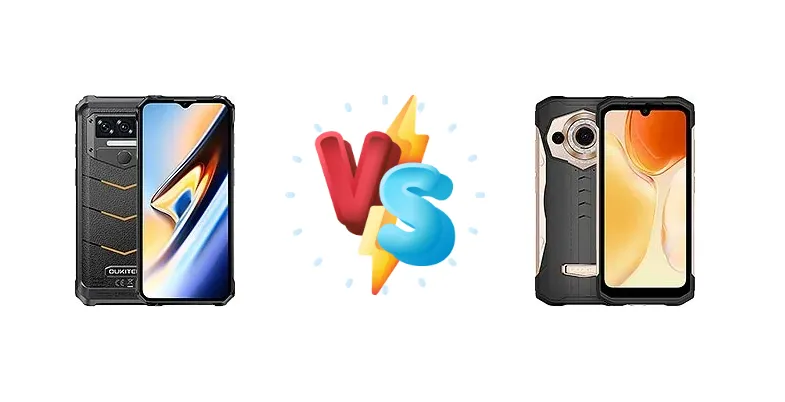
|
🏆 Quick Verdict
For users prioritizing maximum uptime and longevity, the Oukitel WP38 is the clear winner. Its impressive 102.32-hour endurance and 1000 charge cycles outweigh the Doogee S99’s faster charging. However, if you need more responsive performance for gaming or demanding apps, the Doogee S99’s Helio G96 chipset offers a noticeable advantage.
| PHONES | ||
|---|---|---|
| Phone Names | Oukitel WP38 | Doogee S99 |
| Network | ||
|---|---|---|
| 2G bands | GSM 850 / 900 / 1800 / 1900 | GSM 850 / 900 / 1800 / 1900 |
| 3G bands | HSDPA 800 / 850 / 900 / 1700(AWS) / 1900 / 2100 | HSDPA 800 / 850 / 900 / 1700(AWS) / 1900 / 2100 |
| 4G bands | 1, 2, 3, 4, 5, 7, 8, 12, 17, 18, 19, 20, 25, 26, 28, 38, 39, 40, 41, 66 | 1, 2, 3, 4, 5, 7, 8, 12, 13, 17, 18, 19, 20, 25, 26, 28, 34, 38, 39, 40, 41, 66 |
| Speed | HSPA, LTE | HSPA, LTE |
| Technology | GSM / HSPA / LTE | GSM / CDMA / HSPA / LTE |
| Launch | ||
|---|---|---|
| Announced | 2024, May | 2022, December 05 |
| Status | Available. Released 2024, June | Available. Released 2022, December 05 |
| Body | ||
|---|---|---|
| Dimensions | 172.2 x 80.7 x 17.1 mm (6.78 x 3.18 x 0.67 in) | 172 x 82 x 15.5 mm (6.77 x 3.23 x 0.61 in) |
| SIM | Nano-SIM | Nano-SIM + Nano-SIM |
| Weight | 366 g (12.91 oz) | - |
| Display | ||
|---|---|---|
| Protection | Corning Gorilla Glass 5, Mohs level 5 | Corning Gorilla Glass |
| Resolution | 720 x 1600 pixels, 20:9 ratio (~269 ppi density) | 1080 x 2340 pixels, 19.5:9 ratio (~409 ppi density) |
| Size | 6.52 inches, 102.6 cm2 (~73.9% screen-to-body ratio) | 6.3 inches, 97.4 cm2 (~69.1% screen-to-body ratio) |
| Type | IPS LCD, 400 nits | IPS LCD |
| Platform | ||
|---|---|---|
| CPU | Octa-core (4x2.0 GHz Cortex-A73 & 4x2.0 GHz Cortex-A53) | Octa-core (2x2.05 GHz Cortex-A76 & 6x2.0 GHz Cortex-A55) |
| Chipset | Mediatek MT8788 (12 nm) | Mediatek MT6781 Helio G96 (12 nm) |
| GPU | Mali-G72 MP3 | Mali-G57 MC2 |
| OS | Android 13 | Android 12 |
| Memory | ||
|---|---|---|
| Card slot | No | microSDXC (dedicated slot) |
| Internal | 256GB 6GB RAM | 128GB 8GB RAM |
| Main Camera | ||
|---|---|---|
| Dual | 13 MP, f/2.2, (wide), 1/3.1", AF 2 MP (macro) | - |
| Features | LED flash, panorama | Dual-LED flash, HDR, panorama |
| Triple | - | 108 MP, f/1.9, (wide), 1/1.52", 0.7µm, PDAF 64 MP, f/1.8, (night vision), 2 infrared night vision lights 16 MP, f/1.8, 130˚ (ultrawide) |
| Video | 1080p@30fps | 1440p@30fps, 1080p@30fps |
| Selfie camera | ||
|---|---|---|
| Single | 5 MP, f/2.2, (wide), 1/2.74" | 32 MP, f/2.0, (wide), 1/2.8", 0.8µm |
| Video | 1080p@30fps | 1080p@30fps |
| Sound | ||
|---|---|---|
| 35mm jack | No | No |
| Loudspeaker | Yes | Yes |
| Comms | ||
|---|---|---|
| Bluetooth | 4.2, A2DP | 5.1, A2DP, LE |
| NFC | Yes | Yes (market/region dependent) |
| Positioning | GPS, GLONASS, GALILEO | GPS, GLONASS, GALILEO, BDS |
| Radio | FM radio | FM radio |
| USB | USB Type-C 2.0, OTG | USB Type-C 2.0, OTG |
| WLAN | Wi-Fi 802.11 a/b/g/n/ac, dual-band | Wi-Fi 802.11 a/b/g/n/ac, dual-band |
| Features | ||
|---|---|---|
| Sensors | Fingerprint (rear-mounted), accelerometer, proximity, compass | Fingerprint (side-mounted), accelerometer, gyro, proximity, compass |
| Battery | ||
|---|---|---|
| Charging | 18W wired | 33W wired, 45% in 30 min 15W wireless Reverse wired |
| Type | Li-Po 10600 mAh | 6000 mAh |
| Misc | ||
|---|---|---|
| Colors | Black, Gray, Green | Gold, Black |
| Price | - | About 250 EUR |
| EU LABEL | ||
|---|---|---|
| Battery | 102:32h endurance, 1000 cycles | - |
| Energy | Class B | - |
| Free fall | Class A (270 falls) | - |
| Repairability | Class C | - |
Oukitel WP38
- Exceptional battery life (102.32h endurance)
- Long battery lifespan (1000 charge cycles)
- Power-efficient chipset for extended use
- Less powerful processor for demanding tasks
- Slower charging speed (18W)
Doogee S99
- Faster and more responsive processor (Helio G96)
- Faster charging (33W wired, 45% in 30min)
- Wireless and reverse wired charging support
- Likely shorter battery life compared to WP38
- Potentially faster battery degradation
Display Comparison
Neither device’s display specifications are provided, so a direct comparison is limited. However, given the rugged focus, both likely utilize durable, scratch-resistant glass. The absence of details like resolution or refresh rate suggests a focus on practicality over premium visual experiences. We can assume both will prioritize visibility in direct sunlight, a key requirement for outdoor use.
Camera Comparison
Without specific camera sensor details, a detailed comparison is challenging. However, the market segment suggests both phones will feature capable, but not flagship-level, camera systems. The absence of information regarding sensor size or optical image stabilization (OIS) indicates a focus on providing functional photography rather than professional-grade results. Users should expect adequate performance in good lighting conditions, but potentially struggle in low-light scenarios. The inclusion of a 2MP macro lens on either device is likely a marketing feature with limited practical benefit.
Performance
The Doogee S99’s Mediatek Helio G96 chipset represents a significant architectural leap over the Oukitel WP38’s MT8788. The G96 utilizes two Cortex-A76 cores clocked at 2.05 GHz alongside six Cortex-A55 cores, offering superior single-core and multi-core performance compared to the WP38’s four Cortex-A73 and four Cortex-A53 cores clocked at 2.0 GHz. This translates to snappier app launches, smoother multitasking, and a more enjoyable gaming experience. While both chipsets are built on a 12nm process, the newer architecture of the G96 provides a performance edge. The WP38’s chipset is likely optimized for power efficiency, contributing to its exceptional battery life.
Battery Life
The Oukitel WP38 boasts an impressive 102.32-hour endurance rating, a testament to its power-efficient chipset and likely large battery capacity (though the exact mAh is unspecified). This is a substantial advantage over the Doogee S99, which lacks a published endurance rating. The Doogee S99 compensates with faster charging: 33W wired charging can deliver 45% charge in 30 minutes, and it also supports 15W wireless charging and reverse wired charging. The WP38 is limited to 18W wired charging. The WP38 also claims 1000 charge cycles, suggesting a longer lifespan for the battery itself, mitigating degradation over time.
Buying Guide
Buy the Oukitel WP38 if you need a phone that can genuinely last for days on a single charge, and you value long-term battery health. This is ideal for extended trips off-grid or professions where access to power is limited. Buy the Doogee S99 if you prefer a more responsive user experience, enjoy mobile gaming, and appreciate the convenience of 33W fast charging and wireless charging capabilities. It’s the better choice for users who regularly use power-intensive applications.