
Oukitel WP36 vs. Ulefone Armor 17 Pro: A Rugged Smartphone Showdown
| Phones Images | |||||
|---|---|---|---|---|---|
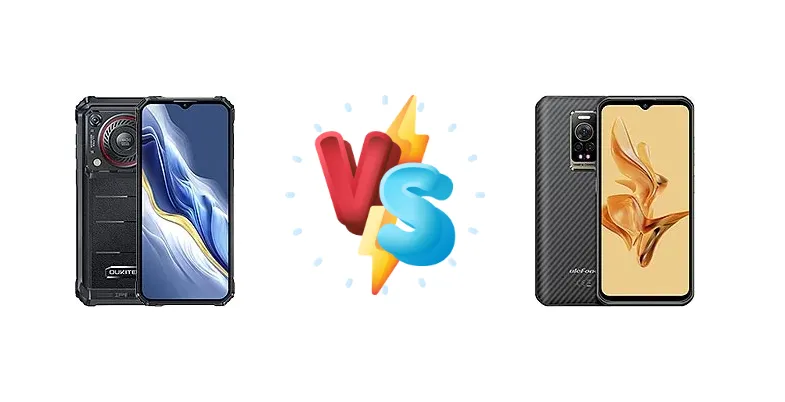
|
🏆 Quick Verdict
For most users, the Ulefone Armor 17 Pro emerges as the stronger choice. Its Mediatek Helio G99 chipset, built on a 6nm process, delivers significantly improved performance and efficiency compared to the Oukitel WP36’s older MT8788. While the WP36 boasts impressive battery endurance, the Armor 17 Pro’s 66W charging and overall responsiveness make it the more practical daily driver.
| PHONES | ||
|---|---|---|
| Phone Names | Oukitel WP36 | Ulefone Armor 17 Pro |
| Network | ||
|---|---|---|
| 2G bands | GSM 850 / 900 / 1800 / 1900 | GSM 850 / 900 / 1800 / 1900 |
| 3G bands | HSDPA 850 / 900 / 1700(AWS) / 1900 / 2100 | HSDPA 800 / 850 / 900 / 1700(AWS) / 1900 / 2100 |
| 4G bands | 1, 2, 3, 4, 5, 7, 8, 12, 17, 18, 19, 20, 25, 26, 28, 38, 39, 40, 41, 66 | 1, 2, 3, 4, 5, 7, 8, 12, 13, 17, 18, 19, 20, 25, 26, 28, 34, 38, 39, 40, 41, 66 |
| Speed | HSPA, LTE | HSPA, LTE |
| Technology | GSM / CDMA / HSPA / LTE | GSM / HSPA / LTE |
| Launch | ||
|---|---|---|
| Announced | 2024, January 06 | 2022, October 31 |
| Status | Available. Released 2024, January | Available. Released 2022, October 31 |
| Body | ||
|---|---|---|
| Dimensions | 172.2 x 80.7 x 19.1 mm (6.78 x 3.18 x 0.75 in) | 172.7 x 80.4 x 12.5 mm (6.80 x 3.17 x 0.49 in) |
| SIM | Nano-SIM + Nano-SIM | Nano-SIM + Nano-SIM |
| Weight | 393.7 g (13.90 oz) | 290 g (10.23 oz) |
| - | IP68/IP69K dust/water resistant (up to 1.5m for 30 min) Drop-to-concrete resistance from up to 1.5m MIL-STD-810G compliant | |
| Display | ||
|---|---|---|
| Protection | Corning Gorilla Glass 5, Mohs level 5 | Corning Gorilla Glass 5 |
| Resolution | 720 x 1600 pixels, 20:9 ratio (~269 ppi density) | 1080 x 2408 pixels, 20:9 ratio (~401 ppi density) |
| Size | 6.52 inches, 102.6 cm2 (~73.9% screen-to-body ratio) | 6.58 inches, 104.3 cm2 (~75.1% screen-to-body ratio) |
| Type | IPS LCD, 400 nits | IPS LCD, 120Hz |
| Platform | ||
|---|---|---|
| CPU | Octa-core (4x2.0 GHz Cortex-A73 & 4x2.0 GHz Cortex-A53) | Octa-core (2x2.2 GHz Cortex-A76 & 6x2.0 GHz Cortex-A55) |
| Chipset | Mediatek MT8788 (12 nm) | Mediatek Helio G99 (6 nm) |
| GPU | Mali-G72 MP3 | Mali-G57 MC2 |
| OS | Android 13 | Android 12 |
| Memory | ||
|---|---|---|
| Card slot | microSDXC (uses shared SIM slot) | microSDXC (dedicated slot) |
| Internal | 128GB 8GB RAM | 256GB 8GB RAM |
| Main Camera | ||
|---|---|---|
| Dual | 13 MP, f/2.2, (wide), 1/3.1", AF 2 MP (macro) | - |
| Features | LED flash | Triple-LED flash, HDR, panorama |
| Single | - | 16 MP, f/2.2, (wide), 1.0µm |
| Triple | - | 108 MP, f/1.9, (wide), 1/1.52”, 0.7µm, PDAF 8 MP, f/2.2, 119˚, (ultrawide), 1/4.0", 1.12µm 8 MP, (night vision), 2 infrared night vision lights |
| Video | 1080p@30fps | 1440p@30fps, 1080p@30fps |
| Selfie camera | ||
|---|---|---|
| Single | 5 MP, f/2.2, (wide), 1/5.0" | 16 MP, f/2.2, (wide), 1.0µm |
| Video | 1080p@30fps | 1080p@30fps |
| Sound | ||
|---|---|---|
| 3.5mm jack | - | Yes |
| 35mm jack | No | Yes |
| Loudspeaker | Yes (128 dB, 3.5W peak) | Yes |
| Comms | ||
|---|---|---|
| Bluetooth | 4.2, A2DP | 5.2, A2DP, LE |
| NFC | Yes | Yes |
| Positioning | GPS, GLONASS, GALILEO, BDS | GPS, GLONASS, GALILEO, BDS |
| Radio | FM radio | Wireless FM radio, RDS, recording |
| USB | USB Type-C 2.0, OTG | USB Type-C 2.0, OTG |
| WLAN | Wi-Fi 802.11 a/b/g/n/ac, dual-band | Wi-Fi 802.11 a/b/g/n/ac, dual-band |
| Features | ||
|---|---|---|
| Sensors | Fingerprint (side-mounted), accelerometer, gyro, proximity, compass | Fingerprint (side-mounted), accelerometer, gyro, proximity, compass |
| - | MagSafe compatible accessories | |
| Battery | ||
|---|---|---|
| Charging | 15W wired Reverse wired | 66W wired, 53% in 15 min 15W wireless Wireless reversed |
| Type | Li-Po 10600 mAh | Li-Po 5380 mAh |
| Misc | ||
|---|---|---|
| Colors | Black, | Black |
| Price | About 190 EUR | About 260 EUR |
| EU LABEL | ||
|---|---|---|
| Battery | 101:19h endurance, 1000 cycles | - |
| Energy | Class B | - |
| Free fall | Class A (270 falls) | - |
| Repairability | Class C | - |
Oukitel WP36
- Exceptional battery endurance (101:19h)
- High charge cycle lifespan (1000 cycles)
- Reverse wired charging capability
- Outdated Mediatek MT8788 chipset
- Slow 15W charging speed
- Likely less responsive user experience
Ulefone Armor 17 Pro
- Modern Mediatek Helio G99 chipset (6nm)
- Ultra-fast 66W wired charging (53% in 15min)
- Wireless charging and reverse wireless charging
- Potentially shorter battery life compared to WP36
- May be more expensive than the WP36
- Rugged design may add bulk
Display Comparison
Neither device’s display specifications are provided, so a direct comparison is limited. However, given the Armor 17 Pro’s focus on modern features, it likely incorporates a higher-quality panel with better color accuracy and viewing angles. The WP36, being an older model, may utilize a less refined display technology. The absence of display specs highlights a common trade-off in the rugged segment: prioritizing durability over cutting-edge screen technology.
Camera Comparison
Without detailed camera specifications, a precise comparison is difficult. However, the Armor 17 Pro’s positioning suggests a more modern camera system with potentially larger sensors and improved image processing. Rugged phones often prioritize practicality over photographic excellence, so expect competent but not class-leading camera performance from both devices. The absence of information on sensor sizes and apertures suggests neither phone is targeting photography enthusiasts.
Performance
The Ulefone Armor 17 Pro’s Mediatek Helio G99 (6nm) represents a substantial leap forward in performance compared to the Oukitel WP36’s Mediatek MT8788 (12nm). The G99’s newer architecture, featuring 2x2.2 GHz Cortex-A76 cores and 6x2.0 GHz Cortex-A55 cores, provides a noticeable advantage in CPU-intensive tasks and gaming. The 6nm fabrication process also translates to improved thermal efficiency, reducing the likelihood of throttling under sustained load. The WP36’s older Cortex-A73/A53 configuration, while adequate for basic use, will struggle with demanding applications and multitasking.
Battery Life
The Oukitel WP36 claims 101:19h endurance and 1000 charge cycles, emphasizing longevity. While impressive, the Ulefone Armor 17 Pro compensates with its 66W wired charging, capable of reaching 53% charge in just 15 minutes. This drastically reduces downtime compared to the WP36’s 15W charging. The Armor 17 Pro also offers 15W wireless charging and reverse wireless charging, adding convenience. The WP36’s endurance is valuable for extended off-grid use, but the Armor 17 Pro’s charging speed is a significant advantage for daily users.
Buying Guide
Buy the Oukitel WP36 if you absolutely prioritize maximum battery life and are willing to compromise on processing power for tasks beyond basic communication and navigation. This phone is ideal for extended trips off-grid where charging opportunities are limited. Buy the Ulefone Armor 17 Pro if you need a rugged phone that can handle demanding applications, multitasking, and faster charging, offering a more responsive and versatile experience for everyday use and work.