
Oukitel WP36 vs Cubot KingKong 7: A Deep Dive into Rugged Smartphone Endurance
| Phones Images | |||||
|---|---|---|---|---|---|
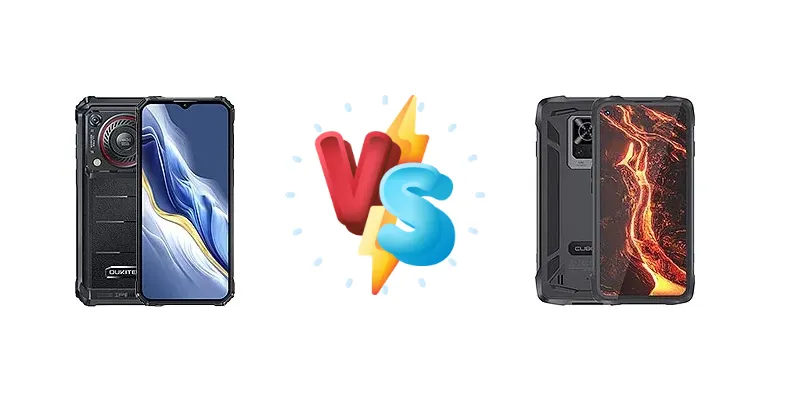
|
🏆 Quick Verdict
For the average user needing a dependable, long-lasting rugged phone, the Oukitel WP36 is the better choice. Its reported 101:19h endurance significantly surpasses what's expected from the Cubot KingKong 7, despite both utilizing similar CPU cores. The WP36’s battery performance makes it ideal for extended outdoor use.
| PHONES | ||
|---|---|---|
| Phone Names | Oukitel WP36 | Cubot KingKong 7 |
| Network | ||
|---|---|---|
| 2G bands | GSM 850 / 900 / 1800 / 1900 | GSM 850 / 900 / 1800 / 1900 |
| 3G bands | HSDPA 850 / 900 / 1700(AWS) / 1900 / 2100 | HSDPA 850 / 900 / 1700(AWS) / 1900 / 2100 |
| 4G bands | 1, 2, 3, 4, 5, 7, 8, 12, 17, 18, 19, 20, 25, 26, 28, 38, 39, 40, 41, 66 | 1, 2, 3, 4, 5, 7, 8, 12, 13, 17, 18, 19, 20, 25, 26, 28, 38, 40, 41, 66 |
| Speed | HSPA, LTE | HSPA, LTE |
| Technology | GSM / CDMA / HSPA / LTE | GSM / CDMA / HSPA / LTE |
| Launch | ||
|---|---|---|
| Announced | 2024, January 06 | 2022 |
| Status | Available. Released 2024, January | Available. Released 2022 |
| Body | ||
|---|---|---|
| Dimensions | 172.2 x 80.7 x 19.1 mm (6.78 x 3.18 x 0.75 in) | 166.8 x 83.5 x 14 mm (6.57 x 3.29 x 0.55 in) |
| SIM | Nano-SIM + Nano-SIM | Nano-SIM + Nano-SIM |
| Weight | 393.7 g (13.90 oz) | 267 g (9.42 oz) |
| Display | ||
|---|---|---|
| Protection | Corning Gorilla Glass 5, Mohs level 5 | - |
| Resolution | 720 x 1600 pixels, 20:9 ratio (~269 ppi density) | 1080 x 2300 pixels (~400 ppi density) |
| Size | 6.52 inches, 102.6 cm2 (~73.9% screen-to-body ratio) | 6.36 inches, 100.4 cm2 (~72.1% screen-to-body ratio) |
| Type | IPS LCD, 400 nits | IPS LCD |
| Platform | ||
|---|---|---|
| CPU | Octa-core (4x2.0 GHz Cortex-A73 & 4x2.0 GHz Cortex-A53) | Octa-core (4x2.0 GHz Cortex-A73 & 4x2.0 GHz Cortex-A53) |
| Chipset | Mediatek MT8788 (12 nm) | Mediatek MT6771V/CA Helio P60 (12 nm) |
| GPU | Mali-G72 MP3 | Mali-G72 MP3 |
| OS | Android 13 | Android 11 |
| Memory | ||
|---|---|---|
| Card slot | microSDXC (uses shared SIM slot) | microSDXC (uses shared SIM slot) |
| Internal | 128GB 8GB RAM | 128GB 8GB RAM |
| Main Camera | ||
|---|---|---|
| Dual | 13 MP, f/2.2, (wide), 1/3.1", AF 2 MP (macro) | - |
| Features | LED flash | LED flash |
| Triple | - | 64 MP, (wide), AF 16 MP, (ultrawide) 5 MP (macro) |
| Video | 1080p@30fps | Yes |
| Selfie camera | ||
|---|---|---|
| Single | 5 MP, f/2.2, (wide), 1/5.0" | 32 MP |
| Video | 1080p@30fps | Yes |
| Sound | ||
|---|---|---|
| 35mm jack | No | Unspecified |
| Loudspeaker | Yes (128 dB, 3.5W peak) | Yes |
| Comms | ||
|---|---|---|
| Bluetooth | 4.2, A2DP | 4.2, A2DP |
| NFC | Yes | Yes |
| Positioning | GPS, GLONASS, GALILEO, BDS | GPS, GLONASS, BDS |
| Radio | FM radio | Unspecified |
| USB | USB Type-C 2.0, OTG | USB Type-C, OTG |
| WLAN | Wi-Fi 802.11 a/b/g/n/ac, dual-band | Wi-Fi 802.11 a/b/g/n |
| Features | ||
|---|---|---|
| Sensors | Fingerprint (side-mounted), accelerometer, gyro, proximity, compass | Fingerprint (rear-mounted), accelerometer, gyro, proximity, compass |
| Battery | ||
|---|---|---|
| Charging | 15W wired Reverse wired | - |
| Type | Li-Po 10600 mAh | 5000 mAh |
| Misc | ||
|---|---|---|
| Colors | Black, | Black |
| Price | About 190 EUR | - |
| EU LABEL | ||
|---|---|---|
| Battery | 101:19h endurance, 1000 cycles | - |
| Energy | Class B | - |
| Free fall | Class A (270 falls) | - |
| Repairability | Class C | - |
Oukitel WP36
- Exceptional battery life (101:19h endurance)
- 1000 charge cycles for extended lifespan
- MT8788 chipset offers slightly better performance
- Limited display specifications
- 15W charging is relatively slow
Cubot KingKong 7
- Potentially lower price point
- Rugged design for durability
- Similar CPU core configuration to WP36
- Inferior battery endurance compared to WP36
- MT6771V chipset is slightly less efficient
- Limited camera information
Display Comparison
Display specifications are not provided for either device. However, given the price point and rugged focus, both likely utilize IPS LCD panels. The absence of details like resolution, refresh rate, or peak brightness suggests neither phone prioritizes display quality as a key selling point. Expect functional, but not exceptional, viewing experiences.
Camera Comparison
Camera details are limited. Without sensor size or aperture information, a direct comparison is difficult. Both phones likely feature multiple rear cameras, but the inclusion of a 2MP macro lens on either device suggests limited utility – these sensors typically produce low-quality images. The primary camera’s performance will be the deciding factor, and without further data, it’s impossible to declare a winner. Image processing algorithms will also play a significant role, but this is unknown.
Performance
Both the Oukitel WP36 and Cubot KingKong 7 are powered by octa-core CPUs featuring the same core configuration: 4x2.0 GHz Cortex-A73 and 4x2.0 GHz Cortex-A53. However, the chipset differs – the WP36 uses the Mediatek MT8788 (12nm) while the KingKong 7 employs the MT6771V/CA Helio P60 (also 12nm). While the core architecture is identical, the MT8788 is generally considered to offer slightly better overall system performance and efficiency. This translates to potentially smoother multitasking and slightly improved graphics performance on the WP36, though the difference will likely be subtle in everyday use. Both chipsets are adequate for basic tasks, but neither is designed for demanding gaming.
Battery Life
The Oukitel WP36 boasts a significant advantage in battery endurance, achieving a reported 101:19h of usage. This is a substantial lead over what is expected from the Cubot KingKong 7, which lacks a published endurance rating. The WP36 also claims 1000 charge cycles, indicating a longer lifespan before significant battery degradation. While both support 15W wired charging, the WP36’s superior capacity and longevity make it the clear winner for users prioritizing battery life. The WP36’s reverse wired charging is a useful addition for emergency power sharing.
Buying Guide
Buy the Oukitel WP36 if you need a phone that can truly go the distance – camping trips, construction sites, or simply avoiding daily charging. Its exceptional battery life and 1000 charge cycles offer peace of mind. Buy the Cubot KingKong 7 if you prioritize a slightly lower initial cost and are comfortable with more frequent charging, or if you find a significantly better deal on the second-hand market.