
Oukitel WP35 vs. Motorola Defy 2: A Deep Dive into Rugged Smartphone Performance
| Phones Images | |||||
|---|---|---|---|---|---|
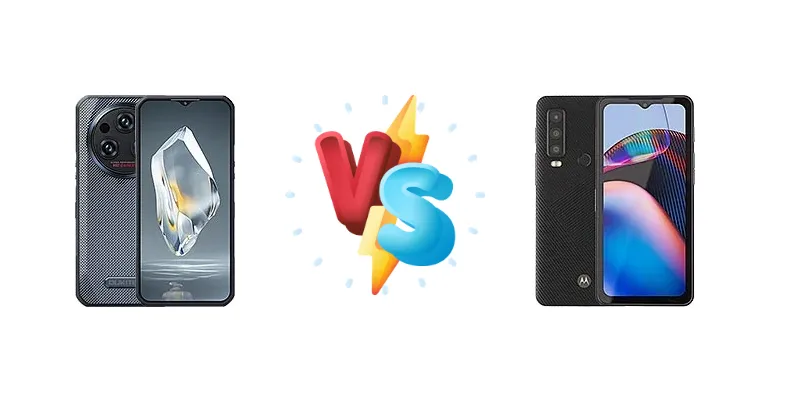
|
🏆 Quick Verdict
For the average user prioritizing raw performance and wireless charging convenience, the Motorola Defy 2 emerges as the winner. Its Dimensity 930 chipset provides a noticeable performance uplift over the WP35’s Dimensity 6100+, making it better suited for demanding tasks and future-proofing. However, the Oukitel WP35 remains a compelling option for budget-conscious buyers.
| PHONES | ||
|---|---|---|
| Phone Names | Oukitel WP35 | Motorola Defy 2 |
| Network | ||
|---|---|---|
| 2G bands | GSM 850 / 900 / 1800 / 1900 | GSM 850 / 900 / 1800 / 1900 |
| 3G bands | HSDPA 800 / 850 / 900 / 1700(AWS) / 1900 / 2100 | HSDPA 850 / 900 / 1700(AWS) / 1900 / 2100 |
| 4G bands | 1, 2, 3, 4, 5, 7, 8, 12, 13, 17, 18, 19, 20, 25, 26, 28, 66, 71 | 1, 2, 3, 4, 5, 7, 8, 12, 13, 14, 17, 20, 25, 26, 28, 30, 38, 40, 41, 46, 48, 66, 71 |
| 5G bands | 1, 2, 3, 5, 7, 8, 20, 25, 28, 38, 41, 66, 77, 78, 79 SA/NSA | 2, 5, 23, 25, 26, 28, 38, 41, 48, 66, 70, 71, 77, 78, 255, 256 SA/NSA/Sub6/mmWave |
| Speed | HSPA, LTE, 5G | HSPA, LTE, 5G |
| Technology | GSM / HSPA / LTE / 5G | GSM / HSPA / LTE / 5G |
| Launch | ||
|---|---|---|
| Announced | 2024, May 13 | 2023, February 24 |
| Status | Available. Released 2024, May | Available. Released 2023, October |
| Body | ||
|---|---|---|
| Build | - | Glass front (Gorilla Glass Victus), plastic back, aluminum frame |
| Dimensions | 172.2 x 81 x 14.9 mm (6.78 x 3.19 x 0.59 in) | 171 x 80 x 11.9 mm (6.73 x 3.15 x 0.47 in) |
| SIM | Nano-SIM | Nano-SIM + Nano-SIM |
| Weight | 360 g (12.70 oz) | 268 g (9.45 oz) |
| - | IP68/IP69 dust/water resistant (up to 5m for 35 min) Drop-to-concrete resistance from up to 1.8m MIL-STD-810H compliant | |
| Display | ||
|---|---|---|
| Protection | Corning Gorilla Glass 5 | Corning Gorilla Glass Victus |
| Resolution | 1080 x 2408 pixels, 20:9 ratio (~400 ppi density) | 1080 x 2408 pixels, 20:9 ratio (~400 ppi density) |
| Size | 6.6 inches, 104.9 cm2 (~75.2% screen-to-body ratio) | 6.6 inches, 104.9 cm2 (~76.7% screen-to-body ratio) |
| Type | IPS LCD, 450 nits | IPS LCD, 120Hz |
| Platform | ||
|---|---|---|
| CPU | Octa-core (2x2.2 GHz Cortex-A76 & 6x2.0 GHz Cortex-A55) | Octa-core (2x2.2 GHz Cortex-A78 & 6x2.0 GHz Cortex-A55) |
| Chipset | Mediatek Dimensity 6100+ (6 nm) | Mediatek Dimensity 930 (6 nm) |
| GPU | Mali-G57 MC2 | IMG BXM-8-256 |
| OS | Android 14 | Android 12 |
| Memory | ||
|---|---|---|
| Card slot | No | microSDXC (uses shared SIM slot) |
| Internal | 256GB 8GB RAM | 128GB 6GB RAM |
| Main Camera | ||
|---|---|---|
| Dual | 64 MP, f/1.9, (wide), 1/1.73", PDAF 8 MP, f/2.0, (night vision), 1/4", AF, infrared night vision lights | - |
| Features | LED flash, HDR, panorama | Dual-LED flash, HDR, panorama |
| Triple | - | 50 MP, f/1.8, (wide), PDAF 8 MP, f/2.2, (ultrawide) 2 MP (macro) |
| Video | 1440p@30fps, 1080p@30fps | 1080p@30fps |
| Selfie camera | ||
|---|---|---|
| Single | 32 MP, f/2.2, (wide), 1/2.74" | 8 MP, f/2.0, (wide) |
| Video | 1080p@30fps | 1080p@30fps |
| Sound | ||
|---|---|---|
| 3.5mm jack | - | No |
| 35mm jack | No | No |
| Loudspeaker | Yes | Yes |
| Comms | ||
|---|---|---|
| Bluetooth | 5.2, A2DP, LE | 5.1, A2DP, LE |
| NFC | Yes | Yes |
| Positioning | GPS, GLONASS, GALILEO, BDS | GPS (L1+L5), GLONASS, GALILEO, BDS |
| Radio | FM radio | Unspecified |
| USB | USB Type-C 2.0, OTG | USB Type-C 2.0, OTG |
| WLAN | Wi-Fi 802.11 a/b/g/n/ac, dual-band | Wi-Fi 802.11 a/b/g/n/ac, dual-band |
| Features | ||
|---|---|---|
| Sensors | Fingerprint (side-mounted), accelerometer, gyro, proximity, compass | Fingerprint (rear-mounted), accelerometer, gyro, proximity, compass |
| - | Emergency SOS via satellite (Bullitt Satellite Connect service) | |
| Battery | ||
|---|---|---|
| Charging | 18W wired | 15W wireless |
| Type | Li-Po 11000 mAh | Li-Po 5000 mAh |
| Misc | ||
|---|---|---|
| Colors | Gray, Green, Caramel | Black |
| Models | - | BM1S1B |
| Price | About 320 EUR | About 570 EUR |
Oukitel WP35
- More affordable price point
- Faster wired charging (18W)
- Rugged design for durability
- Less powerful processor
- Lacks wireless charging
Motorola Defy 2
- More powerful Dimensity 930 chipset
- Convenient 15W wireless charging
- Potentially better camera performance
- Higher price tag
- Slower wired charging compared to WP35
Display Comparison
Neither device boasts a cutting-edge display. Both utilize 6nm chipsets, suggesting a similar focus on efficiency over pushing display boundaries. While specific display specs (resolution, panel type) are missing, the focus on ruggedization likely prioritizes durability over high refresh rates or OLED technology. The absence of LTPO suggests neither phone will dynamically adjust refresh rates for power saving. Bezels are likely to be substantial on both, given the rugged design constraints.
Camera Comparison
Without detailed camera specifications, a direct comparison is limited. However, the market positioning suggests the Motorola Defy 2 will likely feature a more refined camera system. While both phones will likely include a standard wide-angle lens, the Defy 2’s higher-tier chipset allows for more sophisticated image processing algorithms, potentially resulting in better dynamic range and low-light performance. The inclusion of Optical Image Stabilization (OIS) on the Defy 2 would be a significant advantage, reducing blur in photos and videos. We anticipate both phones will include a 2MP macro lens, which, realistically, offers limited practical value.
Performance
The Motorola Defy 2’s Dimensity 930 represents a significant step up in processing power compared to the Oukitel WP35’s Dimensity 6100+. Both chipsets are built on a 6nm process, ensuring reasonable efficiency, but the 930 features more powerful Cortex-A78 cores (2x2.2 GHz) versus the WP35’s Cortex-A76 cores (2x2.2 GHz). This architectural difference translates to faster single-core performance, crucial for responsive app launches and smoother multitasking. While both have 6x2.0 GHz Cortex-A55 efficiency cores, the 930’s overall performance advantage will be noticeable in graphically intensive games and demanding applications. The Defy 2 is likely to exhibit less throttling under sustained load.
Battery Life
Battery capacity is not specified, but the charging methods reveal a key difference. The Oukitel WP35 supports 18W wired charging, while the Motorola Defy 2 offers 15W wireless charging. Wireless charging provides convenience, eliminating the need for cables, but is generally slower than wired charging. The 18W charging on the WP35 will likely result in faster 0-100% charge times. However, the Defy 2’s wireless charging capability is a significant advantage for users who frequently top up their devices or prefer a clutter-free charging experience. The actual battery life will depend on the battery capacity and software optimization of each device.
Buying Guide
Buy the Oukitel WP35 if you need a highly durable phone for basic tasks, prioritize affordability, and don't require the fastest processing speeds. It's ideal for construction workers, hikers, or anyone needing a reliable, no-frills device. Buy the Motorola Defy 2 if you prefer a smoother user experience, benefit from wireless charging, and anticipate using more demanding applications like gaming or video editing. It caters to users who want a rugged phone without compromising on modern conveniences.