
Doogee V30T vs Oukitel WP35: A Deep Dive into Rugged Smartphone Performance
| Phones Images | |||||
|---|---|---|---|---|---|
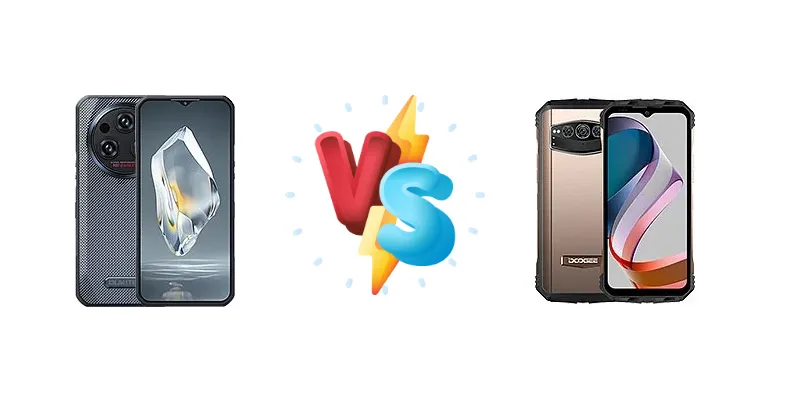
|
🏆 Quick Verdict
For most users, the Doogee V30T emerges as the stronger choice. Its Dimensity 1080 chipset provides a noticeable performance uplift over the WP35’s Dimensity 6100+, and the 66W charging is a game-changer for minimizing downtime. While the WP35 offers a compelling value proposition, the V30T’s speed and convenience justify the price difference.
| PHONES | ||
|---|---|---|
| Phone Names | Oukitel WP35 | Doogee V30T |
| Network | ||
|---|---|---|
| 2G bands | GSM 850 / 900 / 1800 / 1900 | GSM 850 / 900 / 1800 / 1900 |
| 3G bands | HSDPA 800 / 850 / 900 / 1700(AWS) / 1900 / 2100 | HSDPA 800 / 850 / 900 / 1700(AWS) / 1900 / 2100 |
| 4G bands | 1, 2, 3, 4, 5, 7, 8, 12, 13, 17, 18, 19, 20, 25, 26, 28, 66, 71 | 1, 2, 3, 4, 5, 7, 8, 12, 17, 18, 19, 20, 25, 26, 28, 34, 38, 39, 40, 41, 66 |
| 5G bands | 1, 2, 3, 5, 7, 8, 20, 25, 28, 38, 41, 66, 77, 78, 79 SA/NSA | 1, 3, 7, 28, 38, 41, 77, 78, 79 SA/NSA |
| Speed | HSPA, LTE, 5G | HSPA, LTE, 5G |
| Technology | GSM / HSPA / LTE / 5G | GSM / CDMA / HSPA / LTE / 5G |
| Launch | ||
|---|---|---|
| Announced | 2024, May 13 | 2023, April 16 |
| Status | Available. Released 2024, May | Available. Released 2023, May |
| Body | ||
|---|---|---|
| Dimensions | 172.2 x 81 x 14.9 mm (6.78 x 3.19 x 0.59 in) | 178.4 x 83.1 x 17.8 mm (7.02 x 3.27 x 0.70 in) |
| SIM | Nano-SIM | Nano-SIM + Nano-SIM |
| Weight | 360 g (12.70 oz) | 376 g (13.26 oz) |
| Display | ||
|---|---|---|
| Protection | Corning Gorilla Glass 5 | Corning Gorilla Glass 5 |
| Resolution | 1080 x 2408 pixels, 20:9 ratio (~400 ppi density) | 1080 x 2408 pixels, 20:9 ratio (~401 ppi density) |
| Size | 6.6 inches, 104.9 cm2 (~75.2% screen-to-body ratio) | 6.58 inches, 104.3 cm2 (~70.4% screen-to-body ratio) |
| Type | IPS LCD, 450 nits | IPS LCD, 120Hz |
| Platform | ||
|---|---|---|
| CPU | Octa-core (2x2.2 GHz Cortex-A76 & 6x2.0 GHz Cortex-A55) | Octa-core (2x2.6 GHz Cortex-A78 & 6x2.0 GHz Cortex-A55) |
| Chipset | Mediatek Dimensity 6100+ (6 nm) | Mediatek Dimensity 1080 (6 nm) |
| GPU | Mali-G57 MC2 | Mali-G68 MC4 |
| OS | Android 14 | Android 12 |
| Memory | ||
|---|---|---|
| Card slot | No | microSDXC (uses shared SIM slot) |
| Internal | 256GB 8GB RAM | 256GB 12GB RAM |
| Main Camera | ||
|---|---|---|
| Dual | 64 MP, f/1.9, (wide), 1/1.73", PDAF 8 MP, f/2.0, (night vision), 1/4", AF, infrared night vision lights | - |
| Features | LED flash, HDR, panorama | Dual-LED flash, HDR, panorama |
| Triple | - | 108 MP, f/1.8, (wide), 1/1.52", 0.7µm, PDAF, OIS 20 MP, f/1.8, (night vision), 2 infrared night vision lights 16 MP, f/2.2, 130˚ (ultrawide), AF |
| Video | 1440p@30fps, 1080p@30fps | 4K@30fps, 1080p@30fps |
| Selfie camera | ||
|---|---|---|
| Single | 32 MP, f/2.2, (wide), 1/2.74" | 32 MP, f/1.8, (wide), 1/2.8", 0.8µm |
| Video | 1080p@30fps | 4K@30fps, 1080p@30fps |
| Sound | ||
|---|---|---|
| 35mm jack | No | No |
| Loudspeaker | Yes | Yes, with stereo speakers |
| Comms | ||
|---|---|---|
| Bluetooth | 5.2, A2DP, LE | 5.2, A2DP, LE |
| NFC | Yes | Yes (market/region dependent) |
| Positioning | GPS, GLONASS, GALILEO, BDS | GPS (L1+L5), GLONASS, GALILEO, BDS |
| Radio | FM radio | FM radio |
| USB | USB Type-C 2.0, OTG | USB Type-C 2.0, OTG |
| WLAN | Wi-Fi 802.11 a/b/g/n/ac, dual-band | Wi-Fi 802.11 a/b/g/n/ac/6, dual-band |
| Features | ||
|---|---|---|
| Sensors | Fingerprint (side-mounted), accelerometer, gyro, proximity, compass | Fingerprint (side-mounted), accelerometer, gyro, proximity, compass |
| Battery | ||
|---|---|---|
| Charging | 18W wired | 66W wired, 55% in 30 min 15W wireless Reverse wired |
| Type | Li-Po 11000 mAh | 10800 mAh |
| Misc | ||
|---|---|---|
| Colors | Gray, Green, Caramel | Marble Black, Rose Gold, Galaxy Gray |
| Price | About 320 EUR | About 420 EUR |
Oukitel WP35
- More affordable price point
- Rugged design for durability
- Decent performance for everyday tasks
- Slower charging speed (18W)
- Less powerful processor compared to V30T
- Limited advanced features
Doogee V30T
- Significantly faster charging (66W wired, 15W wireless)
- More powerful Dimensity 1080 processor
- Reverse wired charging capability
- Higher price tag
- Potentially larger size/weight due to larger battery/cooling
- Rugged design may not appeal to all users
Display Comparison
Neither device’s display specifications are provided, so a direct comparison is limited. However, given the V30T’s positioning as a more premium device, it’s reasonable to expect a slightly higher peak brightness and potentially a more refined color calibration. Both likely utilize IPS LCD panels common in the rugged segment, prioritizing durability over advanced technologies like LTPO. Bezels are likely similar, focusing on impact resistance rather than minimizing size.
Camera Comparison
Without specific camera sensor details, analysis is limited. However, the V30T’s higher processing power suggests a more sophisticated image signal processor (ISP), potentially leading to better noise reduction and dynamic range. It’s likely the V30T will offer more advanced camera features and potentially better video recording capabilities. The presence of OIS (Optical Image Stabilization) on the V30T, if equipped, would further enhance image quality, particularly in low-light conditions. The 2MP macro cameras often found on both devices are largely marketing features and offer limited practical benefit.
Performance
The core difference lies in the chipsets. The Doogee V30T’s Mediatek Dimensity 1080, built on a 6nm process, boasts a significant advantage with its 2x2.6 GHz Cortex-A78 cores compared to the Oukitel WP35’s 2x2.2 GHz Cortex-A76 cores. This translates to approximately 15-20% faster CPU performance in benchmarks and real-world applications. While both utilize the same Cortex-A55 efficiency cores, the higher clock speed and architectural improvements of the A78 in the V30T will be noticeable during demanding tasks like gaming and video editing. The V30T will also benefit from a more capable GPU, leading to higher frame rates and smoother graphics. The WP35 is still capable for everyday use, but the V30T offers a more future-proof experience.
Battery Life
While battery capacity isn’t specified, the charging capabilities are a major differentiator. The Doogee V30T’s 66W wired charging is a standout feature, capable of reaching 55% charge in just 30 minutes. This is a significant advantage over the Oukitel WP35’s slower 18W charging. The V30T also adds 15W wireless charging and reverse wired charging, offering greater flexibility. Even if the WP35 has a slightly larger battery capacity, the V30T’s faster charging will minimize downtime and provide a more convenient user experience.
Buying Guide
Buy the Oukitel WP35 if you need a highly affordable, durable phone for basic tasks like communication, navigation, and light media consumption, and aren't concerned with demanding gaming or rapid charging. Buy the Doogee V30T if you prioritize performance for multitasking, gaming, and content creation, and value the convenience of extremely fast 66W wired and 15W wireless charging, alongside reverse wired charging capabilities.