
Oukitel WP300 vs. Ulefone Power Armor 18T Ultra: A Rugged Endurance Test
| Phones Images | |||||
|---|---|---|---|---|---|
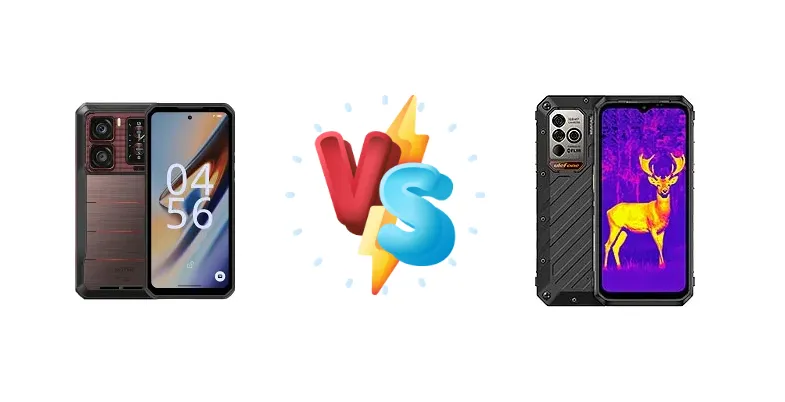
|
🏆 Quick Verdict
For users prioritizing maximum uptime and long-term battery health, the Oukitel WP300 is the clear winner. Its significantly longer 152:22h endurance dwarfs the Ulefone’s 88:30h, making it ideal for extended fieldwork or travel. However, the Ulefone 18T Ultra’s 66W charging offers a substantial convenience boost.
| PHONES | ||
|---|---|---|
| Phone Names | Oukitel WP300 | Ulefone Power Armor 18T Ultra |
| Network | ||
|---|---|---|
| 2G bands | GSM 850 / 900 / 1800 / 1900 | GSM 850 / 900 / 1800 / 1900 |
| 3G bands | HSDPA 800 / 850 / 900 / 1700(AWS) / 1900 / 2100 | HSDPA 800 / 850 / 900 / 1700(AWS) / 1900 / 2100 |
| 4G bands | 1, 2, 3, 4, 5, 7, 8, 12, 13, 17, 18, 19, 20, 25, 26, 28, 34, 38, 40, 41, 66, 71 | 1, 2, 3, 4, 5, 7, 8, 12, 13, 17, 18, 19, 20, 25, 26, 28, 34, 38, 39, 40, 41, 66, 71 |
| 5G bands | 1, 2, 3, 5, 7, 8, 12, 20, 28, 38, 39, 40, 41, 66, 71, 77, 78 SA/NSA | 1, 2, 3, 5, 7, 8, 12, 20, 25, 28, 38, 40, 41, 66, 71, 77, 78, 79 SA/NSA/Sub6 |
| Speed | HSPA, LTE, 5G | HSPA, LTE, 5G |
| Technology | GSM / HSPA / LTE / 5G | GSM / CDMA / HSPA / CDMA2000 / LTE / 5G |
| Launch | ||
|---|---|---|
| Announced | 2024, December | 2023, October |
| Status | Available. Released 2025, March 20 | Available. Released 2023, November |
| Body | ||
|---|---|---|
| Dimensions | 181.3 x 84.9 x 21.2 mm (7.14 x 3.34 x 0.83 in) | 175.2 x 83.4 x 18.8 mm (6.90 x 3.28 x 0.74 in) |
| SIM | Nano-SIM + Nano-SIM | Nano-SIM + Nano-SIM |
| Weight | 512 g (1.13 lb) | 409 g (14.43 oz) |
| Display | ||
|---|---|---|
| Protection | Corning Gorilla Glass 5, Mohs level 5 | Corning Gorilla Glass 5, Mohs level 4 |
| Resolution | 1080 x 2460 pixels (~395 ppi density) | 1080 x 2408 pixels, 20:9 ratio (~401 ppi density) |
| Size | 6.8 inches, 109.8 cm2 (~71.3% screen-to-body ratio) | 6.58 inches, 104.3 cm2 (~71.4% screen-to-body ratio) |
| Type | IPS LCD, 120Hz, 650 nits | IPS LCD, 120Hz |
| Platform | ||
|---|---|---|
| CPU | Octa-core (2x2.6 GHz Cortex-A78 & 6x2.0 GHz Cortex-A55) | Octa-core (2x2.6 GHz Cortex-A78 & 6x2.0 GHz Cortex-A55) |
| Chipset | Mediatek Dimensity 7025 (6 nm) | Mediatek Dimensity 7050 (6 nm) |
| GPU | IMG BXM-8-256 | Mali-G68 MC4 |
| OS | Android 15 | Android 13, upgradable to Android 14 |
| Memory | ||
|---|---|---|
| Card slot | microSDXC (uses shared SIM slot) | microSDXC (uses shared SIM slot) |
| Internal | 512GB 12GB RAM | 512GB 12GB RAM |
| Main Camera | ||
|---|---|---|
| Dual | 108 MP, f/1.9, (wide), 1/1.8", PDAF 2 MP (macro) | - |
| Features | LED flash, HDR, panorama | Hexa-LED flash, HDR, panorama |
| Triple | - | 108 MP, f/1.9, (wide), 1/1.52", 0.7µm, PDAF 5 MP (macro) 5 MP, f/2.2, (FLIR thermal camera, Lepton module) |
| Video | 4K@30fps | 4K@30fps, 1080p@30fps |
| Selfie camera | ||
|---|---|---|
| Single | 32 MP, 1/2.74" | 32 MP, f/2.0, (wide), 1.2µm |
| Video | 1080p@30fps | 1080p@30fps |
| Sound | ||
|---|---|---|
| 35mm jack | No | Yes |
| Loudspeaker | Yes | Yes |
| Comms | ||
|---|---|---|
| Bluetooth | 5.2, A2DP, LE | 5.0, A2DP, LE |
| NFC | Yes | Yes |
| Positioning | GPS, GLONASS, GALILEO, BDS | GPS (L1+L5), GLONASS, GALILEO, BDS, NavIC |
| Radio | FM radio | Wireless FM radio, RDS, recording |
| USB | USB Type-C 2.0, OTG | USB Type-C 2.0, OTG, magnetic connector |
| WLAN | Wi-Fi 802.11 a/b/g/n/ac/6, dual-band | Wi-Fi 802.11 a/b/g/n/ac/6, dual-band |
| Features | ||
|---|---|---|
| Sensors | Fingerprint (side-mounted), accelerometer, gyro, proximity, compass | Fingerprint (side-mounted), accelerometer, gyro, proximity, compass |
| Battery | ||
|---|---|---|
| Charging | 45W wired Reverse wired | 66W wired, 52% in 30 min 15W wireless 5W wireless reversed |
| Type | Li-Po 16000 mAh | Li-Po 9600 mAh |
| Misc | ||
|---|---|---|
| Colors | Gray, Red | Black |
| Price | - | About 700 EUR |
| EU LABEL | ||
|---|---|---|
| Battery | 152:22h endurance, 1000 cycles | 88:30h endurance, 1000 cycles |
| Energy | Class B | Class B |
| Free fall | Class A (270 falls) | Class A (270 falls) |
| Repairability | Class C | Class C |
Oukitel WP300
- Exceptional battery endurance (152:22h)
- Long-term battery health (1000 cycles)
- 45W wired and reverse wired charging
- Slightly less powerful chipset than the Ulefone
- Charging speed is slower than the Ulefone
Ulefone Power Armor 18T Ultra
- Faster processor (Dimensity 7050)
- Rapid 66W wired charging (52% in 30 min)
- Wireless charging (15W) and reverse wireless charging (5W)
- Significantly shorter battery life (88:30h)
- May require more frequent charging
Display Comparison
While both devices likely feature similar LCD panels given their rugged focus, the context data doesn't provide specifics. We can infer that neither will compete with flagship OLEDs in color accuracy or peak brightness. The focus here is durability, not visual fidelity. Bezels are likely substantial on both to protect the screen.
Camera Comparison
The provided data doesn't detail camera specifications beyond the chipsets' ISP capabilities. Given the rugged nature of these phones, we can expect a focus on durability over cutting-edge camera technology. Image processing will likely prioritize clarity and dynamic range in challenging outdoor conditions. Without sensor size or aperture information, a detailed camera comparison is impossible, but it's safe to assume both will offer acceptable, rather than exceptional, image quality.
Performance
Both the Oukitel WP300 and Ulefone Power Armor 18T Ultra utilize an octa-core CPU configuration with the same 2x2.6 GHz Cortex-A78 and 6x2.0 GHz Cortex-A55 arrangement. However, the Ulefone edges ahead with the Mediatek Dimensity 7050 (6nm) versus the WP300’s Dimensity 7025 (6nm). While both are 6nm chips, the 7050 generally offers a slight performance uplift in GPU and AI tasks. This translates to marginally faster app loading and smoother multitasking, but the difference won’t be dramatic in everyday use. Both devices will likely pair this with ample RAM, though the specific amount isn't provided.
Battery Life
The battery is where the Oukitel WP300 truly shines. Its 152:22h endurance is a massive advantage over the Ulefone Power Armor 18T Ultra’s 88:30h. This difference isn’t just about capacity; it’s about efficiency. While both batteries are rated for 1000 cycles, the WP300 allows for far more usage between charges. The Ulefone compensates with 66W wired charging (52% in 30 minutes), 15W wireless, and 5W reverse wireless, offering significant convenience. The WP300 offers 45W wired and reverse wired charging, which is slower but sufficient given its extended battery life.
Buying Guide
Buy the Oukitel WP300 if you need a phone that can reliably last for days on a single charge, and value long-term battery lifespan with its 1000 cycle rating. This is the phone for construction workers, hikers, or anyone frequently away from power outlets. Buy the Ulefone Power Armor 18T Ultra if you prefer the convenience of incredibly fast charging – getting to 52% in just 30 minutes – and want a slightly more powerful processor for demanding tasks, even if it means sacrificing significant battery endurance.