
Oukitel WP30 Pro vs Ulefone Armor 17 Pro: A Deep Dive into Rugged Performance
| Phones Images | |||||
|---|---|---|---|---|---|
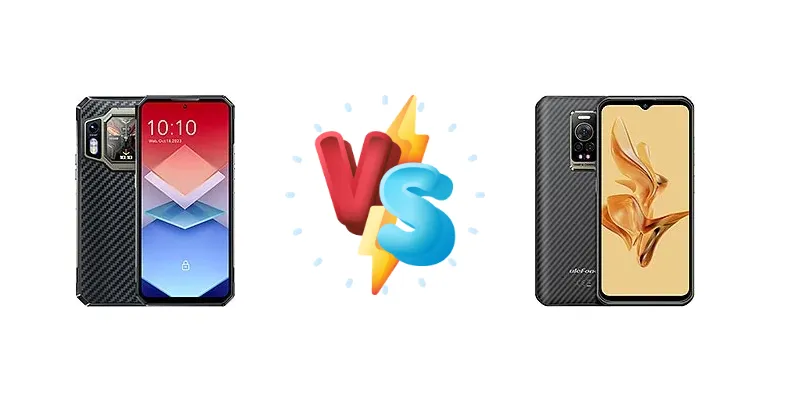
|
🏆 Quick Verdict
For users prioritizing raw performance and rapid charging, the Oukitel WP30 Pro is the clear winner. Its Dimensity 8050 offers a significant leap in CPU and GPU capabilities over the Ulefone Armor 17 Pro’s Helio G99. While the Ulefone offers wireless charging, the Oukitel’s speed advantage justifies the trade-off for most power users.
| PHONES | ||
|---|---|---|
| Phone Names | Oukitel WP30 Pro | Ulefone Armor 17 Pro |
| Network | ||
|---|---|---|
| 2G bands | GSM 850 / 900 / 1800 / 1900 | GSM 850 / 900 / 1800 / 1900 |
| 3G bands | HSDPA 800 / 850 / 900 / 1700(AWS) / 1900 / 2100 | HSDPA 800 / 850 / 900 / 1700(AWS) / 1900 / 2100 |
| 4G bands | 1, 2, 3, 4, 5, 7, 8, 12, 13, 17, 18, 19, 20, 25, 26, 28, 34, 38, 39, 40, 41, 66, 71 | 1, 2, 3, 4, 5, 7, 8, 12, 13, 17, 18, 19, 20, 25, 26, 28, 34, 38, 39, 40, 41, 66 |
| 5G bands | 1, 2, 3, 5, 7, 8, 12, 20, 25, 28, 34, 38, 39, 40, 41, 48, 66, 71, 77, 78, 79 SA/NSA | - |
| Speed | HSPA, LTE, 5G | HSPA, LTE |
| Technology | GSM / CDMA / HSPA / LTE / 5G | GSM / HSPA / LTE |
| Launch | ||
|---|---|---|
| Announced | 2023, October | 2022, October 31 |
| Status | Available. Released 2023, November 11 | Available. Released 2022, October 31 |
| Body | ||
|---|---|---|
| Dimensions | 177.4 x 83.6 x 19 mm (6.98 x 3.29 x 0.75 in) | 172.7 x 80.4 x 12.5 mm (6.80 x 3.17 x 0.49 in) |
| SIM | Nano-SIM + eSIM | Nano-SIM + Nano-SIM |
| Weight | 413.8 g (14.60 oz) | 290 g (10.23 oz) |
| - | IP68/IP69K dust/water resistant (up to 1.5m for 30 min) Drop-to-concrete resistance from up to 1.5m MIL-STD-810G compliant | |
| Display | ||
|---|---|---|
| Protection | Corning Gorilla Glass 5 | Corning Gorilla Glass 5 |
| Resolution | 1080 x 2460 pixels (~396 ppi density) | 1080 x 2408 pixels, 20:9 ratio (~401 ppi density) |
| Size | 6.78 inches, 109.2 cm2 (~73.6% screen-to-body ratio) | 6.58 inches, 104.3 cm2 (~75.1% screen-to-body ratio) |
| Type | IPS LCD, 120Hz, 430 nits | IPS LCD, 120Hz |
| Platform | ||
|---|---|---|
| CPU | Octa-core (1x3.0 GHz Cortex-A78 & 3x2.6 GHz Cortex-A78 & 4x2.0 GHz Cortex-A55) | Octa-core (2x2.2 GHz Cortex-A76 & 6x2.0 GHz Cortex-A55) |
| Chipset | Mediatek Dimensity 8050 (6 nm) | Mediatek Helio G99 (6 nm) |
| GPU | Mali-G77 MC9 | Mali-G57 MC2 |
| OS | Android 13 | Android 12 |
| Memory | ||
|---|---|---|
| Card slot | No | microSDXC (dedicated slot) |
| Internal | 512GB 12GB RAM | 256GB 8GB RAM |
| Main Camera | ||
|---|---|---|
| Features | LED flash, HDR, panorama | Triple-LED flash, HDR, panorama |
| Single | - | 16 MP, f/2.2, (wide), 1.0µm |
| Triple | 108 MP, f/1.9, (wide), 1/1.33", PDAF 20 MP, f/2.0, (night vision), 1/2.78", AF, infrared night vision lights 5 MP (macro) | 108 MP, f/1.9, (wide), 1/1.52”, 0.7µm, PDAF 8 MP, f/2.2, 119˚, (ultrawide), 1/4.0", 1.12µm 8 MP, (night vision), 2 infrared night vision lights |
| Video | 4K@30fps, 1080p@30fps | 1440p@30fps, 1080p@30fps |
| Selfie camera | ||
|---|---|---|
| Single | 32 MP, f/2.2, (wide), 1/2.74" | 16 MP, f/2.2, (wide), 1.0µm |
| Video | 1080p@30fps | 1080p@30fps |
| Sound | ||
|---|---|---|
| 3.5mm jack | - | Yes |
| 35mm jack | Unspecified | Yes |
| Loudspeaker | Yes | Yes |
| Comms | ||
|---|---|---|
| Bluetooth | 5.2, A2DP, LE | 5.2, A2DP, LE |
| NFC | Yes | Yes |
| Positioning | GPS (L1+L5), GLONASS, GALILEO, BDS | GPS, GLONASS, GALILEO, BDS |
| Radio | Unspecified | Wireless FM radio, RDS, recording |
| USB | USB Type-C 2.0, OTG | USB Type-C 2.0, OTG |
| WLAN | Wi-Fi 802.11 a/b/g/n/ac/6, dual-band | Wi-Fi 802.11 a/b/g/n/ac, dual-band |
| Features | ||
|---|---|---|
| Sensors | Fingerprint (side-mounted), accelerometer, gyro, proximity, compass | Fingerprint (side-mounted), accelerometer, gyro, proximity, compass |
| - | MagSafe compatible accessories | |
| Battery | ||
|---|---|---|
| Charging | 120W wired, 50% in 15 min, 100% in 50 min | 66W wired, 53% in 15 min 15W wireless Wireless reversed |
| Type | Li-Po 11000 mAh | Li-Po 5380 mAh |
| Misc | ||
|---|---|---|
| Colors | Black | Black |
| Price | About 500 EUR | About 260 EUR |
Oukitel WP30 Pro
- Significantly faster charging (120W)
- More powerful processor (Dimensity 8050)
- Superior performance for gaming and demanding tasks
- Lacks wireless charging
- No reversed wireless charging
Ulefone Armor 17 Pro
- Wireless charging support
- Reversed wireless charging capability
- Potentially better battery life due to less power-hungry processor
- Slower charging speeds (66W wired)
- Less powerful processor (Helio G99)
- Lower overall performance
Display Comparison
Neither device's display specifications are provided, so a direct comparison is limited. However, given the WP30 Pro's focus on performance, it's reasonable to expect a higher refresh rate panel. The Armor 17 Pro, being an older model, may prioritize battery efficiency over display fluidity. Rugged phones often prioritize durability over display quality, so expect robust glass protection on both, but potentially lower peak brightness compared to mainstream smartphones.
Camera Comparison
Without detailed camera specifications, a precise comparison is difficult. However, the market positioning suggests the WP30 Pro may feature a more advanced camera system. Rugged phones often prioritize practicality over cutting-edge camera tech, but the WP30 Pro’s higher processing power could enable more sophisticated image processing algorithms. Both devices likely feature multiple lenses, but the WP30 Pro’s chipset could handle higher resolution sensors and more complex computational photography features.
Performance
The Oukitel WP30 Pro’s Mediatek Dimensity 8050 (6nm) represents a substantial upgrade over the Ulefone Armor 17 Pro’s Helio G99 (6nm). The Dimensity 8050’s octa-core configuration, featuring a 3.0 GHz Cortex-A78 prime core, delivers significantly higher single-core and multi-core performance. The G99’s 2.2 GHz Cortex-A76 cores, while efficient, simply can’t match the processing power. This translates to faster app loading times, smoother multitasking, and a more responsive gaming experience on the WP30 Pro. The Dimensity 8050 also benefits from a more modern GPU architecture, providing a noticeable advantage in graphics-intensive applications.
Battery Life
The charging speed is a key differentiator. The Oukitel WP30 Pro’s 120W wired charging is significantly faster than the Ulefone Armor 17 Pro’s 66W wired charging. Oukitel claims 50% charge in 15 minutes and 100% in 50 minutes, while Ulefone manages 53% in 15 minutes. The Ulefone Armor 17 Pro compensates with 15W wireless charging and reversed wireless charging, offering flexibility the WP30 Pro lacks. While battery capacity isn’t specified, the faster charging of the WP30 Pro mitigates the impact of a potentially smaller battery.
Buying Guide
Buy the Oukitel WP30 Pro if you need a rugged phone capable of handling demanding tasks like gaming, video editing, or running multiple apps simultaneously, and if minimizing charging time is a priority. Buy the Ulefone Armor 17 Pro if you value the convenience of wireless charging and reversed wireless charging, and if your usage primarily revolves around everyday tasks and moderate gaming.