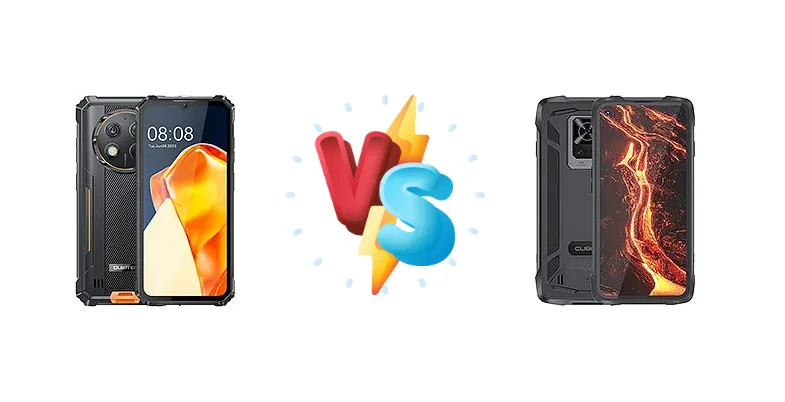
The rugged smartphone market caters to a specific user: those needing a device that can withstand drops, dust, and water. Both the Oukitel WP28 and Cubot KingKong 7 aim to deliver this durability at an accessible price point. However, they approach this goal with different internal hardware, creating a clear distinction in performance and user experience. This comparison will dissect these differences to determine which phone offers the best value for your needs.
🏆 Quick Verdict
For the average user prioritizing a smoother, more responsive experience, the Cubot KingKong 7 emerges as the better choice. Its Mediatek Helio P60 chipset, while not the latest, provides a noticeable performance advantage over the Oukitel WP28's unspecified processor, making everyday tasks and light gaming more enjoyable. The WP28 may appeal to those on a tighter budget, but the performance trade-off is significant.
| Network |
|---|
| 2G bands | GSM 850 / 900 / 1800 / 1900 | GSM 850 / 900 / 1800 / 1900 |
| 3G bands | HSDPA 850 / 900 / 1700(AWS) / 1900 / 2100 | HSDPA 850 / 900 / 1700(AWS) / 1900 / 2100 |
| 4G bands | LTE | 1, 2, 3, 4, 5, 7, 8, 12, 13, 17, 18, 19, 20, 25, 26, 28, 38, 40, 41, 66 |
| Speed | HSPA, LTE | HSPA, LTE |
| Technology | GSM / HSPA / LTE | GSM / CDMA / HSPA / LTE |
| Launch |
|---|
| Announced | 2023, July | 2022 |
| Status | Available. Released 2023, July | Available. Released 2022 |
| Body |
|---|
| Dimensions | - | 166.8 x 83.5 x 14 mm (6.57 x 3.29 x 0.55 in) |
| SIM | Nano-SIM + Nano-SIM | Nano-SIM + Nano-SIM |
| Weight | - | 267 g (9.42 oz) |
| Display |
|---|
| Protection | Corning Gorilla Glass | - |
| Resolution | 720 x 1600 pixels, 20:9 ratio (~269 ppi density) | 1080 x 2300 pixels (~400 ppi density) |
| Size | 6.52 inches, 102.6 cm2 | 6.36 inches, 100.4 cm2 (~72.1% screen-to-body ratio) |
| Type | IPS LCD | IPS LCD |
| Platform |
|---|
| CPU | - | Octa-core (4x2.0 GHz Cortex-A73 & 4x2.0 GHz Cortex-A53) |
| Chipset | - | Mediatek MT6771V/CA Helio P60 (12 nm) |
| GPU | - | Mali-G72 MP3 |
| OS | Android 13 | Android 11 |
| Memory |
|---|
| Card slot | microSDXC (uses shared SIM slot) | microSDXC (uses shared SIM slot) |
| Internal | 256GB 8GB RAM | 128GB 8GB RAM |
| Main Camera |
|---|
| Dual | 48 MP, (wide)
2 MP (macro) | - |
| Features | LED flash | LED flash |
| Triple | - | 64 MP, (wide), AF
16 MP, (ultrawide)
5 MP (macro) |
| Video | 1080p@30fps | Yes |
| Selfie camera |
|---|
| Single | 5 MP | 32 MP |
| Video | Yes | Yes |
| Sound |
|---|
| 35mm jack | Unspecified | Unspecified |
| Loudspeaker | Yes | Yes |
| Comms |
|---|
| Bluetooth | Yes | 4.2, A2DP |
| NFC | No | Yes |
| Positioning | GPS, GLONASS, GALILEO, BDS | GPS, GLONASS, BDS |
| Radio | Unspecified | Unspecified |
| USB | USB Type-C 2.0 | USB Type-C, OTG |
| WLAN | Yes | Wi-Fi 802.11 a/b/g/n |
| Features |
|---|
| Sensors | Unspecified | Fingerprint (rear-mounted), accelerometer, gyro, proximity, compass |
| Battery |
|---|
| Charging | 18W wired | - |
| Type | Li-Po 10600 mAh | 5000 mAh |
| Misc |
|---|
| Colors | Black, Orange, Green | Black |
| Price | About 200 EUR | - |
Oukitel WP28
- Potentially lower price point
- Rugged design for durability
- Basic smartphone functionality
- Likely weaker processor performance
- Slow 18W charging
- Limited multitasking capabilities
Cubot KingKong 7
- More powerful Mediatek Helio P60 chipset
- Octa-core CPU for smoother performance
- Potentially better power efficiency
- May be slightly more expensive
- Rugged design may add bulk
- Camera quality likely average
Display Comparison
Neither device's display specifications are provided, so a direct comparison is limited. However, given the price bracket, we can assume both utilize IPS LCD panels. The KingKong 7's performance advantage suggests a potentially higher display refresh rate or more optimized panel calibration, leading to a smoother visual experience. Users prioritizing color accuracy and viewing angles should expect typical performance for this segment.
Camera Comparison
Without detailed camera specifications for either device, a precise comparison is difficult. However, the rugged phone market often prioritizes durability over camera quality. We can assume both phones feature basic camera setups suitable for casual snapshots. The absence of information regarding sensor size or optical image stabilization (OIS) suggests neither device will excel in low-light photography. The inclusion of a 2MP macro camera on either device is likely a marketing tactic, as the image quality from such sensors is generally poor.
Performance
The Cubot KingKong 7 boasts a Mediatek MT6771V/CA Helio P60 (12 nm) chipset with an octa-core CPU configuration (4x2.0 GHz Cortex-A73 & 4x2.0 GHz Cortex-A53). This architecture provides a solid foundation for multitasking and app responsiveness. The Cortex-A73 cores offer significantly better single-core performance than the typically found Cortex-A53 cores in similarly priced devices. The Oukitel WP28 lacks chipset information, suggesting a less powerful processor. This difference translates to slower app loading times, potential stuttering during multitasking, and a less enjoyable overall user experience on the WP28.
Battery Life
The Oukitel WP28 features 18W wired charging. The Cubot KingKong 7's battery capacity and charging speed are unknown. However, the Helio P60 chipset's 12nm process is more power-efficient than older, larger node chipsets. This efficiency, combined with potential software optimizations, could result in comparable or even better battery life on the KingKong 7 despite potentially having a similar battery capacity to the WP28. The 18W charging on the WP28 is relatively slow, suggesting longer charging times.
Buying Guide
Buy the Oukitel WP28 if you need a bare-bones, ultra-affordable rugged phone primarily for basic communication and minimal app usage. Its appeal lies in its low price point. Buy the Cubot KingKong 7 if you prefer a more responsive user experience, capable of handling multitasking, social media, and light gaming without significant lag. The Helio P60 chipset offers a tangible performance boost for everyday use.
Frequently Asked Questions
❓ Will the Cubot KingKong 7 be able to run demanding games like PUBG Mobile?
While the Helio P60 isn't a gaming powerhouse, it should be capable of running PUBG Mobile at medium settings with acceptable frame rates. Expect some occasional stuttering during intense firefights. The Oukitel WP28, with its unknown processor, is unlikely to provide a playable experience.
❓ How well do these phones handle drops and water exposure?
Both phones are marketed as rugged, meaning they should withstand drops from reasonable heights and submersion in water. However, the specific IP rating (Ingress Protection) is crucial. Without this information, it's difficult to quantify their exact level of protection. Always check the manufacturer's specifications for the IP rating before exposing the phone to water or dust.
❓ Is the lack of detailed specs for the Oukitel WP28 a red flag?
Yes, the absence of key specifications like the chipset model and battery capacity is concerning. It suggests the manufacturer is prioritizing price over transparency and potentially using older or less capable components. This makes it difficult to assess the phone's true value and performance.