
Oukitel WP28 S vs. Ulefone Power Armor 19T: A Rugged Smartphone Showdown
| Phones Images | |||||
|---|---|---|---|---|---|
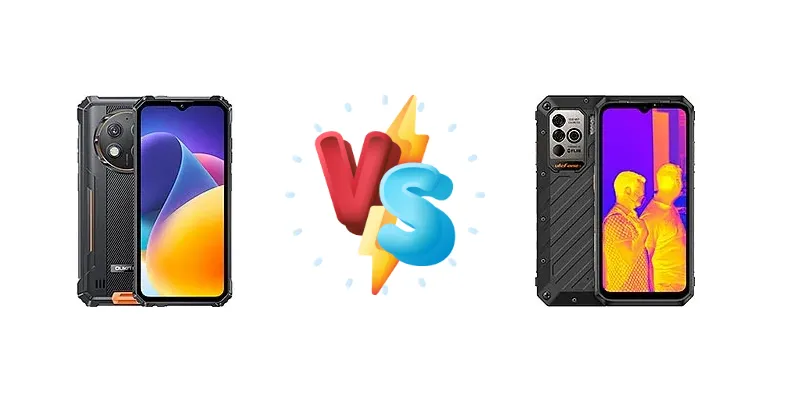
|
🏆 Quick Verdict
For the average user prioritizing sustained battery life and cost-effectiveness, the Oukitel WP28 S is the better choice. However, users who demand quicker app loading times, smoother multitasking, and rapid recharging will find the Ulefone Power Armor 19T a more compelling option.
| PHONES | ||
|---|---|---|
| Phone Names | Oukitel WP28 S | Ulefone Power Armor 19T |
| Network | ||
|---|---|---|
| 2G bands | GSM 850 / 900 / 1800 / 1900 | GSM 850 / 900 / 1800 / 1900 |
| 3G bands | HSDPA 850 / 900 / 1700(AWS) / 1900 / 2100 | HSDPA 800 / 850 / 900 / 1700(AWS) / 1900 / 2100 |
| 4G bands | 1, 2, 3, 4, 5, 7, 8, 12, 17, 18, 19, 20, 25, 26, 28, 38, 40, 41, 66 | 1, 2, 3, 4, 5, 7, 8, 12, 13, 17, 18, 19, 20, 25, 26, 28, 34, 38, 39, 40, 41, 66, 71 |
| Speed | HSPA, LTE | HSPA, LTE |
| Technology | GSM / HSPA / LTE | GSM / CDMA / HSPA / CDMA2000 / LTE |
| - | CDMA2000 1x | |
| Launch | ||
|---|---|---|
| Announced | 2024, July | 2023, March 06 |
| Status | Available. Released 2024, August | Available. Released 2023, March 06 |
| Body | ||
|---|---|---|
| Dimensions | 174.2 x 82.3 x 17.4 mm (6.86 x 3.24 x 0.69 in) | 175.2 x 83.4 x 18.8 mm (6.90 x 3.28 x 0.74 in) |
| SIM | Nano-SIM | Nano-SIM + Nano-SIM |
| Weight | 373 g (13.16 oz) | 409 g (14.43 oz) |
| - | IP68/IP69K dust/water resistant (up to 1.5m for 30 min) Drop-to-concrete resistance from up to 1.5m MIL-STD-810H compliant Accessory connector (ulefone endoscope, microscope) | |
| Display | ||
|---|---|---|
| Protection | Corning Gorilla Glass 5, Mohs level 5 | Corning Gorilla Glass 5 |
| Resolution | 720 x 1600 pixels, 20:9 ratio (~269 ppi density) | 1080 x 2408 pixels, 20:9 ratio (~401 ppi density) |
| Size | 6.52 inches, 102.6 cm2 (~71.6% screen-to-body ratio) | 6.58 inches, 104.3 cm2 (~71.4% screen-to-body ratio) |
| Type | IPS LCD | IPS LCD, 120Hz |
| Platform | ||
|---|---|---|
| CPU | Octa-core (2x1.6 GHz Cortex-A75 & 6x1.6 GHz Cortex-A55) | Octa-core (2x2.2 GHz Cortex-A76 & 6x2.0 GHz Cortex-A55) |
| Chipset | Unisoc T606 (12 nm) | Mediatek Helio G99 (6 nm) |
| GPU | Mali-G57 MP1 | Mali-G57 MC2 |
| OS | Android 14 | Android 12 |
| Memory | ||
|---|---|---|
| Card slot | Unspecified | microSDXC (uses shared SIM slot) |
| Internal | 128GB 4GB RAM | 256GB 12GB RAM |
| Main Camera | ||
|---|---|---|
| Features | LED flash, panorama | Hexa-LED flash, HDR, panorama |
| Single | 13 MP, f/2.2, (wide), 1/3.06", PDAF | - |
| Triple | - | 108 MP, f/1.9, (wide), 1/1.52", 0.7µm, PDAF 5 MP (macro) FLIR thermal camera (Lepton module) 5 MP (for thermal module) |
| Video | 1080p@30fps | 1440p@30fps, 1080p@30fps |
| Selfie camera | ||
|---|---|---|
| Single | 5 MP, f/2.2, (wide), 1/5.0" | 16 MP, f/2.0, (wide), 1.0µm |
| Video | 720p@30fps | 1080p@30fps |
| Sound | ||
|---|---|---|
| 3.5mm jack | - | Yes |
| 35mm jack | No | Yes |
| Loudspeaker | Yes | Yes |
| Comms | ||
|---|---|---|
| Bluetooth | 5.0, A2DP, LE | 5.2, A2DP, LE |
| NFC | Yes | Yes |
| Positioning | GPS, GLONASS, GALILEO, BDS | GPS, GLONASS, GALILEO, BDS |
| Radio | FM radio | Wireless FM radio, RDS, recording |
| USB | USB Type-C 2.0, OTG | USB Type-C 2.0, OTG, magnetic connector |
| WLAN | Wi-Fi 802.11 a/b/g/n/ac, dual-band | Wi-Fi 802.11 a/b/g/n/ac, dual-band |
| Features | ||
|---|---|---|
| Sensors | Accelerometer, proximity, compass | Fingerprint (side-mounted), accelerometer, gyro, proximity, compass |
| Battery | ||
|---|---|---|
| Charging | 18W wired | 66W wired, 52% in 30 min 15W wireless 5W wireless reversed |
| Type | Li-Po 10600 mAh | Li-Po 9600 mAh |
| Misc | ||
|---|---|---|
| Colors | Black, Orange, Green | Black |
| Price | About 110 EUR | About 440 EUR |
| EU LABEL | ||
|---|---|---|
| Battery | 100:16h endurance, 1000 cycles | - |
| Energy | Class B | - |
| Free fall | Class A (270 falls) | - |
| Repairability | Class C | - |
Oukitel WP28 S
- Exceptional battery endurance (16h claimed)
- Long battery lifespan (1000 cycles)
- Potentially lower cost due to less powerful chipset
- Slower processor may struggle with demanding tasks
- Slow 18W charging
Ulefone Power Armor 19T
- Faster and more responsive performance with Helio G99
- 66W fast charging (52% in 30 minutes)
- Wireless charging capabilities (15W & 5W reverse)
- Potentially shorter battery life compared to WP28 S
- May be more expensive than the WP28 S
Display Comparison
Display specifications are not provided, so a direct comparison is limited. However, given the price points, both likely utilize IPS LCD panels. The focus here will be on performance differences impacting display responsiveness. The more powerful GPU in the Ulefone 19T *could* translate to slightly smoother scrolling and animations, but this is speculative without display specs.
Camera Comparison
Camera details are absent, making a detailed comparison impossible. However, rugged phones often prioritize durability over camera quality. We can assume both phones feature a multi-camera setup, but image quality will likely be similar, relying heavily on software processing. Without sensor size or aperture information, it's difficult to assess low-light performance or dynamic range.
Performance
The Ulefone Power Armor 19T boasts a significant performance advantage thanks to its MediaTek Helio G99 chipset, fabricated on a more efficient 6nm process. Its CPU configuration (2x2.2 GHz Cortex-A76 & 6x2.0 GHz Cortex-A55) outperforms the Oukitel WP28 S’s Unisoc T606 (2x1.6 GHz Cortex-A75 & 6x1.6 GHz Cortex-A55). The G99’s Cortex-A76 cores offer a substantial uplift in single-core performance, crucial for everyday tasks and app responsiveness. The 6nm process also contributes to better thermal management, potentially reducing throttling during sustained workloads. The Unisoc T606, while adequate for basic tasks, will likely struggle with demanding games or heavy multitasking.
Battery Life
The Oukitel WP28 S claims 16 hours of endurance, coupled with a 1000-cycle battery lifespan, suggesting a focus on long-term battery health. While the capacity isn't specified, the emphasis on endurance implies a larger battery. The Ulefone Power Armor 19T compensates for a potentially smaller battery with significantly faster charging: 66W wired, achieving 52% charge in 30 minutes, alongside 15W wireless and 5W reverse wireless charging. This charging speed is a major advantage for users who need to quickly top up their device. The WP28 S’s 18W charging is comparatively slow.
Buying Guide
Buy the Oukitel WP28 S if you need a phone that can reliably last through multi-day work trips or outdoor adventures without frequent charging. It’s ideal for users who prioritize battery endurance over raw processing power. Buy the Ulefone Power Armor 19T if you prefer a more responsive user experience, frequently use demanding apps, and value the convenience of 66W fast charging and wireless charging options.