
Oukitel WP28 S vs. Blackview BV9200: A Rugged Smartphone Showdown
| Phones Images | |||||
|---|---|---|---|---|---|
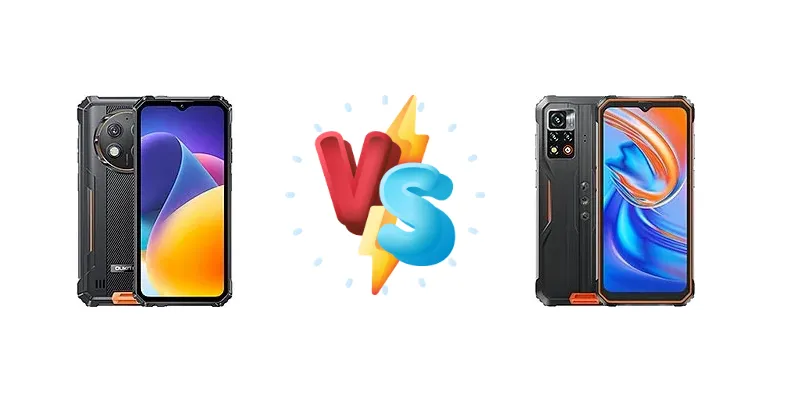
|
🏆 Quick Verdict
For the average user prioritizing sustained performance and rapid refueling, the Blackview BV9200 emerges as the winner. Its Helio G96 chipset and 66W charging significantly outperform the Oukitel WP28 S, despite the latter’s impressive battery endurance claims. However, the WP28 S remains a compelling option for those on a tighter budget or who prioritize maximum uptime above all else.
| PHONES | ||
|---|---|---|
| Phone Names | Oukitel WP28 S | Blackview BV9200 |
| Network | ||
|---|---|---|
| 2G bands | GSM 850 / 900 / 1800 / 1900 | GSM 850 / 900 / 1800 / 1900 |
| 3G bands | HSDPA 850 / 900 / 1700(AWS) / 1900 / 2100 | HSDPA 850 / 900 / 1700(AWS) / 1900 / 2100 |
| 4G bands | 1, 2, 3, 4, 5, 7, 8, 12, 17, 18, 19, 20, 25, 26, 28, 38, 40, 41, 66 | 1, 2, 3, 4, 5, 7, 8, 12, 13, 17, 18, 19, 20, 25, 26, 28, 34, 38, 39, 40, 41, 66 |
| Speed | HSPA, LTE | HSPA, LTE |
| Technology | GSM / HSPA / LTE | GSM / CDMA / HSPA / LTE |
| - | CDMA 800 / 1900 | |
| Launch | ||
|---|---|---|
| Announced | 2024, July | 2022, December 28 |
| Status | Available. Released 2024, August | Available. Released 2023, January 09 |
| Body | ||
|---|---|---|
| Dimensions | 174.2 x 82.3 x 17.4 mm (6.86 x 3.24 x 0.69 in) | 174.5 x 81.8 x 13.6 mm (6.87 x 3.22 x 0.54 in) |
| SIM | Nano-SIM | Nano-SIM + Nano-SIM |
| Weight | 373 g (13.16 oz) | 310 g (10.93 oz) |
| - | IP68/IP69K dust/water resistant (up to 1.5m for 30 min) Drop-to-concrete resistance from up to 1.8m MIL-STD-810H compliant | |
| Display | ||
|---|---|---|
| Protection | Corning Gorilla Glass 5, Mohs level 5 | Corning Gorilla Glass 5 |
| Resolution | 720 x 1600 pixels, 20:9 ratio (~269 ppi density) | 1080 x 2408 pixels, 20:9 ratio (~400 ppi density) |
| Size | 6.52 inches, 102.6 cm2 (~71.6% screen-to-body ratio) | 6.6 inches, 104.9 cm2 (~73.5% screen-to-body ratio) |
| Type | IPS LCD | IPS LCD, 120Hz |
| Platform | ||
|---|---|---|
| CPU | Octa-core (2x1.6 GHz Cortex-A75 & 6x1.6 GHz Cortex-A55) | Octa-core (2x2.05 GHz Cortex-A76 & 6x2.0 GHz Cortex-A55) |
| Chipset | Unisoc T606 (12 nm) | Mediatek MT6781 Helio G96 (12 nm) |
| GPU | Mali-G57 MP1 | Mali-G52 MC2 |
| OS | Android 14 | Android 12, Doke-OS 3.1 |
| Memory | ||
|---|---|---|
| Card slot | Unspecified | microSDXC (dedicated slot) |
| Internal | 128GB 4GB RAM | 256GB 8GB RAM |
| - | UFS 2.1 | |
| Main Camera | ||
|---|---|---|
| Features | LED flash, panorama | LED flash, HDR, panorama |
| Single | 13 MP, f/2.2, (wide), 1/3.06", PDAF | 16 MP, (wide), 1/3", 1.0µm |
| Triple | - | 50 MP, f/1.8, (wide), 1/2.76", 0.64µm, PDAF 8 MP, f/1.8, 120˚, (ultrawide), AF Auxiliary lens |
| Video | 1080p@30fps | 1440p@30fps, 1080p@30fps |
| Selfie camera | ||
|---|---|---|
| Single | 5 MP, f/2.2, (wide), 1/5.0" | 16 MP, f/2.0, (wide), 1/3", 1.0µm |
| Video | 720p@30fps | 1080p |
| Sound | ||
|---|---|---|
| 3.5mm jack | - | No |
| 35mm jack | No | No |
| Loudspeaker | Yes | Yes, with dual speakers |
| Comms | ||
|---|---|---|
| Bluetooth | 5.0, A2DP, LE | 5.2, A2DP, LE |
| NFC | Yes | Yes |
| Positioning | GPS, GLONASS, GALILEO, BDS | GPS, GLONASS, GALILEO, BDS |
| Radio | FM radio | FM radio |
| USB | USB Type-C 2.0, OTG | USB Type-C, OTG |
| WLAN | Wi-Fi 802.11 a/b/g/n/ac, dual-band | Wi-Fi 802.11 a/b/g/n/ac, dual-band |
| Features | ||
|---|---|---|
| Sensors | Accelerometer, proximity, compass | Fingerprint (side-mounted), accelerometer, gyro, proximity, compass, barometer |
| Battery | ||
|---|---|---|
| Charging | 18W wired | 66W wired 30W wireless |
| Type | Li-Po 10600 mAh | 5000 mAh |
| Misc | ||
|---|---|---|
| Colors | Black, Orange, Green | Black, Orange, Green |
| Price | About 110 EUR | About 200 EUR |
| EU LABEL | ||
|---|---|---|
| Battery | 100:16h endurance, 1000 cycles | - |
| Energy | Class B | - |
| Free fall | Class A (270 falls) | - |
| Repairability | Class C | - |
Oukitel WP28 S
- Exceptional battery endurance claims
- Highly affordable price point
- Rugged build quality for demanding environments
- Slower processor limits performance
- Slow 18W charging speed
- Display specifications are unknown, likely basic
Blackview BV9200
- Faster MediaTek Helio G96 processor
- 66W wired and 30W wireless charging
- Brighter and higher contrast display
- Potentially shorter battery life compared to WP28 S
- Higher price tag
- Rugged design may add bulk
Display Comparison
The Blackview BV9200 boasts a significantly more detailed display experience, with a measured peak brightness of 481 nits and a 1423:1 contrast ratio. While the WP28 S’s display specifications are not provided, the BV9200’s higher contrast ratio translates to deeper blacks and more vibrant colors, enhancing media viewing. The higher brightness is crucial for outdoor visibility, a key requirement for rugged phones. The lack of display specs for the WP28 S suggests a more basic panel, likely prioritizing durability over visual fidelity.
Camera Comparison
Without detailed camera specifications for either device, a direct comparison is difficult. However, the rugged phone market often prioritizes durability over camera quality. It’s reasonable to assume both phones feature capable main sensors for outdoor photography, but image processing will likely be the differentiating factor. The presence of a 2MP macro camera on many phones in this segment suggests limited utility, and its inclusion shouldn’t heavily influence purchasing decisions. The BV9200’s chipset may offer slightly better image signal processing capabilities, potentially leading to improved image quality in challenging lighting conditions.
Performance
The core difference lies in the chipsets. The Blackview BV9200’s MediaTek Helio G96, featuring 2x2.05 GHz Cortex-A76 cores and 6x2.0 GHz Cortex-A55 cores, offers a substantial performance advantage over the Oukitel WP28 S’s Unisoc T606 (2x1.6 GHz Cortex-A75 & 6x1.6 GHz Cortex-A55). The G96’s newer Cortex-A76 architecture provides a noticeable boost in single-core performance, impacting app launch speeds and overall responsiveness. While both are built on a 12nm process, the G96’s superior core design and higher clock speeds make it the clear winner for gaming and multitasking. The WP28 S will handle basic tasks adequately, but will struggle with more demanding applications.
Battery Life
The Oukitel WP28 S claims 16 hours of endurance and 1000 charge cycles, suggesting a focus on longevity. However, the Blackview BV9200 compensates for potentially smaller battery capacity with its significantly faster charging capabilities: 66W wired and 30W wireless. This means the BV9200 can go from 0-100% in a fraction of the time compared to the WP28 S’s 18W charging. While the WP28 S may last longer on a single charge, the BV9200’s rapid charging minimizes downtime, making it more convenient for users who need to quickly top up their battery.
Buying Guide
Buy the Oukitel WP28 S if you need a highly affordable, extremely durable phone where battery life is paramount and demanding tasks aren't a priority. This is ideal for construction workers, hikers on multi-day trips, or anyone needing a reliable backup device. Buy the Blackview BV9200 if you prefer a smoother user experience, faster app loading times, and the convenience of incredibly quick charging, making it suitable for users who frequently use their phone for media consumption, gaming, or professional applications.