
Oukitel WP200 vs. Ulefone Power Armor 14 Pro: A Rugged Performance Showdown
| Phones Images | |||||
|---|---|---|---|---|---|
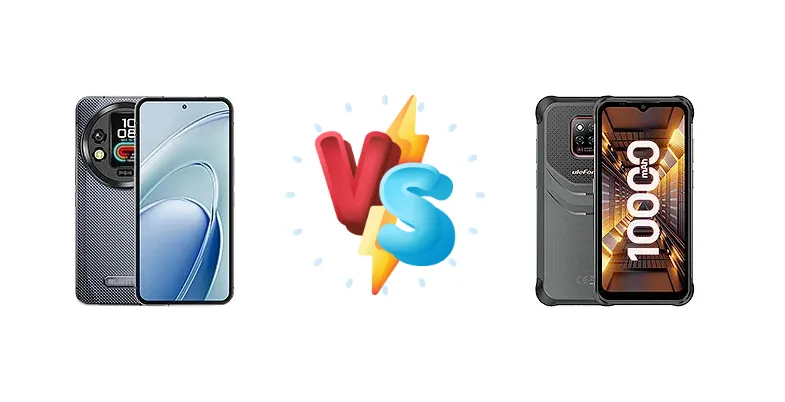
|
🏆 Quick Verdict
For users prioritizing raw performance and future-proofing, the Oukitel WP200 is the clear winner. Its Dimensity 8200 chipset delivers significantly faster processing speeds, making it ideal for gaming and demanding applications. However, the Ulefone Power Armor 14 Pro offers a compelling value proposition for those seeking a reliable, capable rugged phone without the premium price tag.
| PHONES | ||
|---|---|---|
| Phone Names | Oukitel WP200 | Ulefone Power Armor 14 Pro |
| Network | ||
|---|---|---|
| 2G bands | GSM 850 / 900 / 1800 / 1900 | GSM 850 / 900 / 1800 / 1900 |
| 3G bands | HSDPA 800 / 850 / 900 / 1700(AWS) / 1900 / 2100 | HSDPA 850 / 900 / 1700(AWS) / 1900 / 2100 |
| 4G bands | 1, 2, 3, 4, 5, 7, 8, 12, 13, 17, 18, 19, 20, 25, 26, 28, 34, 38, 40, 41, 66, 71 | 1, 2, 3, 4, 5, 7, 8, 12, 13, 17, 18, 19, 20, 25, 26, 28, 38, 40 |
| 5G bands | 1, 2, 3, 5, 7, 8, 12, 20, 25, 28, 34, 38, 39, 40, 41, 48, 66, 71, 77, 78 SA/NSA | - |
| Speed | HSPA, LTE, 5G | HSPA, LTE |
| Technology | GSM / HSPA / LTE / 5G | GSM / HSPA / LTE |
| Launch | ||
|---|---|---|
| Announced | 2025, March | 2022, March 09 |
| Status | Available. Released 2025, March 21 | Available. Released 2022, March 09 |
| Body | ||
|---|---|---|
| Dimensions | 163.6 x 77.9 x 13.7 mm (6.44 x 3.07 x 0.54 in) | 175.6 x 82.5 x 17.2 mm (6.91 x 3.25 x 0.68 in) |
| SIM | Nano-SIM + Nano-SIM | Nano-SIM + Nano-SIM |
| Weight | 311 g (10.97 oz) | 358.2 g (12.63 oz) |
| - | IP68 dust/water resistant (up to 1.5m for 30 min) Drop-to-concrete resistance from up to 1.5m MIL-STD-810G compliant | |
| Display | ||
|---|---|---|
| Protection | Corning Gorilla Glass 5 | Corning Gorilla Glass 3 |
| Resolution | 1080 x 2412 pixels, 20:9 ratio (~394 ppi density) | 720 x 1600 pixels, 20:9 ratio (~269 ppi density) |
| Size | 6.7 inches, 108.0 cm2 (~84.8% screen-to-body ratio) | 6.52 inches, 102.6 cm2 (~70.8% screen-to-body ratio) |
| Type | AMOLED, 120Hz, 500 nits | IPS LCD |
| Platform | ||
|---|---|---|
| CPU | Octa-core (1x3.1 GHz Cortex-A78 & 3x3.0 GHz Cortex-A78 & 4x2.0 GHz Cortex-A55) | Octa-core (2x2.0 GHz Cortex-A75 & 6x1.8 GHz Cortex-A55) |
| Chipset | Mediatek Dimensity 8200 (4 nm) | Mediatek MT6769Z Helio G85 (12 nm) |
| GPU | Mali-G610 MC6 | Mali-G52 MC2 |
| OS | Android 15 | Android 12 |
| Memory | ||
|---|---|---|
| Card slot | microSDXC (uses shared SIM slot) | microSDXC (uses shared SIM slot) |
| Internal | 512GB 12GB RAM | 128GB 6GB RAM, 128GB 8GB RAM |
| - | eMMC 5.1 | |
| Main Camera | ||
|---|---|---|
| Features | LED flash, HDR, panorama | LED flash, HDR, panorama |
| Single | - | 16 MP, f/2.2 |
| Triple | 108 MP, f/1.9, (wide), 1/1.8", PDAF 2 MP (macro) Auxiliary lens | 20 MP, f/1.8, 26mm (wide), 1/2.78", 1.0µm, PDAF 2 MP (macro) Auxiliary lens |
| Video | 4K@30fps | 1080p@30fps |
| Selfie camera | ||
|---|---|---|
| Features | - | HDR, panorama |
| Single | 32 MP, (wide), 1/2.74" | 16 MP, f/2.2 |
| Video | 1080p@30fps | 1080p@30fps |
| Sound | ||
|---|---|---|
| 3.5mm jack | - | Yes |
| 35mm jack | No | Yes |
| Loudspeaker | Yes | Yes |
| Comms | ||
|---|---|---|
| Bluetooth | 5.3, A2DP, LE | 5.0, A2DP, LE |
| NFC | Yes | Yes |
| Positioning | GPS (L1+L5), GLONASS, GALILEO, BDS | GPS, GLONASS, GALILEO, BDS |
| Radio | FM radio | FM radio, RDS, recording |
| USB | USB Type-C 2.0, OTG | USB Type-C 2.0, OTG |
| WLAN | Wi-Fi 802.11 a/b/g/n/ac/6, dual-band | Wi-Fi 802.11 a/b/g/n/ac, dual-band |
| Features | ||
|---|---|---|
| Sensors | Fingerprint (under display, optical), accelerometer, proximity, compass, gyro | Fingerprint (side-mounted), accelerometer, proximity, compass |
| Battery | ||
|---|---|---|
| Charging | 45W wired Reverse wired | 18W wired 15W wireless |
| Type | Li-Po 8800 mAh | Li-Po 10000 mAh |
| Misc | ||
|---|---|---|
| Colors | Blue, Green, Gray | Black |
| Price | - | About 260 EUR |
Oukitel WP200
- Significantly faster processor for demanding tasks
- Faster 45W wired charging
- More efficient 4nm process for better battery life under load
- Likely higher price point
- Potentially more heat generation under extreme load (though 4nm helps)
Ulefone Power Armor 14 Pro
- More affordable price
- Wireless charging support
- Good enough performance for everyday tasks
- Slower processor struggles with demanding applications
- Slower 18W wired charging
Display Comparison
While both devices are rugged phones, display specifics are missing. Assuming typical rugged phone displays, the focus will be on durability. However, the chipset difference suggests the WP200 could potentially drive a higher resolution or refresh rate display without performance bottlenecks. The WP200's processing power could also enable more sophisticated image processing for display calibration, potentially leading to more accurate colors.
Camera Comparison
Camera details are limited. However, the processing power of the Dimensity 8200 in the WP200 will likely result in superior image processing capabilities, including better noise reduction, dynamic range, and faster image capture. While both phones likely feature multiple cameras, the WP200’s chipset can handle more complex computational photography algorithms. The G85 in the Ulefone Power Armor 14 Pro will be limited in its ability to process high-resolution images or videos efficiently.
Performance
The performance gap between these two devices is substantial. The Oukitel WP200’s Mediatek Dimensity 8200 (4nm) is a significant leap ahead of the Ulefone Power Armor 14 Pro’s Helio G85 (12nm). The Dimensity 8200’s octa-core configuration, featuring a high-clocked Cortex-A78 prime core, delivers significantly faster CPU performance. The 4nm process node also translates to improved power efficiency and reduced thermal throttling under sustained load. The G85, while capable for everyday tasks, will struggle with demanding games or multitasking. The WP200 will benefit from faster app loading times, smoother animations, and a more responsive user experience.
Battery Life
Battery capacity is not specified, but the charging speeds reveal a key difference. The Oukitel WP200’s 45W wired charging is significantly faster than the Ulefone Power Armor 14 Pro’s 18W wired and 15W wireless charging. This means the WP200 can replenish its battery much quicker, minimizing downtime. While the Ulefone offers the convenience of wireless charging, the slower charging speed is a trade-off. The efficiency of the Dimensity 8200’s 4nm process could also contribute to better battery life under heavy use, despite potentially having a similar battery capacity to the Ulefone.
Buying Guide
Buy the Oukitel WP200 if you need a rugged phone capable of handling intensive tasks like mobile gaming, video editing, or running complex applications. Its superior processing power and faster charging will be invaluable. Buy the Ulefone Power Armor 14 Pro if you prefer a more budget-friendly option focused on essential rugged features, reliable performance for everyday tasks, and the convenience of wireless charging.