
Oukitel WP200 vs. Ulefone Armor 17 Pro: A Deep Dive into Rugged Performance
| Phones Images | |||||
|---|---|---|---|---|---|
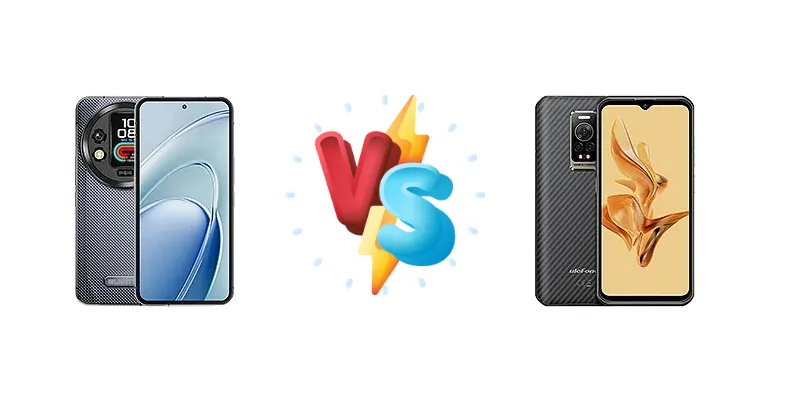
|
🏆 Quick Verdict
For users demanding raw processing power for gaming or demanding applications, the Oukitel WP200 is the clear winner thanks to its Dimensity 8200. However, the Ulefone Armor 17 Pro offers a compelling package for those prioritizing battery longevity and quicker top-ups with its 66W charging, making it ideal for extended outdoor use.
| PHONES | ||
|---|---|---|
| Phone Names | Oukitel WP200 | Ulefone Armor 17 Pro |
| Network | ||
|---|---|---|
| 2G bands | GSM 850 / 900 / 1800 / 1900 | GSM 850 / 900 / 1800 / 1900 |
| 3G bands | HSDPA 800 / 850 / 900 / 1700(AWS) / 1900 / 2100 | HSDPA 800 / 850 / 900 / 1700(AWS) / 1900 / 2100 |
| 4G bands | 1, 2, 3, 4, 5, 7, 8, 12, 13, 17, 18, 19, 20, 25, 26, 28, 34, 38, 40, 41, 66, 71 | 1, 2, 3, 4, 5, 7, 8, 12, 13, 17, 18, 19, 20, 25, 26, 28, 34, 38, 39, 40, 41, 66 |
| 5G bands | 1, 2, 3, 5, 7, 8, 12, 20, 25, 28, 34, 38, 39, 40, 41, 48, 66, 71, 77, 78 SA/NSA | - |
| Speed | HSPA, LTE, 5G | HSPA, LTE |
| Technology | GSM / HSPA / LTE / 5G | GSM / HSPA / LTE |
| Launch | ||
|---|---|---|
| Announced | 2025, March | 2022, October 31 |
| Status | Available. Released 2025, March 21 | Available. Released 2022, October 31 |
| Body | ||
|---|---|---|
| Dimensions | 163.6 x 77.9 x 13.7 mm (6.44 x 3.07 x 0.54 in) | 172.7 x 80.4 x 12.5 mm (6.80 x 3.17 x 0.49 in) |
| SIM | Nano-SIM + Nano-SIM | Nano-SIM + Nano-SIM |
| Weight | 311 g (10.97 oz) | 290 g (10.23 oz) |
| - | IP68/IP69K dust/water resistant (up to 1.5m for 30 min) Drop-to-concrete resistance from up to 1.5m MIL-STD-810G compliant | |
| Display | ||
|---|---|---|
| Protection | Corning Gorilla Glass 5 | Corning Gorilla Glass 5 |
| Resolution | 1080 x 2412 pixels, 20:9 ratio (~394 ppi density) | 1080 x 2408 pixels, 20:9 ratio (~401 ppi density) |
| Size | 6.7 inches, 108.0 cm2 (~84.8% screen-to-body ratio) | 6.58 inches, 104.3 cm2 (~75.1% screen-to-body ratio) |
| Type | AMOLED, 120Hz, 500 nits | IPS LCD, 120Hz |
| Platform | ||
|---|---|---|
| CPU | Octa-core (1x3.1 GHz Cortex-A78 & 3x3.0 GHz Cortex-A78 & 4x2.0 GHz Cortex-A55) | Octa-core (2x2.2 GHz Cortex-A76 & 6x2.0 GHz Cortex-A55) |
| Chipset | Mediatek Dimensity 8200 (4 nm) | Mediatek Helio G99 (6 nm) |
| GPU | Mali-G610 MC6 | Mali-G57 MC2 |
| OS | Android 15 | Android 12 |
| Memory | ||
|---|---|---|
| Card slot | microSDXC (uses shared SIM slot) | microSDXC (dedicated slot) |
| Internal | 512GB 12GB RAM | 256GB 8GB RAM |
| Main Camera | ||
|---|---|---|
| Features | LED flash, HDR, panorama | Triple-LED flash, HDR, panorama |
| Single | - | 16 MP, f/2.2, (wide), 1.0µm |
| Triple | 108 MP, f/1.9, (wide), 1/1.8", PDAF 2 MP (macro) Auxiliary lens | 108 MP, f/1.9, (wide), 1/1.52”, 0.7µm, PDAF 8 MP, f/2.2, 119˚, (ultrawide), 1/4.0", 1.12µm 8 MP, (night vision), 2 infrared night vision lights |
| Video | 4K@30fps | 1440p@30fps, 1080p@30fps |
| Selfie camera | ||
|---|---|---|
| Single | 32 MP, (wide), 1/2.74" | 16 MP, f/2.2, (wide), 1.0µm |
| Video | 1080p@30fps | 1080p@30fps |
| Sound | ||
|---|---|---|
| 3.5mm jack | - | Yes |
| 35mm jack | No | Yes |
| Loudspeaker | Yes | Yes |
| Comms | ||
|---|---|---|
| Bluetooth | 5.3, A2DP, LE | 5.2, A2DP, LE |
| NFC | Yes | Yes |
| Positioning | GPS (L1+L5), GLONASS, GALILEO, BDS | GPS, GLONASS, GALILEO, BDS |
| Radio | FM radio | Wireless FM radio, RDS, recording |
| USB | USB Type-C 2.0, OTG | USB Type-C 2.0, OTG |
| WLAN | Wi-Fi 802.11 a/b/g/n/ac/6, dual-band | Wi-Fi 802.11 a/b/g/n/ac, dual-band |
| Features | ||
|---|---|---|
| Sensors | Fingerprint (under display, optical), accelerometer, proximity, compass, gyro | Fingerprint (side-mounted), accelerometer, gyro, proximity, compass |
| - | MagSafe compatible accessories | |
| Battery | ||
|---|---|---|
| Charging | 45W wired Reverse wired | 66W wired, 53% in 15 min 15W wireless Wireless reversed |
| Type | Li-Po 8800 mAh | Li-Po 5380 mAh |
| Misc | ||
|---|---|---|
| Colors | Blue, Green, Gray | Black |
| Price | - | About 260 EUR |
Oukitel WP200
- Significantly more powerful processor for demanding tasks
- 4nm process for better thermal management
- Potential for higher refresh rate display
- Superior image processing capabilities
- Slower charging speed (45W)
- Likely shorter battery life due to higher power consumption
- No wireless charging
Ulefone Armor 17 Pro
- Faster charging (66W with 53% in 15 min)
- Wireless charging and reverse wireless charging
- More power-efficient processor for longer battery life
- 6nm process for optimized power consumption
- Less powerful processor for demanding tasks
- May struggle with complex image processing
- Potentially lower peak performance
Display Comparison
Neither device's display specifications are provided, so a direct comparison is limited. However, given the WP200's focus on performance, it's likely to feature a higher refresh rate panel. The Armor 17 Pro, leaning towards efficiency, may prioritize power savings over display fluidity. Bezels and color accuracy will likely be similar across both devices, typical of this market segment.
Camera Comparison
Without specific camera details beyond the presence of sensors, a detailed comparison is difficult. However, the WP200’s higher processing power suggests more sophisticated image processing capabilities. The Armor 17 Pro’s Helio G99 may struggle with complex computational photography tasks. The absence of information regarding sensor sizes and OIS makes it impossible to determine which device offers superior image quality.
Performance
The core difference lies in the chipsets. The Oukitel WP200’s Mediatek Dimensity 8200 (4nm) boasts a significantly more powerful CPU configuration – a 1x3.1 GHz Cortex-A78, 3x3.0 GHz Cortex-A78, and 4x2.0 GHz Cortex-A55 – compared to the Ulefone Armor 17 Pro’s Helio G99 (6nm) with its 2x2.2 GHz Cortex-A76 and 6x2.0 GHz Cortex-A55. The 4nm process of the Dimensity 8200 translates to better thermal efficiency and sustained performance under load, crucial for gaming. The Helio G99, while less powerful, benefits from the 6nm node, offering a good balance of performance and power consumption for everyday tasks. The WP200 will excel in benchmarks and demanding applications, while the Armor 17 Pro will provide a smoother experience for less intensive use.
Battery Life
The Ulefone Armor 17 Pro takes a clear lead in charging speed with its 66W wired charging, capable of reaching 53% in just 15 minutes. The Oukitel WP200’s 45W charging is slower. The Armor 17 Pro also offers 15W wireless charging and reverse wireless charging, features absent in the WP200. While battery capacity isn't specified, the Helio G99’s efficiency likely translates to longer battery life for the Armor 17 Pro, despite potentially having a smaller battery cell.
Buying Guide
Buy the Oukitel WP200 if you need uncompromising performance for gaming, video editing, or running resource-intensive apps, and are willing to manage battery life accordingly. Buy the Ulefone Armor 17 Pro if you prioritize all-day battery life, fast charging, and a more balanced experience for everyday tasks and outdoor adventures where power outlets are scarce.