
Oukitel WP200 Pro vs. Nokia XR20: A Deep Dive into Rugged Performance
| Phones Images | |||||
|---|---|---|---|---|---|
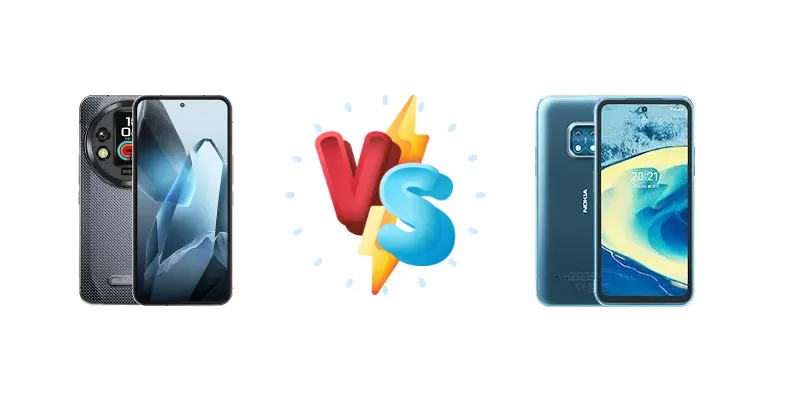
|
🏆 Quick Verdict
For users demanding maximum performance and extended battery life, the Oukitel WP200 Pro is the clear winner. Its Dimensity 8200 chipset offers a substantial performance leap over the XR20’s Snapdragon 480. However, the Nokia XR20 remains a compelling option for those prioritizing a more budget-friendly, reliably durable device.
| PHONES | ||
|---|---|---|
| Phone Names | Oukitel WP200 Pro | Nokia XR20 |
| Network | ||
|---|---|---|
| 2G bands | GSM 850 / 900 / 1800 / 1900 | GSM 850 / 900 / 1800 / 1900 |
| 3G bands | HSDPA 800 / 850 / 900 / 1700(AWS) / 1900 / 2100 | HSDPA 850 / 900 / 1700(AWS) / 1900 / 2100 |
| 4G bands | 1, 2, 3, 4, 5, 7, 8, 12, 13, 17, 18, 19, 20, 25, 26, 28, 34, 38, 40, 41, 66, 71 | 1, 2, 3, 4, 5, 7, 8, 12, 13, 14, 20, 25, 26, 28, 30, 38, 40, 41, 48, 66, 71 |
| 5G bands | 1, 2, 3, 5, 7, 8, 12, 20, 28, 38, 39, 40, 41, 66, 71, 77, 78 SA/NSA | 2, 5, 25, 38, 41, 48, 66, 77, 78 SA/NSA |
| Speed | HSPA, LTE, 5G | HSPA, LTE, 5G |
| Technology | GSM / HSPA / LTE / 5G | GSM / CDMA / HSPA / EVDO / LTE / 5G |
| - | CDMA2000 1xEV-DO | |
| Launch | ||
|---|---|---|
| Announced | 2024, December | 2021, July 27 |
| Status | Available. Released 2025, March 15 | Available. Released 2021, August 04 |
| Body | ||
|---|---|---|
| Dimensions | 163.6 x 77.9 x 13.7 mm (6.44 x 3.07 x 0.54 in) | 171.6 x 81.5 x 10.6 mm (6.76 x 3.21 x 0.42 in) |
| SIM | Nano-SIM + Nano-SIM | · Nano-SIM· Nano-SIM + Nano-SIM |
| Weight | 311 g (10.97 oz) | 248 g (8.75 oz) |
| - | IP68 dust/water resistant (up to 1.5m for 60 min) Drop-to-concrete resistance from up to 1.8m MIL-STD-810H compliant | |
| Display | ||
|---|---|---|
| Protection | Corning Gorilla Glass 5, Mohs level 5 | Corning Gorilla Glass Victus |
| Resolution | 1080 x 2412 pixels, 20:9 ratio (~394 ppi density) | 1080 x 2400 pixels, 20:9 ratio (~395 ppi density) |
| Size | 6.7 inches, 108.0 cm2 (~84.8% screen-to-body ratio) | 6.67 inches, 107.4 cm2 (~76.8% screen-to-body ratio) |
| Type | AMOLED, 120Hz, 500 nits | IPS LCD, 550 nits |
| Platform | ||
|---|---|---|
| CPU | Octa-core (1x3.1 GHz Cortex-A78 & 3x3.0 GHz Cortex-A78 & 4x2.0 GHz Cortex-A55) | Octa-core (2x2.0 GHz Kryo 460 & 6x1.8 GHz Kryo 460) |
| Chipset | Mediatek Dimensity 8200 (4 nm) | Qualcomm SM4350 Snapdragon 480 5G (8 nm) |
| GPU | Mali-G610 MC6 | Adreno 619 |
| OS | Android 15 | Android 11, upgradable to Android 13 |
| Memory | ||
|---|---|---|
| Card slot | microSDXC (uses shared SIM slot) | microSDXC (uses shared SIM slot) |
| Internal | 1TB 24GB RAM | 64GB 4GB RAM, 128GB 6GB RAM |
| Main Camera | ||
|---|---|---|
| Dual | - | 48 MP, f/1.8, (wide), 1/2.25", 0.8µm, PDAF 13 MP, f/2.4, 123˚ (ultrawide), 1/3.0", 1.12µm |
| Features | LED flash, HDR, panorama | Zeiss optics, Dual-LED dual-tone flash, second LED flash, HDR, panorama |
| Single | - | 8 MP, f/2.0 (wide), 1/4.0", 1.12µm |
| Triple | 108 MP, f/1.9, (wide), 1/1.8", PDAF 2 MP (macro) Auxiliary lens | - |
| Video | 4K@30fps | 1080p@30fps |
| Selfie camera | ||
|---|---|---|
| Single | 32 MP, (wide), 1/2.74" | 8 MP, f/2.0 (wide), 1/4.0", 1.12µm |
| Video | 1080p@30fps | 1080p@30fps |
| Sound | ||
|---|---|---|
| 3.5mm jack | - | Yes |
| 35mm jack | No | Yes |
| Loudspeaker | Yes | Yes, with stereo speakers |
| Comms | ||
|---|---|---|
| Bluetooth | 5.3, A2DP, LE | 5.1, A2DP, LE, aptX Adaptive |
| NFC | Yes | Yes |
| Positioning | GPS, GLONASS, GALILEO, BDS | GPS (L1+L5), GLONASS, BDS, GALILEO, QZSS, NavIC |
| Radio | FM radio | Unspecified |
| USB | USB Type-C 2.0, OTG | USB Type-C 3.0 |
| WLAN | Wi-Fi 802.11 a/b/g/n/ac/6, dual-band | Wi-Fi 802.11 a/b/g/n/ac/6, dual-band, Wi-Fi Direct |
| Features | ||
|---|---|---|
| Sensors | Fingerprint (under display, optical), accelerometer, proximity, compass, gyro | Fingerprint (side-mounted), accelerometer, gyro, proximity, compass, barometer |
| Battery | ||
|---|---|---|
| Charging | 45W wired Reverse wired | 18W wired 15W wireless |
| Type | Li-Po 8800 mAh | Li-Po 4630 mAh |
| Misc | ||
|---|---|---|
| Colors | Black | Ultra Blue, Granite Gray |
| Models | - | TA-1368, TA-1362 |
| Price | - | About 270 EUR |
| SAR EU | - | 1.13 W/kg (head) 1.43 W/kg (body) |
| EU LABEL | ||
|---|---|---|
| Battery | 86:17h endurance, 1000 cycles | - |
| Energy | Class B | - |
| Free fall | Class A (270 falls) | - |
| Repairability | Class C | - |
Oukitel WP200 Pro
- Exceptional performance with the Dimensity 8200 chipset
- Outstanding battery life (86:17h endurance)
- Fast 45W wired charging and reverse wired charging
- Potentially superior camera system
- Likely higher price point
- Rugged design may add bulk
Nokia XR20
- More affordable price
- Durable build quality
- 5G connectivity
- Wireless charging support
- Significantly lower performance compared to the WP200 Pro
- Slower charging speeds
Display Comparison
While display specifications aren't provided, the Oukitel WP200 Pro, positioned as a higher-tier device, likely features a higher resolution and potentially a higher refresh rate panel than the Nokia XR20. The XR20’s display is expected to prioritize visibility in direct sunlight, a common requirement for rugged phones. The absence of LTPO technology in either device suggests both will rely on adaptive refresh rate scaling rather than variable refresh rates for power efficiency.
Camera Comparison
Camera details are limited, but the Oukitel WP200 Pro’s positioning suggests a more advanced camera system. While both phones likely feature multiple lenses, the WP200 Pro is expected to have a larger main sensor and potentially more sophisticated image processing algorithms. The Nokia XR20 will likely focus on reliable image capture in challenging conditions, prioritizing durability over cutting-edge camera features. The inclusion of OIS (Optical Image Stabilization) is likely on the WP200 Pro, offering improved stability for photos and videos.
Performance
The performance gap between these two devices is significant. The Oukitel WP200 Pro’s Mediatek Dimensity 8200 (4nm) is a flagship-class chipset featuring an octa-core configuration with a high-clocked Cortex-A78 prime core (3.1 GHz) and multiple performance cores (3x3.0 GHz Cortex-A78). This contrasts sharply with the Nokia XR20’s Qualcomm Snapdragon 480 5G (8nm), which utilizes a more modest octa-core setup (2x2.0 GHz Kryo 460). The 4nm process node of the Dimensity 8200 translates to superior power efficiency and thermal management, allowing for sustained peak performance. Users engaging in graphically intensive tasks or multitasking will experience a noticeably smoother experience on the WP200 Pro.
Battery Life
The Oukitel WP200 Pro boasts an impressive 86:17h endurance rating, indicating exceptional battery life. Coupled with its 45W wired charging, it offers a rapid recharge time. The Nokia XR20, with 18W wired and 15W wireless charging, provides more versatile charging options but at a slower rate. The WP200 Pro’s 1000 charge cycle rating suggests a longer lifespan for the battery, a crucial factor for users who rely heavily on their devices.
Buying Guide
Buy the Oukitel WP200 Pro if you need a rugged phone capable of demanding tasks like mobile gaming, video editing, or running multiple applications simultaneously, and value exceptional battery endurance. Buy the Nokia XR20 if you prefer a more affordable, dependable rugged phone for everyday use, prioritizing durability and 5G connectivity over raw processing power.