
Oukitel RT8 vs. Ulefone Power Armor 13: A Deep Dive into Rugged Smartphone Endurance
| Phones Images | |||||
|---|---|---|---|---|---|
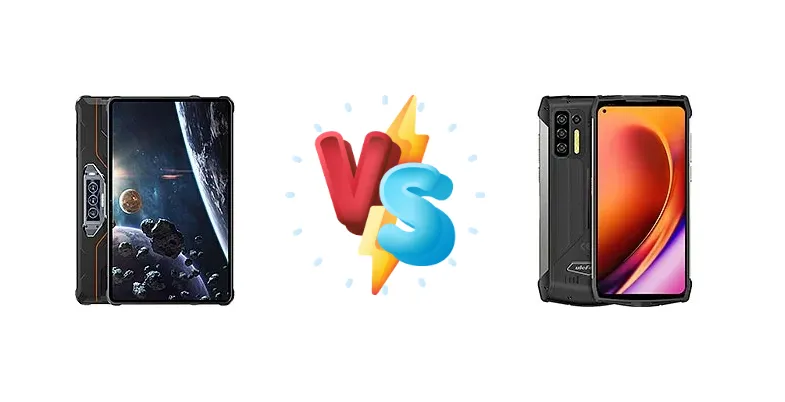
|
🏆 Quick Verdict
For the average user prioritizing battery life and performance, the Oukitel RT8 is the clear winner. Its Helio G99 chipset, built on a 6nm process, and staggering 499-hour endurance rating significantly outperform the Ulefone Power Armor 13’s older Helio G95 and 296-hour rating. While the Power Armor 13 offers wireless charging, the RT8’s superior efficiency makes it the more practical choice.
| PHONES | ||
|---|---|---|
| Phone Names | Oukitel RT8 | Ulefone Power Armor 13 |
| Network | ||
|---|---|---|
| 2G bands | GSM 850 / 900 / 1800 / 1900 | GSM 850 / 900 / 1800 / 1900 |
| 3G bands | HSDPA 800 / 850 / 900 / 1700(AWS) / 1900 / 2100 | HSDPA 850 / 900 / 1700(AWS) / 1900 / 2100 |
| 4G bands | 1, 2, 3, 4, 5, 7, 8, 12, 13, 17, 18, 19, 20, 25, 26, 28, 34, 38, 39, 40, 41, 66 | 1, 2, 3, 4, 5, 7, 8, 12, 13, 17, 18, 19, 20, 25, 26, 28, 38, 40, 66 |
| Speed | HSPA, LTE | HSPA 42.2/11.5 Mbps, LTE Cat12 600/150 Mbps |
| Technology | GSM / CDMA / HSPA / LTE | GSM / HSPA / LTE |
| Launch | ||
|---|---|---|
| Announced | 2024, March | 2021, July 22 |
| Status | Available. Released 2024, March | Available. Released 2021, July 26 |
| Body | ||
|---|---|---|
| Dimensions | 265.1 x 176.7 x 15.1 mm (10.44 x 6.96 x 0.59 in) | 183.7 x 85.4 x 20.8 mm (7.23 x 3.36 x 0.82 in) |
| SIM | Nano-SIM + Nano-SIM | Nano-SIM + Nano-SIM |
| Weight | 996.7 g (2.20 lb) | 492 g (1.08 lb) |
| - | IP68 dust/water resistant (up to 1.5m for 30 min) Drop-to-concrete resistance from up to 1.2m MIL-STD-810G compliant | |
| Display | ||
|---|---|---|
| Protection | Corning Gorilla Glass 5, Mohs level 5 | Corning Gorilla Glass 3 |
| Resolution | 1200 x 1920 pixels, 16:10 ratio (~206 ppi density) | 1080 x 2400 pixels, 20:9 ratio (~386 ppi density) |
| Size | 11.0 inches, 350.9 cm2 (~74.9% screen-to-body ratio) | 6.81 inches, 112.0 cm2 (~71.4% screen-to-body ratio) |
| Type | IPS LCD, 500 nits | IPS LCD |
| Platform | ||
|---|---|---|
| CPU | Octa-core (2x2.2 GHz Cortex-A76 & 6x2.0 GHz Cortex-A55) | Octa-core (2x2.05 GHz Cortex-A76 & 6x2.0 GHz Cortex-A55) |
| Chipset | Mediatek Helio G99 (6 nm) | Mediatek MT6785V/CD Helio G95 (12 nm) |
| GPU | Mali-G57 MC2 | Mali-G76 MC4 |
| OS | Android 13 | Android 11 |
| Memory | ||
|---|---|---|
| Card slot | microSDXC (uses shared SIM slot) | microSDXC (uses shared SIM slot) |
| Internal | 256GB 6GB RAM | 256GB 8GB RAM |
| Main Camera | ||
|---|---|---|
| Features | LED flash, HDR, panorama | Quad-LED flash, HDR, panorama |
| Penta | - | 48 MP, f/1.8, 26mm (wide), 1/2.0", 0.8µm, PDAF 8 MP, f/2.2, (ultrawide) 2 MP (macro) Auxiliary lens |
| Triple | 48 MP, f/1.8, (wide), 1/2", PDAF 20 MP, f/1.8, (night vision), 1/2.78", AF, infrared night vision lights 5 MP (macro) | - |
| Video | 1440p@30fps, 1080p@30fps | 4K@30fps, 1080p@30fps |
| Selfie camera | ||
|---|---|---|
| Features | - | HDR, panorama |
| Single | 32 MP, f/2.2, (wide), 1/2.8" | 16 MP, f/2.2 |
| Video | 1080p@30fps | 1080p@30fps |
| Sound | ||
|---|---|---|
| 3.5mm jack | - | Yes |
| 35mm jack | No | Yes |
| Loudspeaker | Yes, with stereo speakers (4 speakers) | Yes |
| Comms | ||
|---|---|---|
| Bluetooth | 5.1, A2DP, LE | 5.0, A2DP, LE |
| NFC | Yes | Yes |
| Positioning | GPS, GLONASS, GALILEO, BDS | GPS, GLONASS, GALILEO, BDS |
| Radio | FM radio | FM radio, RDS, recording |
| USB | USB Type-C 2.0, OTG | - |
| WLAN | Wi-Fi 802.11 a/b/g/n/ac, dual-band | Wi-Fi 802.11 a/b/g/n/ac, dual-band |
| Features | ||
|---|---|---|
| Sensors | Accelerometer, gyro, proximity, compass | Fingerprint (side-mounted), accelerometer, gyro, proximity, compass, baroceptor, coulombmeter |
| - | Infrared distance measure (error range: 1~20m, ±10mm; 20~40m, ±25mm) | |
| Battery | ||
|---|---|---|
| Charging | 33W wired Reverse wired | 33W wired 15W wireless 5W reverse wireless |
| Type | Li-Po 20000 mAh | Li-Po 13200 mAh |
| Misc | ||
|---|---|---|
| Colors | Black, Black/Orange | Black |
| Price | About 280 EUR | About 300 EUR |
| Tests | ||
|---|---|---|
| Battery life | - | Endurance rating 296h |
| Camera | - | Photo / Video |
| Display | - | Contrast ratio: 1306:1 (nominal) |
| Loudspeaker | - | -28.3 LUFS (Average) |
| Performance | - | AnTuTu: 294194 (v8), 351678 (v9) GeekBench: 1610 (v5.1) GFXBench: 18fps (ES 3.1 onscreen) |
| EU LABEL | ||
|---|---|---|
| Battery | 499:59h endurance, 1000 cycles | - |
| Energy | Class B | - |
| Free fall | Class A (208 falls) | - |
| Repairability | Class C | - |
Oukitel RT8
- Exceptional 499-hour battery endurance
- More efficient Mediatek Helio G99 chipset (6nm)
- Potentially better sustained performance due to thermal efficiency
- No wireless charging support
- Display brightness specification missing
Ulefone Power Armor 13
- Convenient 15W wireless charging
- Measured 401 nits peak display brightness
- 5W reverse wireless charging for accessories
- Significantly lower 296-hour battery endurance
- Older and less efficient Mediatek Helio G95 chipset (12nm)
- Limited camera specification details
Display Comparison
Both devices share a 1306:1 contrast ratio, suggesting similar visual pop. However, the Ulefone Power Armor 13 provides a measured peak brightness of 401 nits. While the RT8’s brightness isn’t specified, the lack of data suggests it may not reach the same level. This could impact outdoor visibility for the RT8 in direct sunlight. Both lack information regarding panel technology (IPS, AMOLED) or refresh rates, indicating a focus on durability over premium display features.
Camera Comparison
Both phones list 'Photo / Video' capabilities, but lack specific details regarding sensor size, aperture, or image processing. This suggests a focus on basic functionality rather than photographic excellence. The absence of details makes a direct comparison impossible, but the market segment suggests neither phone will compete with dedicated camera phones. The lack of mention of OIS (Optical Image Stabilization) on either device indicates potential for blurry images in low-light conditions.
Performance
The Oukitel RT8’s Mediatek Helio G99 (6nm) represents a significant architectural advantage over the Ulefone Power Armor 13’s Helio G95 (12nm). The smaller 6nm node translates to improved power efficiency and reduced heat generation, allowing the RT8 to sustain peak performance for longer periods. While both CPUs feature the same core configuration (2x2.2 GHz Cortex-A76 & 6x2.0 GHz Cortex-A55), the G99’s superior process node gives it a clear edge in sustained performance and thermal management. This benefits users engaged in gaming or demanding applications.
Battery Life
The Oukitel RT8’s 499-hour endurance rating is a standout feature, dwarfing the Ulefone Power Armor 13’s 296-hour rating. This translates to significantly longer usage between charges. Both support 33W wired charging, but the Power Armor 13 adds 15W wireless and 5W reverse wireless charging. While convenient, wireless charging is inherently less efficient than wired charging, and the 15W rate is relatively slow. The RT8’s superior battery capacity and chipset efficiency likely offset the Power Armor 13’s wireless charging capabilities for most users.
Buying Guide
Buy the Oukitel RT8 if you need maximum battery life for extended outdoor adventures, fieldwork, or simply want a phone that lasts for days on a single charge. Its newer chipset also provides a performance edge. Buy the Ulefone Power Armor 13 if you prioritize the convenience of wireless charging and don't mind sacrificing some battery life and processing power. It’s a good option for users who frequently use wireless charging pads and value that feature above all else.