
Oukitel RT8 vs Doogee S96 Pro: A Deep Dive into Rugged Smartphone Choices
| Phones Images | |||||
|---|---|---|---|---|---|
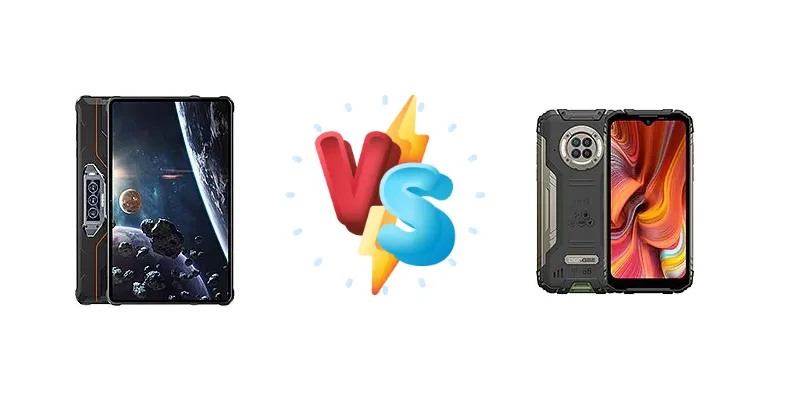
|
🏆 Quick Verdict
For the average user prioritizing longevity and reliable power, the Oukitel RT8 emerges as the winner. Its significantly superior battery endurance (499:59h) and newer, more efficient Helio G99 chipset outweigh the Doogee S96 Pro’s slightly older, but still capable, Helio G90. However, gamers may find the S96 Pro’s focus on performance more appealing.
| PHONES | ||
|---|---|---|
| Phone Names | Oukitel RT8 | Doogee S96 Pro |
| Network | ||
|---|---|---|
| 2G bands | GSM 850 / 900 / 1800 / 1900 | GSM 850 / 900 / 1800 / 1900 |
| 3G bands | HSDPA 800 / 850 / 900 / 1700(AWS) / 1900 / 2100 | HSDPA 800 / 850 / 900 / 1700(AWS) / 1900 / 2100 |
| 4G bands | 1, 2, 3, 4, 5, 7, 8, 12, 13, 17, 18, 19, 20, 25, 26, 28, 34, 38, 39, 40, 41, 66 | 1, 2, 3, 4, 5, 7, 8, 12, 13, 17, 18, 19, 20, 25, 26, 28, 38, 40, 66 |
| Speed | HSPA, LTE | HSPA, LTE |
| Technology | GSM / CDMA / HSPA / LTE | GSM / CDMA / HSPA / LTE |
| Launch | ||
|---|---|---|
| Announced | 2024, March | 2020, October 26. Released 2020, November |
| Status | Available. Released 2024, March | Discontinued |
| Body | ||
|---|---|---|
| Dimensions | 265.1 x 176.7 x 15.1 mm (10.44 x 6.96 x 0.59 in) | 167 x 81.4 x 15.5 mm (6.57 x 3.20 x 0.61 in) |
| SIM | Nano-SIM + Nano-SIM | Nano-SIM + Nano-SIM |
| Weight | 996.7 g (2.20 lb) | 310 g (10.93 oz) |
| Display | ||
|---|---|---|
| Protection | Corning Gorilla Glass 5, Mohs level 5 | Corning Gorilla Glass |
| Resolution | 1200 x 1920 pixels, 16:10 ratio (~206 ppi density) | 720 x 1520 pixels, 19:9 ratio (~270 ppi density) |
| Size | 11.0 inches, 350.9 cm2 (~74.9% screen-to-body ratio) | 6.22 inches, 96.6 cm2 (~71.0% screen-to-body ratio) |
| Type | IPS LCD, 500 nits | IPS LCD |
| Platform | ||
|---|---|---|
| CPU | Octa-core (2x2.2 GHz Cortex-A76 & 6x2.0 GHz Cortex-A55) | Octa-core (2x2.0 GHz Cortex-A76 & 6x2.0 GHz Cortex-A55) |
| Chipset | Mediatek Helio G99 (6 nm) | Mediatek MT6785 Helio G90 (12 nm) |
| GPU | Mali-G57 MC2 | Mali-G76 MC4 |
| OS | Android 13 | Android 10 |
| Memory | ||
|---|---|---|
| Card slot | microSDXC (uses shared SIM slot) | microSDXC (dedicated slot) |
| Internal | 256GB 6GB RAM | 128GB 8GB RAM |
| Main Camera | ||
|---|---|---|
| Features | LED flash, HDR, panorama | Quad-LED flash, HDR, panorama |
| Quad | - | 48 MP, f/1.8, (wide), PDAF 8 MP, f/2.2, 130˚, (ultrawide) 20 MP, f/2.8, (night vision), 4 infrared night vision lights 2 MP (macro) |
| Triple | 48 MP, f/1.8, (wide), 1/2", PDAF 20 MP, f/1.8, (night vision), 1/2.78", AF, infrared night vision lights 5 MP (macro) | - |
| Video | 1440p@30fps, 1080p@30fps | 1080p |
| Selfie camera | ||
|---|---|---|
| Single | 32 MP, f/2.2, (wide), 1/2.8" | 16 MP, f/2.0, (wide) |
| Video | 1080p@30fps | 1080p |
| Sound | ||
|---|---|---|
| 35mm jack | No | Yes |
| Loudspeaker | Yes, with stereo speakers (4 speakers) | Yes |
| Comms | ||
|---|---|---|
| Bluetooth | 5.1, A2DP, LE | 5.0, A2DP, LE |
| NFC | Yes | Yes |
| Positioning | GPS, GLONASS, GALILEO, BDS | GPS, GLONASS, BDS, GALILEO |
| Radio | FM radio | FM radio |
| USB | USB Type-C 2.0, OTG | USB Type-C 2.0, OTG |
| WLAN | Wi-Fi 802.11 a/b/g/n/ac, dual-band | Wi-Fi 802.11 a/b/g/n/ac, dual-band |
| Features | ||
|---|---|---|
| Sensors | Accelerometer, gyro, proximity, compass | Fingerprint (side-mounted), accelerometer, gyro, proximity, compass |
| Battery | ||
|---|---|---|
| Charging | 33W wired Reverse wired | 24W wired 10W wireless |
| Type | Li-Po 20000 mAh | 6350 mAh |
| Misc | ||
|---|---|---|
| Colors | Black, Black/Orange | Black, Orange, Green |
| Price | About 280 EUR | About 280 EUR |
| EU LABEL | ||
|---|---|---|
| Battery | 499:59h endurance, 1000 cycles | - |
| Energy | Class B | - |
| Free fall | Class A (208 falls) | - |
| Repairability | Class C | - |
Oukitel RT8
- Exceptional battery life (499:59h endurance)
- More efficient Mediatek Helio G99 chipset (6nm)
- Faster 33W wired charging and reverse charging
- Likely lacks advanced display features (high refresh rate)
- Camera specifications are unknown, potentially average performance
Doogee S96 Pro
- Wireless charging support (10W)
- Slightly more powerful CPU clock speed (2.0 GHz vs 2.2 GHz)
- Potentially better gaming performance due to processor focus
- Significantly shorter battery life compared to Oukitel RT8
- Older, less efficient Mediatek Helio G90 chipset (12nm)
Display Comparison
Neither device’s display specifications are provided, so a direct comparison is limited. However, given the price points, we can assume both utilize IPS LCD panels. The focus here shifts to durability – both are rugged phones, implying reinforced glass and robust construction. The absence of high refresh rate or advanced panel technology suggests a focus on practicality and power efficiency over visual fidelity.
Camera Comparison
Without detailed camera specifications, a comprehensive comparison is difficult. However, the market segment suggests both phones will feature a multi-camera setup geared towards general photography. The absence of information regarding sensor size or optical image stabilization (OIS) suggests neither phone will excel in low-light conditions. Users should expect competent daylight photography but should temper expectations for advanced features or exceptional image quality. The inclusion of a 2MP macro lens on either device is likely a marketing tactic, offering limited practical benefit.
Performance
The Oukitel RT8’s Mediatek Helio G99 (6nm) represents a significant architectural advantage over the Doogee S96 Pro’s Helio G90 (12nm). The smaller 6nm process node translates to improved power efficiency and thermal management, meaning the RT8 is likely to sustain peak performance for longer periods without throttling. While both CPUs share the same core configuration (2x2.2 GHz Cortex-A76 & 6x2.0 GHz Cortex-A55), the G99’s higher clock speed and more efficient architecture give it a clear edge in sustained performance. This benefits users engaged in demanding tasks like video editing or prolonged gaming sessions.
Battery Life
The Oukitel RT8’s battery endurance of 499:59h is a standout feature, dwarfing what is typically expected from a smartphone. This is coupled with a 33W wired charging capability and reverse wired charging. The Doogee S96 Pro offers 24W wired charging and adds 10W wireless charging. While wireless charging is a convenience, the RT8’s significantly longer battery life and faster wired charging make it the more practical choice for users who prioritize minimizing downtime. The RT8 also boasts a claimed 1000 charge cycles, suggesting exceptional long-term battery health.
Buying Guide
Buy the Oukitel RT8 if you need a phone that can genuinely last for days on a single charge, and if your primary use cases involve work, travel, or situations where access to power is limited. Buy the Doogee S96 Pro if you prioritize gaming and multimedia consumption, and are willing to compromise on battery life for a slightly more powerful processor and wireless charging convenience.