
Oukitel RT8 vs. Blackview BV9200: A Deep Dive into Rugged Smartphone Performance
| Phones Images | |||||
|---|---|---|---|---|---|
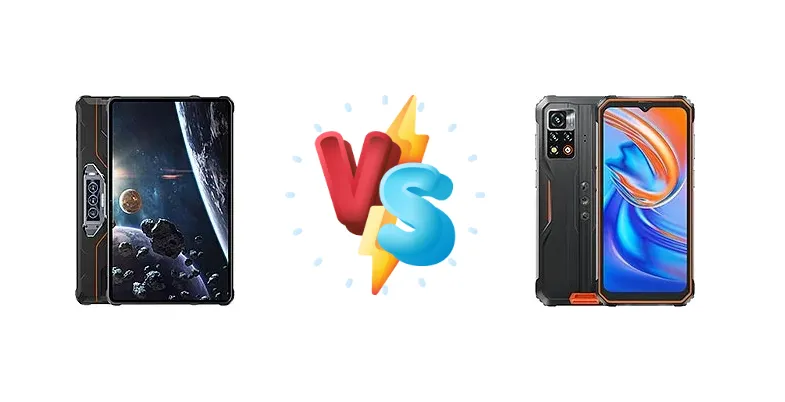
|
🏆 Quick Verdict
For users prioritizing all-day (and multi-day) battery life, the Oukitel RT8 is the clear winner, boasting an impressive 59-hour endurance. However, if rapid charging and a more visible outdoor display are paramount, the Blackview BV9200’s 66W charging and 481 nits brightness offer a compelling alternative.
| PHONES | ||
|---|---|---|
| Phone Names | Oukitel RT8 | Blackview BV9200 |
| Network | ||
|---|---|---|
| 2G bands | GSM 850 / 900 / 1800 / 1900 | GSM 850 / 900 / 1800 / 1900 |
| 3G bands | HSDPA 800 / 850 / 900 / 1700(AWS) / 1900 / 2100 | HSDPA 850 / 900 / 1700(AWS) / 1900 / 2100 |
| 4G bands | 1, 2, 3, 4, 5, 7, 8, 12, 13, 17, 18, 19, 20, 25, 26, 28, 34, 38, 39, 40, 41, 66 | 1, 2, 3, 4, 5, 7, 8, 12, 13, 17, 18, 19, 20, 25, 26, 28, 34, 38, 39, 40, 41, 66 |
| Speed | HSPA, LTE | HSPA, LTE |
| Technology | GSM / CDMA / HSPA / LTE | GSM / CDMA / HSPA / LTE |
| - | CDMA 800 / 1900 | |
| Launch | ||
|---|---|---|
| Announced | 2024, March | 2022, December 28 |
| Status | Available. Released 2024, March | Available. Released 2023, January 09 |
| Body | ||
|---|---|---|
| Dimensions | 265.1 x 176.7 x 15.1 mm (10.44 x 6.96 x 0.59 in) | 174.5 x 81.8 x 13.6 mm (6.87 x 3.22 x 0.54 in) |
| SIM | Nano-SIM + Nano-SIM | Nano-SIM + Nano-SIM |
| Weight | 996.7 g (2.20 lb) | 310 g (10.93 oz) |
| - | IP68/IP69K dust/water resistant (up to 1.5m for 30 min) Drop-to-concrete resistance from up to 1.8m MIL-STD-810H compliant | |
| Display | ||
|---|---|---|
| Protection | Corning Gorilla Glass 5, Mohs level 5 | Corning Gorilla Glass 5 |
| Resolution | 1200 x 1920 pixels, 16:10 ratio (~206 ppi density) | 1080 x 2408 pixels, 20:9 ratio (~400 ppi density) |
| Size | 11.0 inches, 350.9 cm2 (~74.9% screen-to-body ratio) | 6.6 inches, 104.9 cm2 (~73.5% screen-to-body ratio) |
| Type | IPS LCD, 500 nits | IPS LCD, 120Hz |
| Platform | ||
|---|---|---|
| CPU | Octa-core (2x2.2 GHz Cortex-A76 & 6x2.0 GHz Cortex-A55) | Octa-core (2x2.05 GHz Cortex-A76 & 6x2.0 GHz Cortex-A55) |
| Chipset | Mediatek Helio G99 (6 nm) | Mediatek MT6781 Helio G96 (12 nm) |
| GPU | Mali-G57 MC2 | Mali-G52 MC2 |
| OS | Android 13 | Android 12, Doke-OS 3.1 |
| Memory | ||
|---|---|---|
| Card slot | microSDXC (uses shared SIM slot) | microSDXC (dedicated slot) |
| Internal | 256GB 6GB RAM | 256GB 8GB RAM |
| - | UFS 2.1 | |
| Main Camera | ||
|---|---|---|
| Features | LED flash, HDR, panorama | LED flash, HDR, panorama |
| Single | - | 16 MP, (wide), 1/3", 1.0µm |
| Triple | 48 MP, f/1.8, (wide), 1/2", PDAF 20 MP, f/1.8, (night vision), 1/2.78", AF, infrared night vision lights 5 MP (macro) | 50 MP, f/1.8, (wide), 1/2.76", 0.64µm, PDAF 8 MP, f/1.8, 120˚, (ultrawide), AF Auxiliary lens |
| Video | 1440p@30fps, 1080p@30fps | 1440p@30fps, 1080p@30fps |
| Selfie camera | ||
|---|---|---|
| Single | 32 MP, f/2.2, (wide), 1/2.8" | 16 MP, f/2.0, (wide), 1/3", 1.0µm |
| Video | 1080p@30fps | 1080p |
| Sound | ||
|---|---|---|
| 3.5mm jack | - | No |
| 35mm jack | No | No |
| Loudspeaker | Yes, with stereo speakers (4 speakers) | Yes, with dual speakers |
| Comms | ||
|---|---|---|
| Bluetooth | 5.1, A2DP, LE | 5.2, A2DP, LE |
| NFC | Yes | Yes |
| Positioning | GPS, GLONASS, GALILEO, BDS | GPS, GLONASS, GALILEO, BDS |
| Radio | FM radio | FM radio |
| USB | USB Type-C 2.0, OTG | USB Type-C, OTG |
| WLAN | Wi-Fi 802.11 a/b/g/n/ac, dual-band | Wi-Fi 802.11 a/b/g/n/ac, dual-band |
| Features | ||
|---|---|---|
| Sensors | Accelerometer, gyro, proximity, compass | Fingerprint (side-mounted), accelerometer, gyro, proximity, compass, barometer |
| Battery | ||
|---|---|---|
| Charging | 33W wired Reverse wired | 66W wired 30W wireless |
| Type | Li-Po 20000 mAh | 5000 mAh |
| Misc | ||
|---|---|---|
| Colors | Black, Black/Orange | Black, Orange, Green |
| Price | About 280 EUR | About 200 EUR |
| EU LABEL | ||
|---|---|---|
| Battery | 499:59h endurance, 1000 cycles | - |
| Energy | Class B | - |
| Free fall | Class A (208 falls) | - |
| Repairability | Class C | - |
Oukitel RT8
- Exceptional 499-hour battery endurance
- Long-lasting battery health (1000 charge cycles)
- More efficient 6nm Helio G99 chipset
- Slower 33W charging
- Display specifications are unknown
Blackview BV9200
- Fast 66W wired and 30W wireless charging
- Bright 481 nits display for outdoor use
- High 1423:1 contrast ratio
- Less power-efficient 12nm Helio G96 chipset
- Potentially shorter battery life compared to RT8
Display Comparison
The Blackview BV9200 distinguishes itself with a measured peak brightness of 481 nits, crucial for outdoor legibility, a feature the Oukitel RT8’s specifications don’t address. Furthermore, the BV9200’s 1423:1 contrast ratio suggests deeper blacks and more vibrant colors. While the RT8’s display specs are absent, the BV9200’s panel offers a tangible advantage in direct sunlight. The lack of refresh rate information for both devices suggests standard 60Hz panels, focusing their differentiation on brightness and contrast.
Camera Comparison
Neither device’s camera specifications are detailed enough to draw definitive conclusions. Without sensor size, aperture, or image processing details, it’s difficult to assess image quality. The absence of information suggests both phones likely target the mid-range camera experience, prioritizing functionality over flagship-level photography. We can assume both will include standard features like HDR and portrait modes, but detailed analysis requires hands-on testing.
Performance
Both devices utilize Mediatek Helio G-series chipsets, but with key architectural differences. The Oukitel RT8’s Helio G99, built on a 6nm process, offers improved power efficiency compared to the Blackview BV9200’s 12nm Helio G96. While the BV9200’s CPU clocks slightly higher (2.05 GHz vs 2.2 GHz on the RT8’s Cortex-A76 cores), the G99’s more modern node should translate to better sustained performance and less thermal throttling during prolonged gaming or demanding tasks. Both CPUs share the same Cortex-A55 efficiency core configuration, meaning multi-tasking performance will be similar, but the RT8 has a slight edge in single-core burst performance.
Battery Life
The Oukitel RT8’s 499-hour endurance is its standout feature, significantly exceeding what most smartphones offer. This is further bolstered by a claimed 1000 charge cycles, indicating long-term battery health. The Blackview BV9200 counters with 66W wired charging and 30W wireless charging, allowing for a much faster 0-100% charge time. While the BV9200’s battery capacity isn’t specified, the faster charging speeds suggest a smaller battery, prioritizing quick top-ups over extended runtime. The RT8’s 33W charging is slower, but the massive battery capacity makes it less of a concern.
Buying Guide
Buy the Oukitel RT8 if you need a phone that can reliably last through extended trips without access to power, or if you frequently use battery-intensive applications. Buy the Blackview BV9200 if you prefer the convenience of extremely fast charging, need a brighter screen for outdoor visibility, and don't mind potentially shorter battery life between charges.