
Oukitel RT7 5G vs. Ulefone Armor 17 Pro: A Rugged Showdown
| Phones Images | |||||
|---|---|---|---|---|---|
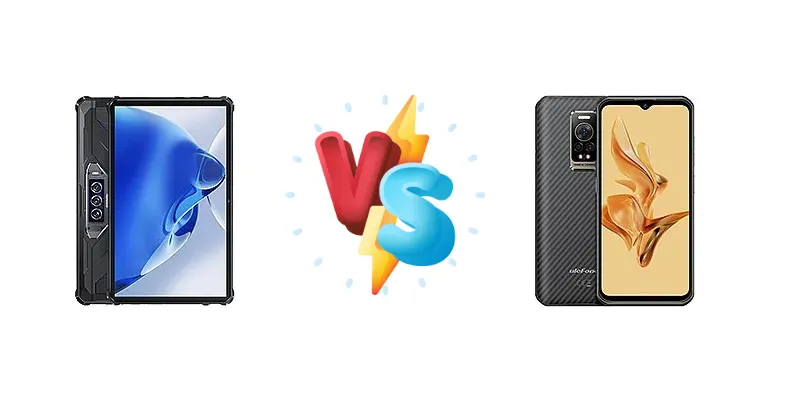
|
🏆 Quick Verdict
For the average user prioritizing longevity and consistent 5G performance, the Oukitel RT7 5G is the better choice. Its exceptional 166:39h battery endurance significantly outweighs the Ulefone Armor 17 Pro’s faster charging, especially given the Armor 17 Pro’s more power-hungry chipset.
| PHONES | ||
|---|---|---|
| Phone Names | Oukitel RT7 5G | Ulefone Armor 17 Pro |
| Network | ||
|---|---|---|
| 2G bands | GSM 850 / 900 / 1800 / 1900 | GSM 850 / 900 / 1800 / 1900 |
| 3G bands | HSDPA 850 / 900 / 1700(AWS) / 1900 / 2100 | HSDPA 800 / 850 / 900 / 1700(AWS) / 1900 / 2100 |
| 4G bands | 1, 2, 3, 4, 5, 7, 8, 12, 17, 18, 19, 20, 25, 26, 28, 38, 39, 40, 41, 66 | 1, 2, 3, 4, 5, 7, 8, 12, 13, 17, 18, 19, 20, 25, 26, 28, 34, 38, 39, 40, 41, 66 |
| Speed | HSPA, LTE | HSPA, LTE |
| Technology | GSM / HSPA / LTE | GSM / HSPA / LTE |
| Launch | ||
|---|---|---|
| Announced | 2023, August | 2022, October 31 |
| Status | Available. Released 2023, September | Available. Released 2022, October 31 |
| Body | ||
|---|---|---|
| Dimensions | 249.1 x 167.8 x 19.8 mm (9.81 x 6.61 x 0.78 in) | 172.7 x 80.4 x 12.5 mm (6.80 x 3.17 x 0.49 in) |
| SIM | Nano-SIM + Nano-SIM | Nano-SIM + Nano-SIM |
| Weight | 1212 g (2.67 lb) | 290 g (10.23 oz) |
| - | IP68/IP69K dust/water resistant (up to 1.5m for 30 min) Drop-to-concrete resistance from up to 1.5m MIL-STD-810G compliant | |
| Display | ||
|---|---|---|
| Protection | Mohs level 5 | Corning Gorilla Glass 5 |
| Resolution | 1200 x 1920 pixels, 16:10 ratio (~224 ppi density) | 1080 x 2408 pixels, 20:9 ratio (~401 ppi density) |
| Size | 10.1 inches, 295.8 cm2 (~70.8% screen-to-body ratio) | 6.58 inches, 104.3 cm2 (~75.1% screen-to-body ratio) |
| Type | IPS LCD, 400 nits | IPS LCD, 120Hz |
| Platform | ||
|---|---|---|
| CPU | Octa-core (2x2.0 GHz Cortex-A76 & 6x2.0 GHz Cortex-A55) | Octa-core (2x2.2 GHz Cortex-A76 & 6x2.0 GHz Cortex-A55) |
| Chipset | Mediatek Dimensity 720 (7 nm) | Mediatek Helio G99 (6 nm) |
| GPU | Mali-G57 MC3 | Mali-G57 MC2 |
| OS | Android 13 | Android 12 |
| Memory | ||
|---|---|---|
| Card slot | microSDXC (uses shared SIM slot) | microSDXC (dedicated slot) |
| Internal | 256GB 12GB RAM | 256GB 8GB RAM |
| Main Camera | ||
|---|---|---|
| Features | LED flash, HDR, panorama | Triple-LED flash, HDR, panorama |
| Single | - | 16 MP, f/2.2, (wide), 1.0µm |
| Triple | 48 MP, f/1.8, (wide), 1/2", PDAF 20 MP, f/1.8, (night vision), 1/2.78", AF, infrared night vision lights 2 MP (macro) | 108 MP, f/1.9, (wide), 1/1.52”, 0.7µm, PDAF 8 MP, f/2.2, 119˚, (ultrawide), 1/4.0", 1.12µm 8 MP, (night vision), 2 infrared night vision lights |
| Video | 1080p@30fps | 1440p@30fps, 1080p@30fps |
| Selfie camera | ||
|---|---|---|
| Single | 32 MP, f/2.2, (wide), 1/2.8" | 16 MP, f/2.2, (wide), 1.0µm |
| Video | 1080p@30fps | 1080p@30fps |
| Sound | ||
|---|---|---|
| 3.5mm jack | - | Yes |
| 35mm jack | No | Yes |
| Loudspeaker | Yes, with stereo speakers | Yes |
| Comms | ||
|---|---|---|
| Bluetooth | 5.1, A2DP, LE | 5.2, A2DP, LE |
| NFC | Yes | Yes |
| Positioning | GPS, GLONASS, GALILEO, BDS | GPS, GLONASS, GALILEO, BDS |
| Radio | FM radio | Wireless FM radio, RDS, recording |
| USB | USB Type-C 2.0, OTG | USB Type-C 2.0, OTG |
| WLAN | Wi-Fi 802.11 a/b/g/n/ac, dual-band | Wi-Fi 802.11 a/b/g/n/ac, dual-band |
| Features | ||
|---|---|---|
| Sensors | Fingerprint (rear-mounted), accelerometer, gyro, proximity, compass | Fingerprint (side-mounted), accelerometer, gyro, proximity, compass |
| - | MagSafe compatible accessories | |
| Battery | ||
|---|---|---|
| Charging | 33W wired Reverse wired | 66W wired, 53% in 15 min 15W wireless Wireless reversed |
| Type | Li-Po 32000 mAh | Li-Po 5380 mAh |
| Misc | ||
|---|---|---|
| Colors | Black, Blue | Black |
| Price | About 470 EUR | About 260 EUR |
| EU LABEL | ||
|---|---|---|
| Battery | 166:39h endurance, 1300 cycles | - |
| Energy | Class D | - |
| Free fall | Class A (208 falls) | - |
| Repairability | Class C | - |
Oukitel RT7 5G
- Exceptional battery life (166:39h endurance)
- Integrated 5G modem for reliable connectivity
- Long-lasting battery health (1300 charge cycles)
- Slower charging speed (33W)
- Older chipset fabrication process (7nm)
Ulefone Armor 17 Pro
- Faster charging (66W, 53% in 15 min)
- More recent chipset (Helio G99, 6nm)
- Wireless and reverse wireless charging
- Significantly lower battery endurance
- Potentially more thermal throttling under sustained load
Display Comparison
Neither device’s display specifications are provided, so a direct comparison is limited. However, given the price points, we can assume both utilize IPS LCD panels. The Armor 17 Pro’s newer chipset *could* indicate a more advanced display controller, potentially offering slightly better color accuracy or viewing angles. The absence of details like refresh rate or peak brightness makes a definitive statement impossible, but the Armor 17 Pro’s more modern silicon gives it a slight edge in potential display quality.
Camera Comparison
Without detailed camera specifications, a thorough comparison is challenging. Both phones likely feature multi-camera setups geared towards versatility rather than flagship-level image quality. The absence of sensor size information is critical; larger sensors generally capture more light and produce better images, especially in low-light conditions. We can assume both will include standard wide, ultrawide, and potentially macro lenses. The Armor 17 Pro’s newer ISP (Image Signal Processor) within the Helio G99 *could* offer slightly improved image processing capabilities, but this is speculative without sample images.
Performance
The Ulefone Armor 17 Pro’s Mediatek Helio G99 (6nm) boasts a slightly higher CPU clock speed (2.2 GHz vs 2.0 GHz) on its Cortex-A76 cores compared to the Oukitel RT7 5G’s Dimensity 720 (7nm). While the clock speed difference is modest, the 6nm fabrication process of the G99 generally translates to improved power efficiency and potentially higher sustained performance under load. However, the Dimensity 720’s integrated 5G modem is a significant advantage for users in areas with 5G coverage, offering a more seamless experience. The RT7’s 7nm process also contributes to respectable thermal management, preventing aggressive throttling during extended use.
Battery Life
This is where the Oukitel RT7 5G truly shines. Its reported 166:39h endurance is exceptional for a smartphone, and the 1300 charge cycles suggest long-term battery health. The Ulefone Armor 17 Pro counters with 66W wired charging, capable of reaching 53% charge in just 15 minutes – a significant convenience factor. However, this speed comes at a cost; the Helio G99 is inherently more power-hungry than the Dimensity 720. The RT7’s 33W charging is slower, but its massive battery capacity and efficient chipset mean you’ll likely need to charge it far less frequently. The Armor 17 Pro also offers 15W wireless and reverse wireless charging, adding to its versatility, but these features don't compensate for the overall lower endurance.
Buying Guide
Buy the Oukitel RT7 5G if you need a phone that can reliably last for days on a single charge, and consistent 5G connectivity is paramount. This is ideal for travelers, field workers, or anyone who frequently finds themselves away from power outlets. Buy the Ulefone Armor 17 Pro if you prioritize quick top-ups and want the benefits of a newer 6nm chipset, even if it means sacrificing some overall battery endurance. This suits users who can charge frequently and want a slightly more responsive experience.