
Oukitel RT7 5G vs. Doogee S99: A Deep Dive into Rugged Smartphone Performance
| Phones Images | |||||
|---|---|---|---|---|---|
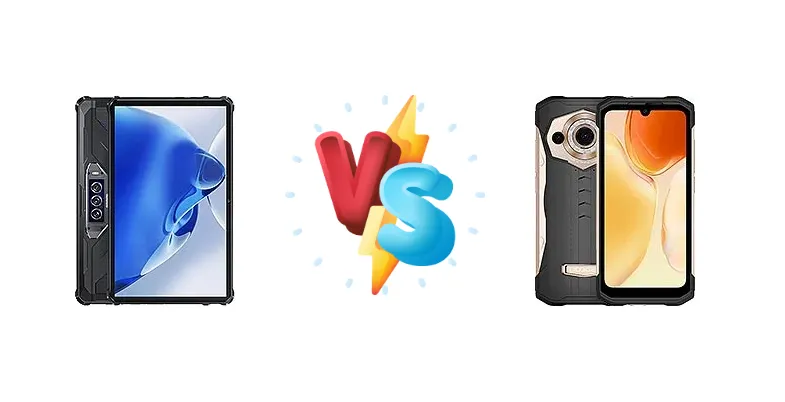
|
🏆 Quick Verdict
For users prioritizing all-day (and multi-day) battery life and 5G connectivity, the Oukitel RT7 5G is the clear winner. However, if gaming and slightly faster processing are more important, the Doogee S99 offers a compelling alternative, especially with its wireless charging capability.
| PHONES | ||
|---|---|---|
| Phone Names | Oukitel RT7 5G | Doogee S99 |
| Network | ||
|---|---|---|
| 2G bands | GSM 850 / 900 / 1800 / 1900 | GSM 850 / 900 / 1800 / 1900 |
| 3G bands | HSDPA 850 / 900 / 1700(AWS) / 1900 / 2100 | HSDPA 800 / 850 / 900 / 1700(AWS) / 1900 / 2100 |
| 4G bands | 1, 2, 3, 4, 5, 7, 8, 12, 17, 18, 19, 20, 25, 26, 28, 38, 39, 40, 41, 66 | 1, 2, 3, 4, 5, 7, 8, 12, 13, 17, 18, 19, 20, 25, 26, 28, 34, 38, 39, 40, 41, 66 |
| Speed | HSPA, LTE | HSPA, LTE |
| Technology | GSM / HSPA / LTE | GSM / CDMA / HSPA / LTE |
| Launch | ||
|---|---|---|
| Announced | 2023, August | 2022, December 05 |
| Status | Available. Released 2023, September | Available. Released 2022, December 05 |
| Body | ||
|---|---|---|
| Dimensions | 249.1 x 167.8 x 19.8 mm (9.81 x 6.61 x 0.78 in) | 172 x 82 x 15.5 mm (6.77 x 3.23 x 0.61 in) |
| SIM | Nano-SIM + Nano-SIM | Nano-SIM + Nano-SIM |
| Weight | 1212 g (2.67 lb) | - |
| Display | ||
|---|---|---|
| Protection | Mohs level 5 | Corning Gorilla Glass |
| Resolution | 1200 x 1920 pixels, 16:10 ratio (~224 ppi density) | 1080 x 2340 pixels, 19.5:9 ratio (~409 ppi density) |
| Size | 10.1 inches, 295.8 cm2 (~70.8% screen-to-body ratio) | 6.3 inches, 97.4 cm2 (~69.1% screen-to-body ratio) |
| Type | IPS LCD, 400 nits | IPS LCD |
| Platform | ||
|---|---|---|
| CPU | Octa-core (2x2.0 GHz Cortex-A76 & 6x2.0 GHz Cortex-A55) | Octa-core (2x2.05 GHz Cortex-A76 & 6x2.0 GHz Cortex-A55) |
| Chipset | Mediatek Dimensity 720 (7 nm) | Mediatek MT6781 Helio G96 (12 nm) |
| GPU | Mali-G57 MC3 | Mali-G57 MC2 |
| OS | Android 13 | Android 12 |
| Memory | ||
|---|---|---|
| Card slot | microSDXC (uses shared SIM slot) | microSDXC (dedicated slot) |
| Internal | 256GB 12GB RAM | 128GB 8GB RAM |
| Main Camera | ||
|---|---|---|
| Features | LED flash, HDR, panorama | Dual-LED flash, HDR, panorama |
| Triple | 48 MP, f/1.8, (wide), 1/2", PDAF 20 MP, f/1.8, (night vision), 1/2.78", AF, infrared night vision lights 2 MP (macro) | 108 MP, f/1.9, (wide), 1/1.52", 0.7µm, PDAF 64 MP, f/1.8, (night vision), 2 infrared night vision lights 16 MP, f/1.8, 130˚ (ultrawide) |
| Video | 1080p@30fps | 1440p@30fps, 1080p@30fps |
| Selfie camera | ||
|---|---|---|
| Single | 32 MP, f/2.2, (wide), 1/2.8" | 32 MP, f/2.0, (wide), 1/2.8", 0.8µm |
| Video | 1080p@30fps | 1080p@30fps |
| Sound | ||
|---|---|---|
| 35mm jack | No | No |
| Loudspeaker | Yes, with stereo speakers | Yes |
| Comms | ||
|---|---|---|
| Bluetooth | 5.1, A2DP, LE | 5.1, A2DP, LE |
| NFC | Yes | Yes (market/region dependent) |
| Positioning | GPS, GLONASS, GALILEO, BDS | GPS, GLONASS, GALILEO, BDS |
| Radio | FM radio | FM radio |
| USB | USB Type-C 2.0, OTG | USB Type-C 2.0, OTG |
| WLAN | Wi-Fi 802.11 a/b/g/n/ac, dual-band | Wi-Fi 802.11 a/b/g/n/ac, dual-band |
| Features | ||
|---|---|---|
| Sensors | Fingerprint (rear-mounted), accelerometer, gyro, proximity, compass | Fingerprint (side-mounted), accelerometer, gyro, proximity, compass |
| Battery | ||
|---|---|---|
| Charging | 33W wired Reverse wired | 33W wired, 45% in 30 min 15W wireless Reverse wired |
| Type | Li-Po 32000 mAh | 6000 mAh |
| Misc | ||
|---|---|---|
| Colors | Black, Blue | Gold, Black |
| Price | About 470 EUR | About 250 EUR |
| EU LABEL | ||
|---|---|---|
| Battery | 166:39h endurance, 1300 cycles | - |
| Energy | Class D | - |
| Free fall | Class A (208 falls) | - |
| Repairability | Class C | - |
Oukitel RT7 5G
- Exceptional battery life (166:39h endurance)
- 5G connectivity for faster data speeds
- More efficient 7nm Dimensity 720 chipset
- Lacks wireless charging
- Potentially less gaming performance than the Doogee S99
Doogee S99
- Wireless charging for added convenience
- Helio G96 chipset geared towards gaming
- Faster charging speed (45% in 30 minutes)
- Shorter battery life compared to the Oukitel RT7 5G
- Less thermally efficient 12nm Helio G96 chipset
Display Comparison
Neither device boasts a particularly high-end display, focusing instead on durability. Specific display specs (resolution, panel type) are missing, but both likely utilize IPS LCDs given their price points. The focus here is on visibility in direct sunlight and scratch resistance, not color accuracy or refresh rates. The lack of LTPO technology means neither phone will offer adaptive refresh rates for power saving.
Camera Comparison
Camera details are sparse, but the focus should be on practical usability rather than flagship-level image quality. Without sensor size information, it’s difficult to make a definitive judgment. However, the Doogee S99’s inclusion of wireless charging suggests a slightly higher overall component quality, which *could* translate to better image processing. The presence of a 2MP macro camera on both devices is largely a marketing gimmick and shouldn’t be a deciding factor.
Performance
The core difference lies in the chipsets. The Oukitel RT7 5G’s MediaTek Dimensity 720 (7nm) is designed for 5G connectivity and efficient power consumption. The Doogee S99’s MediaTek Helio G96 (12nm) prioritizes gaming performance. While both CPUs feature the same core configuration (2x2.05 GHz Cortex-A76 & 6x2.0 GHz Cortex-A55), the 7nm process of the Dimensity 720 offers superior thermal efficiency, potentially leading to more sustained performance under load. The larger node size of the Helio G96 means it will likely generate more heat, potentially causing throttling during extended gaming sessions. RAM specifications are missing, but both likely utilize LPDDR4X to balance cost and performance.
Battery Life
Battery life is where the Oukitel RT7 5G truly shines. Its 166:39h endurance rating is exceptional, indicating significantly longer usage between charges compared to the Doogee S99. While both support 33W wired charging, the Doogee S99 adds 15W wireless charging, a convenience the Oukitel RT7 5G lacks. The Oukitel RT7 5G also boasts a claimed 1300 charge cycles, suggesting a longer lifespan for the battery itself. The Doogee S99 advertises 45% charge in 30 minutes, but without knowing the battery capacity of either device, it's hard to compare absolute charging times.
Buying Guide
Buy the Oukitel RT7 5G if you need a phone that can reliably last through extended fieldwork, camping trips, or simply want to avoid daily charging. Its 166:39h endurance is a standout feature. Buy the Doogee S99 if you prefer a phone that can handle moderate gaming sessions and appreciate the convenience of wireless charging, even if it means sacrificing some battery longevity.