
Oukitel RT6 vs. Ulefone Armor 15: A Deep Dive into Rugged Smartphone Choices
| Phones Images | |||||
|---|---|---|---|---|---|
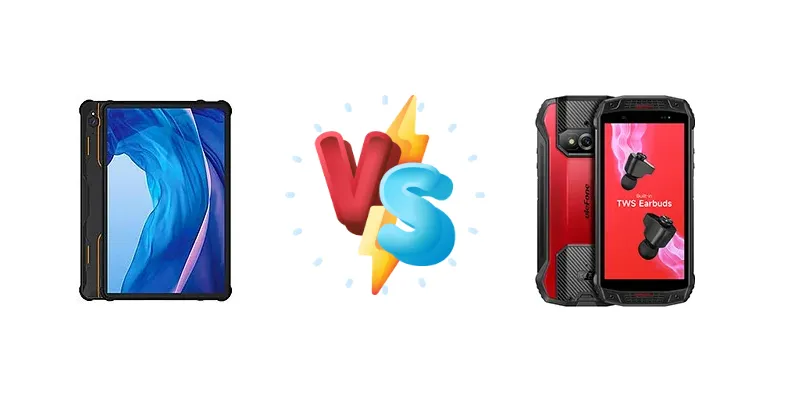
|
🏆 Quick Verdict
For users prioritizing maximum uptime and infrequent, less demanding tasks, the Oukitel RT6 is the clear winner. Its massive 499-hour endurance and 33W charging outweigh the Ulefone Armor 15’s slightly more modern CPU. However, the Armor 15 is a viable option for those needing a more responsive experience for lighter applications.
| PHONES | ||
|---|---|---|
| Phone Names | Oukitel RT6 | Ulefone Armor 15 |
| Network | ||
|---|---|---|
| 2G bands | GSM 850 / 900 / 1800 / 1900 | GSM 850 / 900 / 1800 / 1900 |
| 3G bands | HSDPA 850 / 900 / 1700(AWS) / 1900 / 2100 | HSDPA 850 / 900 / 1700(AWS) / 1900 / 2100 |
| 4G bands | 1, 2, 3, 4, 5, 7, 8, 12, 17, 18, 19, 20, 25, 26, 28, 38, 39, 40, 41, 66 | 1, 2, 3, 4, 5, 7, 8, 12, 13, 17, 18, 19, 20, 25, 26, 28, 38, 39, 40, 41, 66 |
| Speed | HSPA, LTE | HSPA, LTE Cat13 300/150 Mbps |
| Technology | GSM / HSPA / LTE | GSM / HSPA / LTE |
| Launch | ||
|---|---|---|
| Announced | 2023, July | 2022, July 27 |
| Status | Available. Released 2023, July | Available. Released 2022, August 10 |
| Body | ||
|---|---|---|
| Dimensions | 249.1 x 167.8 x 17.3 mm (9.81 x 6.61 x 0.68 in) | 170.2 x 79.6 x 18.2 mm (6.70 x 3.13 x 0.72 in) |
| SIM | Nano-SIM + Nano-SIM | Nano-SIM + Nano-SIM |
| Weight | 1030 g (2.27 lb) | 346 g (12.20 oz) |
| - | IP68 dust/water resistant (up to 1.5m for 30 min) Drop-to-concrete resistance from up to 1.5m MIL-STD-810G compliant Built-in wireless earbuds housed inside the top side of the phone; charging | |
| Display | ||
|---|---|---|
| Protection | Mohs level 5 | - |
| Resolution | 1200 x 1920 pixels, 16:10 ratio (~224 ppi density) | 720 x 1440 pixels, 18:9 ratio (~295 ppi density) |
| Size | 10.1 inches, 295.8 cm2 (~70.8% screen-to-body ratio) | 5.45 inches, 76.7 cm2 (~56.6% screen-to-body ratio) |
| Type | IPS LCD, 350 nits | IPS LCD |
| Platform | ||
|---|---|---|
| CPU | Octa-core (4x2.0 GHz Cortex-A73 & 4x2.0 GHz Cortex-A53) | Octa-core (4x2.3 GHz Cortex-A53 & 4x1.8 GHz Cortex-A53) |
| Chipset | Mediatek MT8788 (12 nm) | Mediatek MT6765G Helio G35 (12 nm) |
| GPU | Mali-G72 MP3 | PowerVR GE8320 |
| OS | Android 13 | Android 12 |
| Memory | ||
|---|---|---|
| Card slot | microSDXC (uses shared SIM slot) | microSDXC (dedicated slot) |
| Internal | 256GB 8GB RAM | 128GB 6GB RAM |
| Main Camera | ||
|---|---|---|
| Dual | - | 12 MP, f/1.8, (wide), 1.4μm 13 MP, f/2.4, 106˚ (ultrawide) |
| Features | LED flash | LED flash, HDR, panorama |
| Single | 16 MP, f/2.0, (wide), AF | 16 MP, f/2.4, (wide), 1.0μm |
| Video | 1080p@30fps | 1080p@30fps |
| Selfie camera | ||
|---|---|---|
| Single | 16 MP, f/2.2, (wide) | 16 MP, f/2.4, (wide), 1.0μm |
| Video | 720p@30fps | 1080p@30fps |
| Sound | ||
|---|---|---|
| 3.5mm jack | - | No |
| 35mm jack | Unspecified | No |
| Loudspeaker | Yes, with stereo speakers | Yes |
| Comms | ||
|---|---|---|
| Bluetooth | 4.2, A2DP | 5.0, A2DP |
| NFC | No | Yes |
| Positioning | GPS, GLONASS, GALILEO, BDS | GPS, GLONASS, BDS, GALILEO |
| Radio | Unspecified | Stereo FM radio, RDS, recording |
| USB | USB Type-C 2.0, OTG | USB Type-C 2.0, OTG |
| WLAN | Wi-Fi 802.11 a/b/g/n/ac, dual-band | Wi-Fi 802.11 a/b/g/n/ac, dual-band |
| Features | ||
|---|---|---|
| Sensors | Accelerometer, gyro, proximity, compass | Fingerprint (side-mounted), accelerometer, proximity, gyro, compass |
| Battery | ||
|---|---|---|
| Charging | 33W wired Reverse wired | 18W wired |
| Type | Li-Po 20000 mAh | Li-Po 6600 mAh |
| Misc | ||
|---|---|---|
| Colors | Black, Orange | Meteorite Black, Tech Blue, Sport Red |
| Price | About 350 EUR | About 300 EUR |
| EU LABEL | ||
|---|---|---|
| Battery | 499:59h endurance, 1000 cycles | - |
| Energy | Class B | - |
| Free fall | Class A (208 falls) | - |
| Repairability | Class C | - |
Oukitel RT6
- Exceptional battery life (499:59h endurance)
- Faster 33W wired charging with reverse charging capability
- More powerful CPU architecture (Cortex-A73 cores)
- Older chipset architecture may impact long-term software support
- Potentially higher power consumption under heavy load
Ulefone Armor 15
- More power-efficient chipset (Helio G35)
- Potentially cooler operating temperatures
- Slightly more modern chipset
- Significantly lower battery endurance
- Slower 18W wired charging
- Less powerful CPU architecture (Cortex-A53 cores)
Display Comparison
Neither device’s display specifications are provided, so a direct comparison is limited. However, given the price point and rugged focus, both likely utilize IPS LCD panels. The absence of details like resolution or refresh rate suggests neither phone is targeting display quality as a primary selling point. Bezels are likely substantial on both to contribute to drop protection.
Camera Comparison
Without detailed camera specifications, a comprehensive comparison is impossible. However, it’s reasonable to assume both phones feature basic camera setups geared towards functional photography rather than high-end image quality. The absence of information suggests neither device boasts advanced features like OIS or large sensors. The focus is likely on providing a usable camera for documentation and quick snapshots in rugged environments.
Performance
The core difference lies in the chipsets. The Oukitel RT6’s Mediatek MT8788, with its Cortex-A73 cores clocked at 2.0 GHz, offers a more powerful, though older, architecture. This translates to better performance in multi-threaded tasks and potentially smoother operation with demanding applications. Conversely, the Ulefone Armor 15’s Helio G35, while newer, utilizes only Cortex-A53 cores clocked slightly higher at 2.3 GHz. While the G35 benefits from a more efficient design, the A73 cores in the RT6 provide a significant architectural advantage. The RT6 is likely to handle multitasking and heavier apps more effectively, but at the cost of potentially higher power consumption. The G35 in the Armor 15 will likely provide a snappier experience for basic tasks.
Battery Life
The Oukitel RT6 dominates in battery endurance with a claimed 499:59h of usage. This is a substantial advantage over what is typically expected from a rugged phone. The 33W wired charging is also faster than the Ulefone Armor 15’s 18W charging, allowing for quicker top-ups when needed. While the Armor 15’s Helio G35 is more power-efficient, the RT6’s larger battery capacity and faster charging provide a more compelling overall package for users prioritizing longevity.
Buying Guide
Buy the Oukitel RT6 if you need a phone that can genuinely last for days on a single charge, frequently work outdoors or in harsh environments, and primarily use your phone for communication, navigation, and basic productivity. Buy the Ulefone Armor 15 if you prefer a slightly more responsive user experience for everyday tasks, are comfortable with more frequent charging, and value a potentially cooler operating temperature under sustained load.