
Oukitel RT6 vs. Doogee S99: A Deep Dive into Rugged Smartphone Performance
| Phones Images | |||||
|---|---|---|---|---|---|
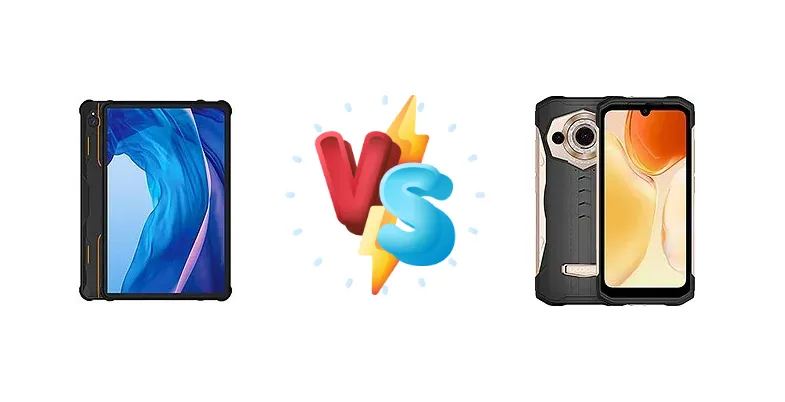
|
🏆 Quick Verdict
For users prioritizing maximum uptime and long-term reliability, the Oukitel RT6 is the clear winner. Its impressive 499-hour endurance and 1000-cycle battery life outweigh the Doogee S99’s slightly faster processor. However, gamers and power users will find the Doogee S99’s Helio G96 chipset a more responsive experience.
| PHONES | ||
|---|---|---|
| Phone Names | Oukitel RT6 | Doogee S99 |
| Network | ||
|---|---|---|
| 2G bands | GSM 850 / 900 / 1800 / 1900 | GSM 850 / 900 / 1800 / 1900 |
| 3G bands | HSDPA 850 / 900 / 1700(AWS) / 1900 / 2100 | HSDPA 800 / 850 / 900 / 1700(AWS) / 1900 / 2100 |
| 4G bands | 1, 2, 3, 4, 5, 7, 8, 12, 17, 18, 19, 20, 25, 26, 28, 38, 39, 40, 41, 66 | 1, 2, 3, 4, 5, 7, 8, 12, 13, 17, 18, 19, 20, 25, 26, 28, 34, 38, 39, 40, 41, 66 |
| Speed | HSPA, LTE | HSPA, LTE |
| Technology | GSM / HSPA / LTE | GSM / CDMA / HSPA / LTE |
| Launch | ||
|---|---|---|
| Announced | 2023, July | 2022, December 05 |
| Status | Available. Released 2023, July | Available. Released 2022, December 05 |
| Body | ||
|---|---|---|
| Dimensions | 249.1 x 167.8 x 17.3 mm (9.81 x 6.61 x 0.68 in) | 172 x 82 x 15.5 mm (6.77 x 3.23 x 0.61 in) |
| SIM | Nano-SIM + Nano-SIM | Nano-SIM + Nano-SIM |
| Weight | 1030 g (2.27 lb) | - |
| Display | ||
|---|---|---|
| Protection | Mohs level 5 | Corning Gorilla Glass |
| Resolution | 1200 x 1920 pixels, 16:10 ratio (~224 ppi density) | 1080 x 2340 pixels, 19.5:9 ratio (~409 ppi density) |
| Size | 10.1 inches, 295.8 cm2 (~70.8% screen-to-body ratio) | 6.3 inches, 97.4 cm2 (~69.1% screen-to-body ratio) |
| Type | IPS LCD, 350 nits | IPS LCD |
| Platform | ||
|---|---|---|
| CPU | Octa-core (4x2.0 GHz Cortex-A73 & 4x2.0 GHz Cortex-A53) | Octa-core (2x2.05 GHz Cortex-A76 & 6x2.0 GHz Cortex-A55) |
| Chipset | Mediatek MT8788 (12 nm) | Mediatek MT6781 Helio G96 (12 nm) |
| GPU | Mali-G72 MP3 | Mali-G57 MC2 |
| OS | Android 13 | Android 12 |
| Memory | ||
|---|---|---|
| Card slot | microSDXC (uses shared SIM slot) | microSDXC (dedicated slot) |
| Internal | 256GB 8GB RAM | 128GB 8GB RAM |
| Main Camera | ||
|---|---|---|
| Features | LED flash | Dual-LED flash, HDR, panorama |
| Single | 16 MP, f/2.0, (wide), AF | - |
| Triple | - | 108 MP, f/1.9, (wide), 1/1.52", 0.7µm, PDAF 64 MP, f/1.8, (night vision), 2 infrared night vision lights 16 MP, f/1.8, 130˚ (ultrawide) |
| Video | 1080p@30fps | 1440p@30fps, 1080p@30fps |
| Selfie camera | ||
|---|---|---|
| Single | 16 MP, f/2.2, (wide) | 32 MP, f/2.0, (wide), 1/2.8", 0.8µm |
| Video | 720p@30fps | 1080p@30fps |
| Sound | ||
|---|---|---|
| 35mm jack | Unspecified | No |
| Loudspeaker | Yes, with stereo speakers | Yes |
| Comms | ||
|---|---|---|
| Bluetooth | 4.2, A2DP | 5.1, A2DP, LE |
| NFC | No | Yes (market/region dependent) |
| Positioning | GPS, GLONASS, GALILEO, BDS | GPS, GLONASS, GALILEO, BDS |
| Radio | Unspecified | FM radio |
| USB | USB Type-C 2.0, OTG | USB Type-C 2.0, OTG |
| WLAN | Wi-Fi 802.11 a/b/g/n/ac, dual-band | Wi-Fi 802.11 a/b/g/n/ac, dual-band |
| Features | ||
|---|---|---|
| Sensors | Accelerometer, gyro, proximity, compass | Fingerprint (side-mounted), accelerometer, gyro, proximity, compass |
| Battery | ||
|---|---|---|
| Charging | 33W wired Reverse wired | 33W wired, 45% in 30 min 15W wireless Reverse wired |
| Type | Li-Po 20000 mAh | 6000 mAh |
| Misc | ||
|---|---|---|
| Colors | Black, Orange | Gold, Black |
| Price | About 350 EUR | About 250 EUR |
| EU LABEL | ||
|---|---|---|
| Battery | 499:59h endurance, 1000 cycles | - |
| Energy | Class B | - |
| Free fall | Class A (208 falls) | - |
| Repairability | Class C | - |
Oukitel RT6
- Unmatched battery life (499:59h endurance)
- Exceptional battery longevity (1000 charge cycles)
- Reverse wired charging for emergency power
- Less powerful processor for demanding tasks
- Limited performance for gaming
Doogee S99
- Faster processor (Helio G96) for smoother performance
- Wireless charging for added convenience
- Faster charging speeds (45% in 30 minutes)
- Significantly shorter battery life compared to RT6
- Potentially reduced battery longevity
Display Comparison
Neither device’s display specifications are provided, so a direct comparison is limited. However, given the rugged focus, both likely utilize durable, scratch-resistant glass. The absence of details like refresh rate or resolution suggests a focus on practicality over premium features. Expect both to prioritize visibility in direct sunlight, a crucial feature for outdoor use.
Camera Comparison
Without detailed camera specifications, a comprehensive comparison is difficult. However, the market segment suggests both phones will feature capable, but not flagship-level, camera systems. The absence of sensor size or aperture information implies a focus on versatility rather than exceptional low-light performance. Users should expect decent image quality in good lighting conditions, but may encounter noise and softness in challenging environments. The inclusion of a 2MP macro lens on either device is likely a marketing feature with limited practical benefit.
Performance
The Doogee S99’s Mediatek Helio G96 chipset, featuring 2x2.05 GHz Cortex-A76 cores and 6x2.0 GHz Cortex-A55 cores, represents a significant performance leap over the Oukitel RT6’s Mediatek MT8788. The G96’s Cortex-A76 cores offer superior single-core performance, crucial for responsive app launching and smoother multitasking. The RT6’s MT8788, with 4x2.0 GHz Cortex-A73 and 4x2.0 GHz Cortex-A53 cores, is adequate for basic tasks but will struggle with graphically intensive games or demanding applications. This difference translates to a more fluid user experience on the S99, particularly for gamers.
Battery Life
The Oukitel RT6’s standout feature is its exceptional battery endurance, rated at 499:59 hours. This is significantly higher than what’s typically seen in smartphones, and is further bolstered by a claimed 1000 charge cycles, indicating long-term battery health. The Doogee S99 offers 33W wired charging with a 45% charge in 30 minutes, and the added convenience of 15W wireless charging. While the S99’s charging speed is faster, the RT6’s sheer capacity and longevity provide a more compelling proposition for users who prioritize minimizing charging frequency. The RT6’s 33W wired charging and reverse wired charging offer similar convenience, but the focus remains on extending runtime rather than rapid replenishment.
Buying Guide
Buy the Oukitel RT6 if you need a phone that can last for days on a single charge, are frequently outdoors without access to power, or value long-term battery health. Buy the Doogee S99 if you prefer a smoother experience with more demanding applications, enjoy mobile gaming, and appreciate the convenience of wireless charging.