
Doogee V30 Pro vs Oukitel RT5: A Deep Dive into Rugged Smartphone Performance
| Phones Images | |||||
|---|---|---|---|---|---|
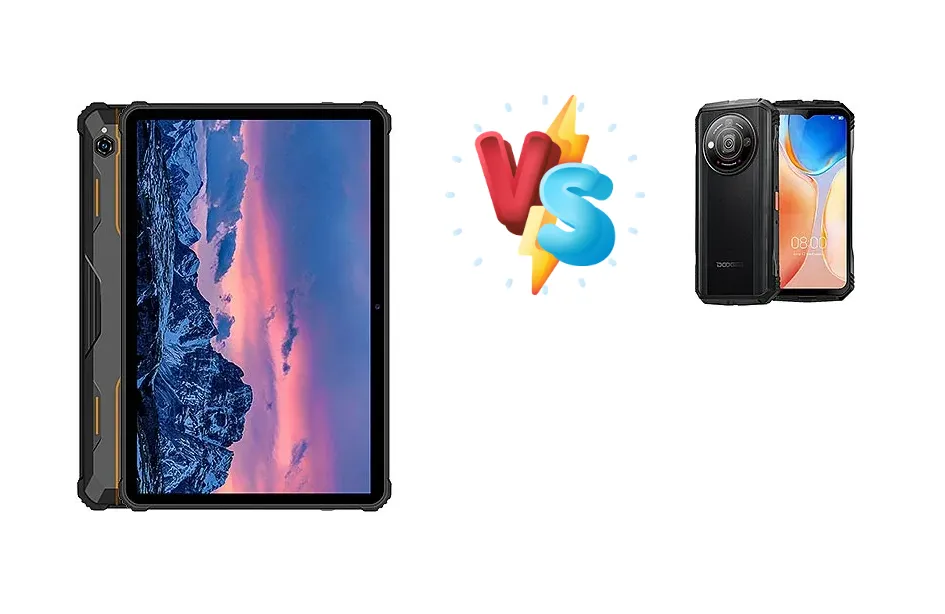
|
🏆 Quick Verdict
For most users, the Doogee V30 Pro is the superior choice. Its Dimensity 7050 chipset delivers a significantly faster and more efficient experience than the Oukitel RT5’s MT8788. While the RT5 offers a lower entry price, the V30 Pro’s performance gains justify the cost for anyone beyond basic smartphone tasks.
| PHONES | ||
|---|---|---|
| Phone Names | Oukitel RT5 | Doogee V30 Pro |
| Network | ||
|---|---|---|
| 2G bands | GSM 850 / 900 / 1800 / 1900 | GSM 850 / 900 / 1800 / 1900 |
| 3G bands | HSDPA 850 / 900 / 1700(AWS) / 1900 / 2100 | HSDPA 800 / 850 / 900 / 1700(AWS) / 1900 / 2100 |
| 4G bands | 1, 2, 3, 4, 5, 7, 8, 12, 17, 18, 19, 20, 25, 26, 28, 38, 39, 40, 41, 66 | 1, 2, 3, 4, 5, 7, 8, 12, 17, 18, 19, 20, 25, 26, 28, 34, 38, 39, 40, 41, 66 |
| 5G bands | - | 1, 3, 7, 28, 38, 41, 77, 78, 79 SA/NSA |
| Speed | HSPA, LTE | HSPA, LTE, 5G |
| Technology | GSM / HSPA / LTE | GSM / CDMA / HSPA / LTE / 5G |
| Launch | ||
|---|---|---|
| Announced | 2023, May | 2023, October 24 |
| Status | Available. Released 2023, May | Available. Released 2023, November 01 |
| Body | ||
|---|---|---|
| Dimensions | 251.2 x 170 x 14.2 mm (9.89 x 6.69 x 0.56 in) | 178.5 x 83.1 x 17.9 mm (7.03 x 3.27 x 0.70 in) |
| SIM | Nano-SIM + Nano-SIM | Nano-SIM + Nano-SIM |
| Weight | 860 g (1.90 lb) | - |
| Display | ||
|---|---|---|
| Protection | - | Corning Gorilla Glass 5 |
| Resolution | 1200 x 1920 pixels, 16:10 ratio (~224 ppi density) | 1080 x 2408 pixels, 20:9 ratio (~401 ppi density) |
| Size | 10.1 inches, 295.8 cm2 (~69.3% screen-to-body ratio) | 6.58 inches, 104.3 cm2 (~70.3% screen-to-body ratio) |
| Type | IPS LCD, 400 nits | IPS LCD, 120Hz |
| Platform | ||
|---|---|---|
| CPU | Octa-core (4x2.0 GHz Cortex-A73 & 4x2.0 GHz Cortex-A53) | Octa-core (2x2.6 GHz Cortex-A78 & 6x2.0 GHz Cortex-A55) |
| Chipset | Mediatek MT8788 (12 nm) | Mediatek Dimensity 7050 (6 nm) |
| GPU | Mali-G72 MP3 | Mali-G68 MC4 |
| OS | Android | Android 13 |
| Memory | ||
|---|---|---|
| Card slot | microSDXC | microSDXC (uses shared SIM slot) |
| Internal | 256GB 14GB RAM | 512GB 12GB RAM |
| Main Camera | ||
|---|---|---|
| Features | LED flash | Dual-LED flash, HDR, panorama |
| Single | 16 MP, f/2.2, (wide), 1/3.1", AF | - |
| Triple | - | 200 MP, f/1.7, (wide), 1/1.4", PDAF 24 MP, f/1.8, (night vision), 2 infrared night vision lights 16 MP, f/2.2, 125˚ (ultrawide) |
| Video | 1080p@30fps | 4K@30fps, 1080p@30fps |
| Selfie camera | ||
|---|---|---|
| Single | 16 MP, f/2.0, (wide), 1/2.8" | 32 MP, f/1.8, (wide), 1/2.7" |
| Video | Yes | 1080p@30fps |
| Sound | ||
|---|---|---|
| 35mm jack | Unspecified | Unspecified |
| Loudspeaker | Yes, with stereo speakers | Yes, with stereo speakers |
| Comms | ||
|---|---|---|
| Bluetooth | 4.2, A2DP | 5.2, A2DP, LE |
| NFC | No | Yes (market/region dependent) |
| Positioning | GPS, GLONASS, GALILEO, BDS | GPS (L1+L5), GLONASS, GALILEO, BDS |
| Radio | Unspecified | FM radio |
| USB | USB Type-C 2.0, OTG | USB Type-C 2.0, OTG |
| WLAN | Wi-Fi 802.11 a/b/g/n/ac, dual-band | Wi-Fi 802.11 a/b/g/n/ac/6, dual-band |
| Features | ||
|---|---|---|
| Sensors | Accelerometer, gyro, compass | Fingerprint (side-mounted), accelerometer, gyro, proximity, compass |
| Battery | ||
|---|---|---|
| Charging | 18W wired Reverse wired | 33W wired Reverse wired |
| Type | Li-Po 10000 mAh | 10800 mAh |
| Misc | ||
|---|---|---|
| Colors | Black, Orange | Black, Orange, Silver |
| Price | About 270 EUR | About 440 EUR |
Oukitel RT5
- Lower price point makes it accessible.
- Rugged design offers good durability.
- Reverse wired charging provides added convenience.
- Outdated MT8788 chipset limits performance.
- Slower 18W charging.
- Likely lower quality display.
Doogee V30 Pro
- Powerful Dimensity 7050 chipset delivers excellent performance.
- Faster 33W wired charging.
- Potentially better display quality.
- Higher price compared to the Oukitel RT5.
- Rugged design may add bulk.
- No specific display details available.
Display Comparison
Neither device’s display specifications are provided, so a direct comparison is limited. However, given the RT5’s positioning, it likely utilizes a standard LCD panel. The V30 Pro, benefiting from a more modern chipset, may incorporate a higher-quality panel with improved color accuracy and viewing angles. The absence of details like refresh rate or resolution suggests both prioritize durability over display extravagance. Bezels are likely substantial on both to contribute to shock absorption.
Camera Comparison
Without detailed camera specifications, analysis is limited. However, the V30 Pro’s more powerful chipset likely enables more sophisticated image processing algorithms, resulting in better dynamic range and noise reduction. The RT5 will likely rely on simpler processing, potentially leading to less detailed images, especially in low-light conditions. The presence of a 2MP macro camera on either device is largely a marketing gimmick; image quality will be limited. The main sensor size and aperture are critical factors not provided, but the V30 Pro’s processing power suggests it will extract more detail from its sensor.
Performance
The core difference lies in the chipsets. The Doogee V30 Pro’s Mediatek Dimensity 7050 (6nm) is a substantial upgrade over the Oukitel RT5’s Mediatek MT8788 (12nm). The 6nm process node allows for greater transistor density and improved power efficiency, translating to less heat and better sustained performance. The CPU architecture also favors the V30 Pro; its Cortex-A78 cores (2x2.6 GHz) are significantly more powerful than the RT5’s Cortex-A73 cores (4x2.0 GHz). This means faster app loading, smoother multitasking, and a more enjoyable gaming experience. The V30 Pro’s Cortex-A55 efficiency cores (6x2.0 GHz) are also a step up from the RT5’s Cortex-A53 cores, further enhancing power efficiency. The RT5 will handle basic tasks adequately, but will struggle with demanding applications.
Battery Life
Battery capacity isn’t specified for either device, but the V30 Pro’s more efficient Dimensity 7050 chipset will likely result in longer battery life despite potentially having a similar capacity to the RT5. The V30 Pro’s 33W wired charging is significantly faster than the RT5’s 18W charging. This translates to a quicker 0-100% charge time, minimizing downtime. Both devices offer reverse wired charging, a useful feature for topping up accessories, but the V30 Pro’s faster charging speed will also benefit this functionality.
Buying Guide
Buy the Oukitel RT5 if you need a truly budget-friendly rugged phone for essential communication and light tasks like messaging and basic navigation. It’s ideal for users prioritizing cost above all else. Buy the Doogee V30 Pro if you prefer a smoother, more responsive experience for gaming, multitasking, and demanding applications. It’s the better choice for users who value performance and future-proofing in a rugged package.