
Oukitel RT5 vs Cubot KingKong 8: A Deep Dive into Rugged Android Performance
| Phones Images | |||||
|---|---|---|---|---|---|
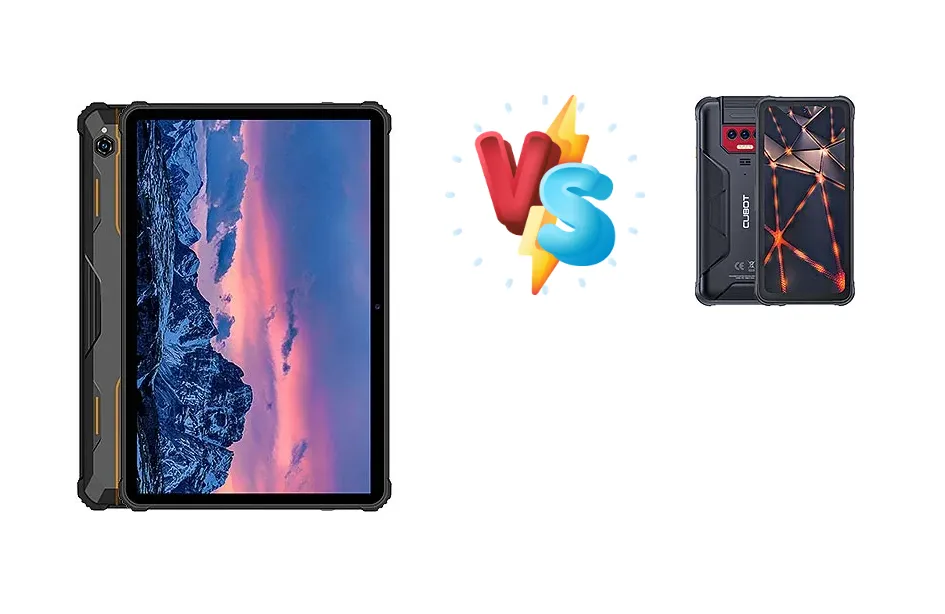
|
🏆 Quick Verdict
For the average user prioritizing consistent performance and potentially slightly better software optimization, the Oukitel RT5 edges out the Cubot KingKong 8. While both share the same core chipset, the RT5’s established presence in the market suggests a more refined user experience. However, the KingKong 8 remains a compelling option at a potentially lower price point.
| PHONES | ||
|---|---|---|
| Phone Names | Oukitel RT5 | Cubot KingKong 8 |
| Network | ||
|---|---|---|
| 2G bands | GSM 850 / 900 / 1800 / 1900 | GSM 850 / 900 / 1800 / 1900 |
| 3G bands | HSDPA 850 / 900 / 1700(AWS) / 1900 / 2100 | HSDPA 850 / 900 / 1700(AWS) / 1900 / 2100 |
| 4G bands | 1, 2, 3, 4, 5, 7, 8, 12, 17, 18, 19, 20, 25, 26, 28, 38, 39, 40, 41, 66 | 1, 2, 3, 4, 5, 7, 8, 12, 17, 20, 28, 41 |
| Speed | HSPA, LTE | HSPA, LTE |
| Technology | GSM / HSPA / LTE | GSM / HSPA / LTE |
| Launch | ||
|---|---|---|
| Announced | 2023, May | 2023, October 23 |
| Status | Available. Released 2023, May | Available. Released 2023, October 23 |
| Body | ||
|---|---|---|
| Dimensions | 251.2 x 170 x 14.2 mm (9.89 x 6.69 x 0.56 in) | 169.9 x 80.2 x 20 mm (6.69 x 3.16 x 0.79 in) |
| SIM | Nano-SIM + Nano-SIM | Nano-SIM + Nano-SIM |
| Weight | 860 g (1.90 lb) | 382 g (13.47 oz) |
| Display | ||
|---|---|---|
| Resolution | 1200 x 1920 pixels, 16:10 ratio (~224 ppi density) | 720 x 1612 pixels, 20:9 ratio (~270 ppi density) |
| Size | 10.1 inches, 295.8 cm2 (~69.3% screen-to-body ratio) | 6.53 inches, 102.4 cm2 (~75.2% screen-to-body ratio) |
| Type | IPS LCD, 400 nits | IPS LCD |
| Platform | ||
|---|---|---|
| CPU | Octa-core (4x2.0 GHz Cortex-A73 & 4x2.0 GHz Cortex-A53) | Octa-core (4x2.0 GHz Cortex-A73 & 4x2.0 GHz Cortex-A53) |
| Chipset | Mediatek MT8788 (12 nm) | Mediatek MT8788V/WA (12 nm) |
| GPU | Mali-G72 MP3 | - |
| OS | Android | Android 13 |
| Memory | ||
|---|---|---|
| Card slot | microSDXC | microSDXC (uses shared SIM slot) |
| Internal | 256GB 14GB RAM | 256GB 12GB RAM |
| Main Camera | ||
|---|---|---|
| Features | LED flash | LED flash |
| Single | 16 MP, f/2.2, (wide), 1/3.1", AF | - |
| Triple | - | 48 MP, (wide), PDAF 2 MP (macro) 0.3 MP |
| Video | 1080p@30fps | Yes |
| Selfie camera | ||
|---|---|---|
| Single | 16 MP, f/2.0, (wide), 1/2.8" | 16 MP |
| Video | Yes | Yes |
| Sound | ||
|---|---|---|
| 35mm jack | Unspecified | Unspecified |
| Loudspeaker | Yes, with stereo speakers | Yes |
| Comms | ||
|---|---|---|
| Bluetooth | 4.2, A2DP | 4.2, A2DP |
| NFC | No | Yes |
| Positioning | GPS, GLONASS, GALILEO, BDS | GPS, GLONASS, GALILEO |
| Radio | Unspecified | Unspecified |
| USB | USB Type-C 2.0, OTG | USB Type-C, OTG |
| WLAN | Wi-Fi 802.11 a/b/g/n/ac, dual-band | Wi-Fi 802.11 a/b/g/n/ac, dual-band |
| Features | ||
|---|---|---|
| Sensors | Accelerometer, gyro, compass | Fingerprint (side-mounted), accelerometer, gyro, proximity, compass |
| Battery | ||
|---|---|---|
| Charging | 18W wired Reverse wired | Wired Reverse wired |
| Type | Li-Po 10000 mAh | 10600 mAh |
| Misc | ||
|---|---|---|
| Colors | Black, Orange | Black, Red, Green |
| Price | About 270 EUR | About 170 EUR |
Oukitel RT5
- Potentially more refined software experience due to Oukitel's market presence.
- Established brand reputation in the rugged phone segment.
- Reverse wired charging for added convenience.
- 18W charging is relatively slow.
- Specific display specs are unknown.
Cubot KingKong 8
- Potentially lower price point.
- Rugged design for durability.
- Reverse wired charging for added convenience.
- MT8788V/WA variant may have less software optimization.
- Unknown display quality.
Display Comparison
Both the Oukitel RT5 and Cubot KingKong 8 likely feature IPS LCD panels, common in this price bracket. Without specific display specs like resolution or brightness, it’s difficult to differentiate. However, rugged phones often prioritize visibility in direct sunlight, so a higher peak brightness would be advantageous. The absence of LTPO technology means neither device will offer adaptive refresh rates for power saving. Bezels are expected to be substantial, prioritizing screen protection over a modern, edge-to-edge design.
Camera Comparison
Camera details are sparse, but both phones likely feature a multi-camera setup. Without sensor size information, it’s difficult to assess image quality. The inclusion of a 2MP macro camera on either device is largely a marketing tactic, offering limited practical benefit. Image processing algorithms will play a significant role in differentiating the final image quality. OIS (Optical Image Stabilization) is unlikely at this price point, meaning reliance on digital stabilization for video recording. The primary sensor’s aperture will be a key indicator of low-light performance.
Performance
Both devices are powered by the Mediatek MT8788 (Oukitel RT5) and MT8788V/WA (Cubot KingKong 8), both 12nm chips featuring an octa-core CPU configuration with 4x2.0 GHz Cortex-A73 and 4x2.0 GHz Cortex-A53 cores. The 'V/WA' designation on the KingKong 8 suggests a potentially slightly tweaked variant, but real-world performance differences are likely minimal. The CPU architecture is geared towards efficient multitasking and moderate gaming. RAM speed (likely LPDDR3 or LPDDR4) is a critical factor, but unspecified. Thermal management will be crucial; sustained workloads could lead to throttling, impacting long-term performance. The identical CPU configuration means the performance will be very similar, with software optimization being the deciding factor.
Battery Life
Both devices support 18W wired charging and reverse wired charging. The actual battery capacity is not specified, but rugged phones typically prioritize larger batteries for extended use in the field. 18W charging is relatively slow by modern standards, meaning a full 0-100% charge will likely take over 2 hours. Reverse wired charging is a useful feature for topping up accessories like wireless earbuds or other phones in emergencies. The real-world battery life will depend on usage patterns and the battery capacity, but both should comfortably last a full day with moderate use.
Buying Guide
Buy the Oukitel RT5 if you need a rugged phone with a slightly more established track record and potentially smoother software updates. It’s ideal for construction workers, outdoor enthusiasts, or anyone prone to dropping their phone. Buy the Cubot KingKong 8 if you prioritize value and are comfortable with a potentially less polished software experience, making it a good fit for budget-conscious users who still demand durability.