
Oukitel RT3 vs Samsung Galaxy XCover 5: A Deep Dive into Rugged Smartphone Performance
| Phones Images | |||||
|---|---|---|---|---|---|
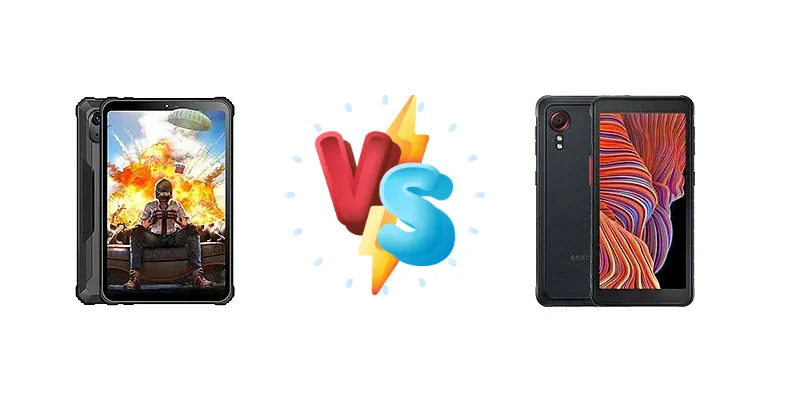
|
🏆 Quick Verdict
For the average user prioritizing a smoother experience and brand reliability, the Samsung Galaxy XCover 5 is the better choice. Its Exynos 850 chipset provides a significant performance advantage over the Oukitel RT3’s Helio P22, justifying the price difference for those who need consistent responsiveness.
| PHONES | ||
|---|---|---|
| Phone Names | Oukitel RT3 | Samsung Galaxy XCover 5 |
| Network | ||
|---|---|---|
| 2G bands | GSM 850 / 900 / 1800 / 1900 | GSM 850 / 900 / 1800 / 1900 |
| 3G bands | HSDPA 850 / 900 / 1700(AWS) / 1900 / 2100 | HSDPA 850 / 900 / 1700(AWS) / 1900 / 2100 |
| 4G bands | 1, 2, 3, 4, 5, 7, 8, 12, 17, 18, 19, 20, 25, 26, 28, 38, 39, 40, 41, 66 | 1, 2, 3, 4, 5, 7, 8, 12, 17, 20, 26, 28, 38, 40, 41, 66 |
| Speed | HSPA, LTE | HSPA, LTE |
| Technology | GSM / HSPA / LTE | GSM / HSPA / LTE |
| Launch | ||
|---|---|---|
| Announced | 2022, December | 2021, March 04 |
| Status | Available. Released 2022, December | Available. Released 2021, March 12 |
| Body | ||
|---|---|---|
| Dimensions | - | 147.1 x 71.6 x 9.2 mm (5.79 x 2.82 x 0.36 in) |
| SIM | Nano-SIM + Nano-SIM | · Nano-SIM· Nano-SIM + Nano-SIM |
| Weight | - | 172 g (6.07 oz) |
| - | IP68 dust/water resistant (up to 1.5m for 30 min) MIL-STD-810H compliant | |
| Display | ||
|---|---|---|
| Resolution | 800 x 1280 pixels, 16:10 ratio (~189 ppi density) | 720 x 1480 pixels, 18.5:9 ratio (~311 ppi density) |
| Size | 8.0 inches, 185.6 cm2 | 5.3 inches, 71.3 cm2 (~67.7% screen-to-body ratio) |
| Type | IPS LCD, 400 nits | PLS LCD |
| Platform | ||
|---|---|---|
| CPU | Octa-core 2.0 GHz Cortex-A53 | Octa-core (4x2.0 GHz Cortex-A55 & 4x2.0 GHz Cortex-A55) |
| Chipset | Mediatek MT6762 Helio P22 (12 nm) | Exynos 850 (8 nm) |
| GPU | PowerVR GE8320 | Mali-G52 |
| OS | Android 12 | Android 11, upgradable to Android 14, One UI 6.1 |
| Memory | ||
|---|---|---|
| Card slot | microSDXC (uses shared SIM slot) | microSDXC (dedicated slot) |
| Internal | 64GB 4GB RAM | 64GB 4GB RAM |
| - | eMMC 5.1 | |
| Main Camera | ||
|---|---|---|
| Dual | 16 MP, f/1.8, (wide), 1/2.53", AF 0.3 MP (macro) | - |
| Features | LED flash | Dual LED flash, HDR, panorama |
| Single | - | 16 MP, f/1.8, PDAF |
| Video | 1080p@30fps | 1080p@30fps |
| Selfie camera | ||
|---|---|---|
| Single | 8 MP, f/2.2, (wide), 1/4.0" | 5 MP, f/2.2 |
| Video | Yes | - |
| Sound | ||
|---|---|---|
| 3.5mm jack | - | Yes |
| 35mm jack | Unspecified | Yes |
| Loudspeaker | Yes, with stereo speakers | Yes |
| Comms | ||
|---|---|---|
| Bluetooth | Yes | 5.0, A2DP, LE |
| NFC | No | Yes |
| Positioning | GPS, GLONASS, GALILEO, BDS | GPS, GLONASS, GALILEO, BDS |
| Radio | Unspecified | Unspecified |
| USB | USB Type-C 2.0, OTG | USB Type-C 2.0, charging connector pins |
| WLAN | Yes | Wi-Fi 802.11 a/b/g/n/ac, dual-band, Wi-Fi Direct |
| Features | ||
|---|---|---|
| Sensors | Accelerometer, compass | Accelerometer, gyro, proximity, compass |
| Battery | ||
|---|---|---|
| Charging | Wired Reverse wired | 15W wired |
| Type | Li-Po 5150 mAh | Li-Ion 3000 mAh, removable |
| Misc | ||
|---|---|---|
| Colors | Gray, Green, Orange | Black |
| Models | - | SM-G525F, SM-G525F/DS, SM-G525N |
| Price | About 200 EUR | £ 61.49 / € 74.89 |
| SAR EU | - | 0.70 W/kg (head) 1.27 W/kg (body) |
Oukitel RT3
- Significantly lower price point
- Reverse wired charging capability
- Rugged design for demanding environments
- Weak processor performance (Helio P22)
- Likely limited software support
- Basic camera system
Samsung Galaxy XCover 5
- Superior processor performance (Exynos 850)
- Samsung’s software and support ecosystem
- Potentially better camera image quality
- Higher price tag
- Slower 15W charging
- Basic display technology
Display Comparison
Neither device boasts a cutting-edge display. Details regarding panel type (IPS vs AMOLED) and resolution are missing for the Oukitel RT3, suggesting a basic LCD. The Samsung Galaxy XCover 5 also utilizes a standard LCD. The key difference lies in processing power; the Exynos 850’s image signal processor (ISP) will likely deliver slightly more accurate colors and better dynamic range. Both prioritize visibility over visual fidelity, a common trait in rugged phones.
Camera Comparison
Camera details are sparse for both devices. The Oukitel RT3 likely features a basic camera setup focused on functionality rather than image quality. The Samsung Galaxy XCover 5, while not a camera-centric phone, benefits from Samsung’s image processing expertise. Expect better dynamic range and more accurate colors from the XCover 5, particularly in challenging lighting conditions. The presence of OIS (Optical Image Stabilization) on the XCover 5, if equipped, would further enhance image quality and video stability. The usefulness of a 2MP macro camera on either device is questionable, offering limited detail and often poor image quality.
Performance
The performance gap is the most significant differentiator. The Samsung Galaxy XCover 5’s Exynos 850, fabricated on an 8nm process, offers a substantial advantage over the Oukitel RT3’s 12nm Mediatek Helio P22. While both CPUs feature octa-core configurations, the Cortex-A55 cores in the Exynos 850 are more efficient and deliver better single-core performance. This translates to snappier app launches, smoother multitasking, and a more responsive user interface. The RT3 will struggle with demanding applications and may exhibit noticeable lag. The Exynos 850 also benefits from a more capable GPU, offering a better gaming experience, though neither phone is a gaming powerhouse.
Battery Life
Battery capacity details are missing for the Oukitel RT3, but rugged phones typically prioritize large batteries. The Samsung Galaxy XCover 5 supports 15W wired charging, a relatively slow speed by today’s standards. The Oukitel RT3 offers both wired charging and reverse wired charging, a useful feature for topping up accessories. However, without knowing the RT3’s battery capacity, it’s difficult to assess real-world battery life. The Exynos 850’s improved efficiency should allow the XCover 5 to deliver comparable or better battery life despite potentially having a smaller capacity.
Buying Guide
Buy the Oukitel RT3 if you need an extremely affordable, highly durable phone for basic tasks and aren't concerned with demanding applications. It's ideal for construction workers or those needing a backup device. Buy the Samsung Galaxy XCover 5 if you prefer a more refined user experience, better performance for multitasking and moderate gaming, and the peace of mind that comes with Samsung’s software support and established ecosystem.