
Oukitel P1 vs. Doogee S96 Pro: A Deep Dive into Rugged Smartphone Performance and Battery Life
| Phones Images | |||||
|---|---|---|---|---|---|
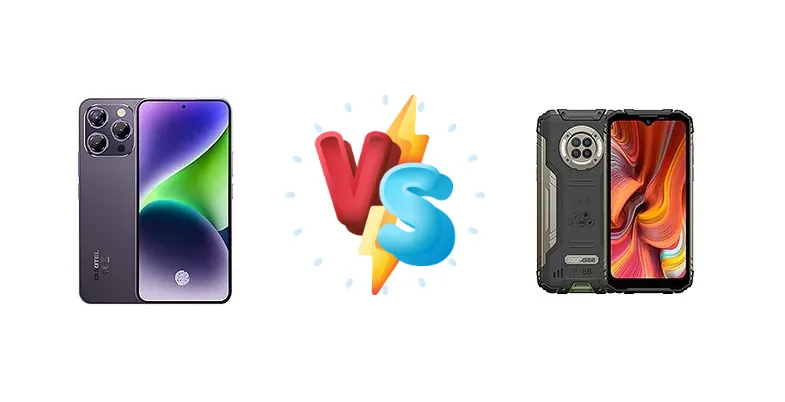
|
🏆 Quick Verdict
For the average user prioritizing longevity and consistent performance, the Oukitel P1 emerges as the winner. Its Helio G99 chipset, built on a 6nm process, offers a more efficient architecture than the Doogee S96 Pro’s 12nm Helio G90, translating to superior battery life and potentially less thermal throttling during sustained tasks.
| PHONES | ||
|---|---|---|
| Phone Names | Oukitel P1 | Doogee S96 Pro |
| Network | ||
|---|---|---|
| 2G bands | GSM 850 / 900 / 1800 / 1900 | GSM 850 / 900 / 1800 / 1900 |
| 3G bands | HSDPA 850 / 900 / 1700(AWS) / 1900 / 2100 | HSDPA 800 / 850 / 900 / 1700(AWS) / 1900 / 2100 |
| 4G bands | 1, 2, 3, 4, 5, 7, 8, 12, 13, 17, 18, 19, 20, 25, 26, 28, 38, 39, 40, 41, 66 | 1, 2, 3, 4, 5, 7, 8, 12, 13, 17, 18, 19, 20, 25, 26, 28, 38, 40, 66 |
| Speed | HSPA, LTE | HSPA, LTE |
| Technology | GSM / CDMA / HSPA / LTE | GSM / CDMA / HSPA / LTE |
| Launch | ||
|---|---|---|
| Announced | 2024, November | 2020, October 26. Released 2020, November |
| Status | Available. Released 2024, November | Discontinued |
| Body | ||
|---|---|---|
| Dimensions | 162.4 x 76.2 x 8.2 mm (6.39 x 3.00 x 0.32 in) | 167 x 81.4 x 15.5 mm (6.57 x 3.20 x 0.61 in) |
| SIM | Nano-SIM + Nano-SIM | Nano-SIM + Nano-SIM |
| Weight | 186.8 g (6.60 oz) | 310 g (10.93 oz) |
| Display | ||
|---|---|---|
| Protection | Corning Gorilla Glass 5, Mohs level 5 | Corning Gorilla Glass |
| Resolution | 1080 x 2412 pixels, 20:9 ratio (~394 ppi density) | 720 x 1520 pixels, 19:9 ratio (~270 ppi density) |
| Size | 6.7 inches, 108.0 cm2 (~87.3% screen-to-body ratio) | 6.22 inches, 96.6 cm2 (~71.0% screen-to-body ratio) |
| Type | AMOLED, 500 nits | IPS LCD |
| Platform | ||
|---|---|---|
| CPU | Octa-core (2x2.2 GHz Cortex-A76 & 6x2.0 GHz Cortex-A55) | Octa-core (2x2.0 GHz Cortex-A76 & 6x2.0 GHz Cortex-A55) |
| Chipset | Mediatek Helio G99 (6 nm) | Mediatek MT6785 Helio G90 (12 nm) |
| GPU | Mali-G57 MC2 | Mali-G76 MC4 |
| OS | Android 14 | Android 10 |
| Memory | ||
|---|---|---|
| Card slot | microSDXC (uses shared SIM slot) | microSDXC (dedicated slot) |
| Internal | 256GB 4GB RAM, 256GB 8GB RAM | 128GB 8GB RAM |
| Main Camera | ||
|---|---|---|
| Features | LED flash, HDR, panorama | Quad-LED flash, HDR, panorama |
| Quad | - | 48 MP, f/1.8, (wide), PDAF 8 MP, f/2.2, 130˚, (ultrawide) 20 MP, f/2.8, (night vision), 4 infrared night vision lights 2 MP (macro) |
| Triple | 50 MP, f/1.9, (wide), 1/56", PDAF 2 MP (macro) Auxiliary lens | - |
| Video | 4K@30fps, 1080p@30fps | 1080p |
| Selfie camera | ||
|---|---|---|
| Single | 32 MP, f/2.2, (wide), 1/2.74" | 16 MP, f/2.0, (wide) |
| Video | 1080p@30fps | 1080p |
| Sound | ||
|---|---|---|
| 35mm jack | No | Yes |
| Loudspeaker | Yes | Yes |
| Comms | ||
|---|---|---|
| Bluetooth | 5.2, A2DP, LE | 5.0, A2DP, LE |
| NFC | Yes | Yes |
| Positioning | GPS, GALILEO, GLONASS, BDS | GPS, GLONASS, BDS, GALILEO |
| Radio | FM radio | FM radio |
| USB | USB Type-C, OTG | USB Type-C 2.0, OTG |
| WLAN | Wi-Fi 802.11 a/b/g/n/ac, dual-band | Wi-Fi 802.11 a/b/g/n/ac, dual-band |
| Features | ||
|---|---|---|
| Sensors | Fingerprint (under display, optical), accelerometer, proximity, compass | Fingerprint (side-mounted), accelerometer, gyro, proximity, compass |
| Battery | ||
|---|---|---|
| Charging | 18W wired | 24W wired 10W wireless |
| Type | Li-Po 5150 mAh | 6350 mAh |
| Misc | ||
|---|---|---|
| Colors | Black, White, Purple | Black, Orange, Green |
| Price | $ 164.41 | About 280 EUR |
| EU LABEL | ||
|---|---|---|
| Battery | 53:11h endurance, 1000 cycles | - |
| Energy | Class B | - |
| Free fall | Class A (270 falls) | - |
| Repairability | Class B | - |
Oukitel P1
- Exceptional battery life (53:11h endurance)
- More efficient Helio G99 chipset (6nm)
- Longer battery lifespan (1000 charge cycles)
- Slower 18W wired charging
- No wireless charging
Doogee S96 Pro
- Faster 24W wired charging
- Convenient 10W wireless charging
- Potentially quicker initial charge times
- Less efficient Helio G90 chipset (12nm)
- Likely shorter battery life
- Potential for more thermal throttling
Display Comparison
Neither device’s display specifications are provided, so a direct comparison is limited. However, given the price points, we can assume both utilize LCD panels. The choice will likely come down to color accuracy and peak brightness, which are unknown. The absence of LTPO technology suggests neither phone will offer adaptive refresh rates for power saving.
Camera Comparison
Without detailed camera specifications, a comprehensive comparison is impossible. However, the market segment suggests both phones will feature a multi-camera setup focused on versatility rather than flagship-level image quality. We can assume both will include a primary sensor, ultrawide, and potentially a macro lens. The absence of information regarding sensor size, aperture, or optical image stabilization (OIS) makes it difficult to assess image quality. It’s likely the image processing will lean towards vibrant colors and boosted contrast, common in this price range.
Performance
The core difference lies in the chipsets. The Oukitel P1’s Mediatek Helio G99 (6nm) boasts a more modern and efficient architecture compared to the Doogee S96 Pro’s Helio G90 (12nm). While both CPUs feature the same core configuration – 2x2.2 GHz Cortex-A76 and 6x2.0 GHz Cortex-A55 – the 6nm process allows the G99 to deliver comparable performance with lower power consumption. This translates to better sustained performance and reduced heat generation. The G99’s improved efficiency will be particularly noticeable in gaming and demanding applications. The Doogee S96 Pro’s older chipset may exhibit more throttling under prolonged load.
Battery Life
The Oukitel P1’s standout feature is its impressive 53:11h endurance rating, indicating exceptional battery life. While the Doogee S96 Pro’s battery capacity is not specified, the faster 24W wired charging and 10W wireless charging offer greater convenience. The P1’s 18W charging is slower, but the superior efficiency of the Helio G99 chipset means it requires less frequent charging. The P1 also boasts a claimed 1000 charge cycles, suggesting a longer lifespan for the battery itself.
Buying Guide
Buy the Oukitel P1 if you need a phone that can reliably last through multi-day expeditions or extended work shifts without needing a power outlet. It’s ideal for users who value battery life above all else. Buy the Doogee S96 Pro if you prioritize faster charging speeds and appreciate the convenience of wireless charging, even if it means slightly reduced battery endurance and potentially more noticeable thermal throttling during intensive gaming or video recording.