
Oukitel P1 Pro vs. Ulefone Armor 11T 5G: A Deep Dive into Rugged Performance
| Phones Images | |||||
|---|---|---|---|---|---|
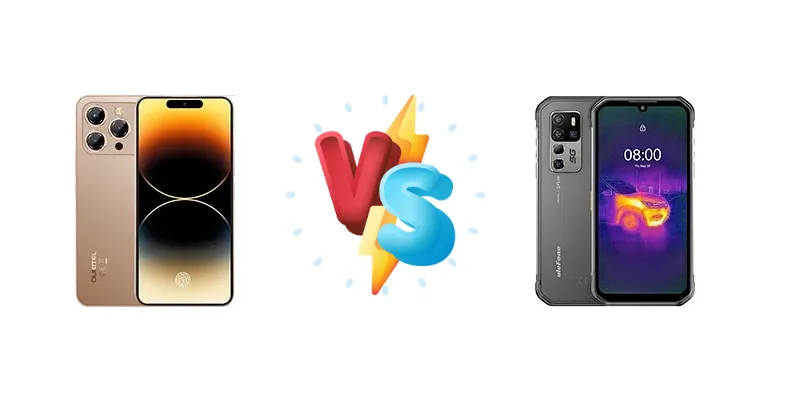
|
🏆 Quick Verdict
For the average user prioritizing sustained performance and 5G connectivity, the Ulefone Armor 11T 5G is the better choice. Its Dimensity 800 chipset offers a noticeable performance edge, and the inclusion of wireless charging adds convenience. However, users who absolutely require maximum battery endurance will find the Oukitel P1 Pro’s 52:55h rating compelling.
| PHONES | ||
|---|---|---|
| Phone Names | Oukitel P1 Pro | Ulefone Armor 11T 5G |
| Network | ||
|---|---|---|
| 2G bands | GSM 850 / 900 / 1800 / 1900 | GSM 850 / 900 / 1800 / 1900 |
| 3G bands | HSDPA 850 / 900 / 1700(AWS) / 1900 / 2100 | HSDPA 850 / 900 / 1700(AWS) / 1900 / 2100 |
| 4G bands | 1, 2, 3, 4, 5, 7, 8, 12, 13, 17, 18, 19, 20, 25, 26, 28, 38, 39, 40, 41, 66 | 1, 2, 3, 4, 5, 7, 8, 12, 13, 17, 18, 19, 20, 25, 26, 28, 34, 38, 39, 40, 41, 66 |
| 5G bands | - | 1, 3, 5, 8, 20, 28, 38, 41, 77, 78, 79 SA/NSA |
| Speed | HSPA, LTE | HSPA, LTE, 5G |
| Technology | GSM / CDMA / HSPA / CDMA2000 / LTE | GSM / CDMA / HSPA / EVDO / LTE / 5G |
| - | CDMA2000 1xEV-DO | |
| Launch | ||
|---|---|---|
| Announced | 2025, July | 2021, May 29 |
| Status | Available. Released 2025, September | Available. Released 2021, June 07 |
| Body | ||
|---|---|---|
| Build | - | Front glass, aluminum back with rubber, aluminum frame |
| Dimensions | 162.4 x 76.2 x 8.2 mm (6.39 x 3.00 x 0.32 in) | 163.8 x 81.6 x 14.2 mm (6.45 x 3.21 x 0.56 in) |
| SIM | Nano-SIM + Nano-SIM | Nano-SIM + Nano-SIM |
| Weight | 186.8 g (6.60 oz) | 293 g (10.34 oz) |
| - | IP69K dust/water resistant (up to 1.5m for 30 min) Drop-to-concrete resistance from up to 1.2m MIL-STD-810G compliant | |
| Display | ||
|---|---|---|
| Protection | Corning Gorilla Glass 5, Mohs level 6 | Oleophobic coating |
| Resolution | 1080 x 2412 pixels, 20:9 ratio (~394 ppi density) | 720 x 1560 pixels, 19.5:9 ratio (~282 ppi density) |
| Size | 6.7 inches, 108.0 cm2 (~87.3% screen-to-body ratio) | 6.1 inches, 91.3 cm2 (~68.3% screen-to-body ratio) |
| Type | AMOLED, 120Hz, 500 nits | IPS LCD |
| Platform | ||
|---|---|---|
| CPU | Octa-core (2x2.2 GHz Cortex-A76 & 6x2.0 GHz Cortex-A55) | Octa-core (4x2.0 GHz Cortex-A76 & 4x2.0 GHz Cortex-A55) |
| Chipset | Mediatek Helio G100 (6 nm) | Mediatek Dimensity 800 (7 nm) |
| GPU | Mali-G57 MC2 | Mali-G57 MP4 |
| OS | Android 15 | Android 11 |
| Memory | ||
|---|---|---|
| Card slot | microSDXC (uses shared SIM slot) | No |
| Internal | 256GB 4GB RAM, 512GB 8GB RAM | 256GB 8GB RAM |
| - | UFS 2.1 | |
| Main Camera | ||
|---|---|---|
| Features | LED flash, HDR, panorama | Dual-LED dual-tone flash, HDR, panorama |
| Penta | - | 48 MP, f/1.8, 26mm (wide), 1/2.0", 0.8µm, PDAF FLIR thermal camera (Lepton module) 5 MP 2 MP (macro) Auxiliary lens |
| Single | - | 16 MP, f/2.0 |
| Triple | 50 MP, f/1.9 (wide), 1/1.56", PDAF 2 MP (macro) Auxiliary lens | - |
| Video | 4K@30fps, 1080p@30fps | 4K@30fps, 1080p@30fps |
| Selfie camera | ||
|---|---|---|
| Features | - | HDR, panorama |
| Single | 32 MP, f/2.2, (wide), 1/2.74" | 16 MP, f/2.0 |
| Video | 1080p@30fps | 1080p@30fps |
| Sound | ||
|---|---|---|
| 3.5mm jack | - | Yes |
| 35mm jack | No | Yes |
| Loudspeaker | Yes | Yes |
| Comms | ||
|---|---|---|
| Bluetooth | 5.0, A2DP, LE | 5.0, A2DP, LE |
| NFC | Yes | Yes |
| Positioning | GPS, GALILEO, GLONASS, BDS | GPS, GLONASS, GALILEO, BDS |
| Radio | FM radio | FM radio, RDS, recording |
| USB | USB Type-C, OTG | USB Type-C 2.0, OTG |
| WLAN | Wi-Fi 802.11 a/b/g/n/ac, dual-band | Wi-Fi 802.11 a/b/g/n/ac, Wi-Fi Direct |
| Features | ||
|---|---|---|
| Sensors | Fingerprint (under display, optical), accelerometer, gyro, proximity | Fingerprint (side-mounted), accelerometer, gyro, proximity, compass, baroceptor |
| Battery | ||
|---|---|---|
| Charging | 18W wired Reverse wired | 18W wired 10W wireless |
| Type | Li-Po 5150 mAh | Li-Po 5200 mAh |
| Misc | ||
|---|---|---|
| Colors | Black, White, Purple | Black |
| Price | $ 239.99 / £ 199.99 / € 219.99 | About 590 EUR |
| EU LABEL | ||
|---|---|---|
| Battery | 52:55h endurance, 1200 cycles | - |
| Energy | Class B | - |
| Free fall | Class A (270 falls) | - |
| Repairability | Class B | - |
Oukitel P1 Pro
- Exceptional battery life (52:55h endurance)
- Modern 6nm Helio G100 chipset for efficiency
- Reverse wired charging capability
- Potentially lower performance compared to Dimensity 800
- No 5G connectivity
- No wireless charging
Ulefone Armor 11T 5G
- Faster performance with the Dimensity 800 chipset
- 5G connectivity for faster data speeds
- Convenient 10W wireless charging
- Shorter battery life compared to Oukitel P1 Pro
- 7nm chipset may run warmer under sustained load
- Potentially higher price
Display Comparison
Neither device provides display specifications, but given their rugged focus, we can assume both utilize durable, likely IPS LCD panels. The key difference lies under the hood. The Oukitel P1 Pro’s Helio G100 (6nm) offers a more modern fabrication process than the Ulefone’s Dimensity 800 (7nm), potentially leading to improved power efficiency. This efficiency translates to longer screen-on time, complementing the P1 Pro’s already impressive battery endurance.
Camera Comparison
Without detailed camera specs, a direct comparison is difficult. However, the rugged phone segment typically prioritizes durability over cutting-edge camera technology. We can assume both phones feature serviceable cameras for basic photography. The absence of information regarding sensor size or optical image stabilization suggests neither device will excel in low-light conditions. The inclusion of a 2MP macro lens on either device is likely a marketing gimmick with limited practical value.
Performance
The Ulefone Armor 11T 5G’s Mediatek Dimensity 800, with its (4x2.0 GHz Cortex-A76 & 4x2.0 GHz Cortex-A55) CPU configuration, provides a clear performance advantage over the Oukitel P1 Pro’s Helio G100 (2x2.2 GHz Cortex-A76 & 6x2.0 GHz Cortex-A55). While both utilize the same Cortex-A76 and A55 cores, the Dimensity 800’s core count and integrated 5G modem offer superior multitasking and network speeds. The P1 Pro’s higher clock speeds on its prime cores may offer a slight edge in single-core tasks, but the Armor 11T 5G will excel in sustained workloads.
Battery Life
The Oukitel P1 Pro’s standout feature is its exceptional battery endurance, rated at 52:55 hours. This is significantly longer than what most smartphones offer. While the Ulefone Armor 11T 5G doesn’t disclose endurance, its 5G capabilities and more powerful chipset will inevitably consume more power. The P1 Pro’s 18W wired charging is matched by the Armor 11T 5G, but the Ulefone adds the convenience of 10W wireless charging, a feature absent on the Oukitel.
Buying Guide
Buy the Oukitel P1 Pro if you need a phone that can genuinely last for days on a single charge, and your primary use cases don't heavily rely on demanding applications. Buy the Ulefone Armor 11T 5G if you prioritize 5G connectivity, smoother multitasking, and a more responsive user experience, even if it means slightly more frequent charging.