
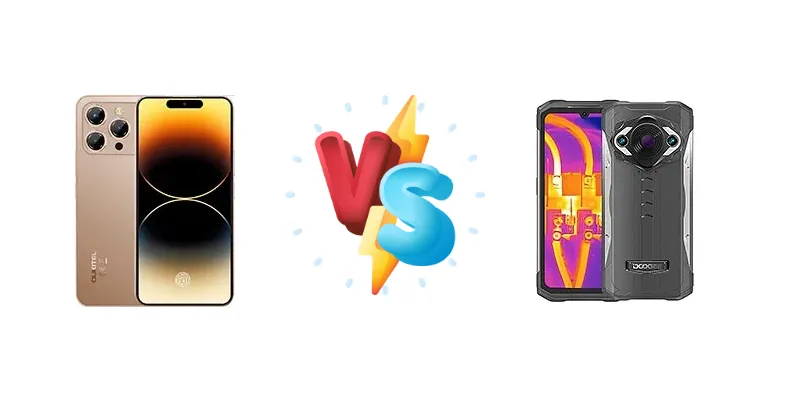
Oukitel P1 Pro vs. Doogee S98 Pro: A Deep Dive into Rugged Performance and Battery Life
| Phones Images | |||||
|---|---|---|---|---|---|
|
🏆 Quick Verdict
For users prioritizing longevity and minimizing charging frequency, the Oukitel P1 Pro is the clear winner. Its 52:55h endurance significantly outpaces the Doogee S98 Pro. However, if quick top-ups and slightly snappier performance are paramount, the Doogee S98 Pro offers a compelling alternative.
| PHONES | ||
|---|---|---|
| Phone Names | Oukitel P1 Pro | Doogee S98 Pro |
| Network | ||
|---|---|---|
| 2G bands | GSM 850 / 900 / 1800 / 1900 | GSM 850 / 900 / 1800 / 1900 |
| 3G bands | HSDPA 850 / 900 / 1700(AWS) / 1900 / 2100 | HSDPA 800 / 850 / 900 / 1700(AWS) / 1900 / 2100 |
| 4G bands | 1, 2, 3, 4, 5, 7, 8, 12, 13, 17, 18, 19, 20, 25, 26, 28, 38, 39, 40, 41, 66 | 1, 2, 3, 4, 5, 7, 8, 12, 13, 17, 18, 19, 20, 25, 26, 28, 34, 38, 39, 40, 41, 66 |
| Speed | HSPA, LTE | HSPA, LTE |
| Technology | GSM / CDMA / HSPA / CDMA2000 / LTE | GSM / CDMA / HSPA / LTE |
| Launch | ||
|---|---|---|
| Announced | 2025, July | 2022, May 27 |
| Status | Available. Released 2025, September | Available. Released 2022, June 06 |
| Body | ||
|---|---|---|
| Dimensions | 162.4 x 76.2 x 8.2 mm (6.39 x 3.00 x 0.32 in) | 172 x 82 x 15.5 mm (6.77 x 3.23 x 0.61 in) |
| SIM | Nano-SIM + Nano-SIM | Nano-SIM + Nano-SIM |
| Weight | 186.8 g (6.60 oz) | 320 g (11.29 oz) |
| Display | ||
|---|---|---|
| Protection | Corning Gorilla Glass 5, Mohs level 6 | Corning Gorilla Glass |
| Resolution | 1080 x 2412 pixels, 20:9 ratio (~394 ppi density) | 1080 x 2340 pixels, 19.5:9 ratio (~409 ppi density) |
| Size | 6.7 inches, 108.0 cm2 (~87.3% screen-to-body ratio) | 6.3 inches, 97.4 cm2 (~69.1% screen-to-body ratio) |
| Type | AMOLED, 120Hz, 500 nits | IPS LCD, 500 nits (peak) |
| Platform | ||
|---|---|---|
| CPU | Octa-core (2x2.2 GHz Cortex-A76 & 6x2.0 GHz Cortex-A55) | Octa-core (2x2.05 GHz Cortex-A76 & 6x2.0 GHz Cortex-A55) |
| Chipset | Mediatek Helio G100 (6 nm) | Mediatek MT6781 Helio G96 (12 nm) |
| GPU | Mali-G57 MC2 | Mali-G57 MC2 |
| OS | Android 15 | Android 12 |
| Memory | ||
|---|---|---|
| Card slot | microSDXC (uses shared SIM slot) | microSDXC (dedicated slot) |
| Internal | 256GB 4GB RAM, 512GB 8GB RAM | 256GB 8GB RAM |
| Main Camera | ||
|---|---|---|
| Features | LED flash, HDR, panorama | Dual-LED flash, HDR, panorama |
| Triple | 50 MP, f/1.9 (wide), 1/1.56", PDAF 2 MP (macro) Auxiliary lens | 48 MP, f/1.8, (wide), PDAF 20 MP, f/1.8, (night vision), 2 infrared night vision lights Thermal imaging camera |
| Video | 4K@30fps, 1080p@30fps | 1440p, 1080p |
| Selfie camera | ||
|---|---|---|
| Single | 32 MP, f/2.2, (wide), 1/2.74" | 16 MP, f/2.0, (wide) |
| Video | 1080p@30fps | 1080p |
| Sound | ||
|---|---|---|
| 35mm jack | No | Unspecified |
| Loudspeaker | Yes | Yes |
| Comms | ||
|---|---|---|
| Bluetooth | 5.0, A2DP, LE | 5.1, A2DP, LE |
| NFC | Yes | Yes |
| Positioning | GPS, GALILEO, GLONASS, BDS | GPS, GLONASS, BDS, GALILEO |
| Radio | FM radio | FM radio |
| USB | USB Type-C, OTG | USB Type-C 2.0, OTG |
| WLAN | Wi-Fi 802.11 a/b/g/n/ac, dual-band | Wi-Fi 802.11 a/b/g/n/ac, dual-band |
| Features | ||
|---|---|---|
| Sensors | Fingerprint (under display, optical), accelerometer, gyro, proximity | Fingerprint (side-mounted), accelerometer, gyro, proximity, compass |
| Battery | ||
|---|---|---|
| Charging | 18W wired Reverse wired | 33W wired 15W wireless |
| Type | Li-Po 5150 mAh | 6000 mAh |
| Misc | ||
|---|---|---|
| Colors | Black, White, Purple | Black |
| Price | $ 239.99 / £ 199.99 / € 219.99 | About 470 EUR |
| EU LABEL | ||
|---|---|---|
| Battery | 52:55h endurance, 1200 cycles | - |
| Energy | Class B | - |
| Free fall | Class A (270 falls) | - |
| Repairability | Class B | - |
Oukitel P1 Pro
- Exceptional battery life (52:55h endurance)
- More efficient chipset (Helio G100, 6nm)
- Reverse wired charging capability
- Slower charging speed (18W wired)
- Potentially less responsive for quick tasks
Doogee S98 Pro
- Faster charging (33W wired, 15W wireless)
- Slightly higher CPU clock speed
- More modern chipset (Helio G96)
- Significantly lower battery endurance
- Less efficient chipset (Helio G96, 12nm)
Display Comparison
Display specifications are not provided, so a direct comparison is limited. However, given the price points, both likely utilize IPS LCD panels. The focus here shifts to durability, as both are rugged phones. Expect reinforced glass and robust bezels on both devices to withstand drops and impacts. Color accuracy and peak brightness are likely similar, leaning towards functional rather than cinematic.
Camera Comparison
Camera details are absent beyond the chipsets. Given the rugged nature of these phones, expect a focus on durability rather than cutting-edge camera technology. Both will likely feature a primary sensor, an ultrawide, and potentially a depth or macro lens. The image processing will likely prioritize practicality – clear, well-exposed photos in challenging conditions – over artistic flair. Without sensor size or aperture information, it’s difficult to assess image quality, but the chipset differences are unlikely to be a major differentiator in real-world results.
Performance
The Doogee S98 Pro’s Mediatek Helio G96 (12nm) offers a slight architectural advantage over the Oukitel P1 Pro’s Helio G100 (6nm) in terms of raw clock speed (2.05 GHz vs 2.2 GHz). However, the G100’s 6nm process node is more efficient, potentially leading to better sustained performance and thermal management under load. Both CPUs share the same Cortex-A76 and A55 core configuration, suggesting similar multi-core performance. The G100’s efficiency will benefit users engaged in prolonged tasks like video editing or extended gaming sessions, minimizing throttling. The G96’s slightly higher clock speed may provide a marginal boost in responsiveness for quick app launches.
Battery Life
The Oukitel P1 Pro’s standout feature is its exceptional 52:55h endurance, a testament to the efficiency of the Helio G100 and likely a larger battery capacity. While the Doogee S98 Pro offers faster 33W wired and 15W wireless charging, this is offset by its lower endurance. The P1 Pro’s 18W wired charging is slower, but the extended battery life minimizes the need for frequent top-ups. The inclusion of reverse wired charging on the P1 Pro adds versatility, allowing it to charge other devices in a pinch. The S98 Pro’s wireless charging is a convenience feature, but the slower charging speed and lower overall endurance make it less impactful.
Buying Guide
Buy the Oukitel P1 Pro if you need a phone that can genuinely last for days on a single charge, ideal for extended outdoor adventures or situations where access to power is limited. Buy the Doogee S98 Pro if you prefer the convenience of faster charging – both wired and wireless – and want a phone that feels a bit more responsive for everyday tasks and light gaming.