
Oukitel P1 Pro vs. Doogee S96 Pro: A Deep Dive into Rugged Performance and Battery Life
| Phones Images | |||||
|---|---|---|---|---|---|
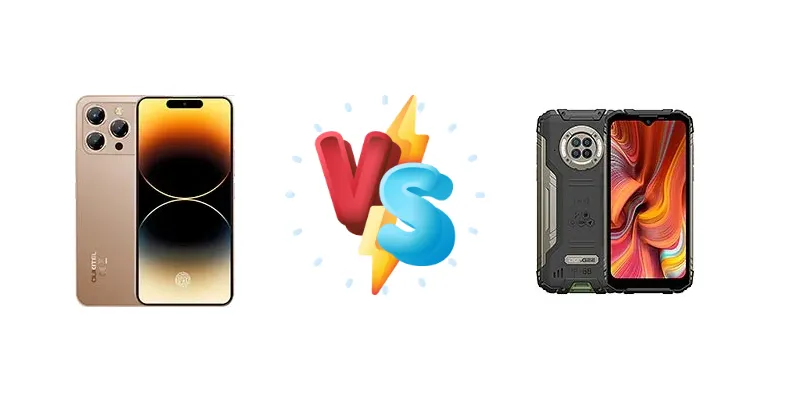
|
🏆 Quick Verdict
For the average user prioritizing longevity and minimizing charging frequency, the Oukitel P1 Pro is the clear winner. Its significantly longer 52:55h battery endurance and 1200 charge cycles outweigh the Doogee S96 Pro’s faster charging, especially considering the P1 Pro’s respectable 18W wired charging and reverse wired capabilities.
| PHONES | ||
|---|---|---|
| Phone Names | Oukitel P1 Pro | Doogee S96 Pro |
| Network | ||
|---|---|---|
| 2G bands | GSM 850 / 900 / 1800 / 1900 | GSM 850 / 900 / 1800 / 1900 |
| 3G bands | HSDPA 850 / 900 / 1700(AWS) / 1900 / 2100 | HSDPA 800 / 850 / 900 / 1700(AWS) / 1900 / 2100 |
| 4G bands | 1, 2, 3, 4, 5, 7, 8, 12, 13, 17, 18, 19, 20, 25, 26, 28, 38, 39, 40, 41, 66 | 1, 2, 3, 4, 5, 7, 8, 12, 13, 17, 18, 19, 20, 25, 26, 28, 38, 40, 66 |
| Speed | HSPA, LTE | HSPA, LTE |
| Technology | GSM / CDMA / HSPA / CDMA2000 / LTE | GSM / CDMA / HSPA / LTE |
| Launch | ||
|---|---|---|
| Announced | 2025, July | 2020, October 26. Released 2020, November |
| Status | Available. Released 2025, September | Discontinued |
| Body | ||
|---|---|---|
| Dimensions | 162.4 x 76.2 x 8.2 mm (6.39 x 3.00 x 0.32 in) | 167 x 81.4 x 15.5 mm (6.57 x 3.20 x 0.61 in) |
| SIM | Nano-SIM + Nano-SIM | Nano-SIM + Nano-SIM |
| Weight | 186.8 g (6.60 oz) | 310 g (10.93 oz) |
| Display | ||
|---|---|---|
| Protection | Corning Gorilla Glass 5, Mohs level 6 | Corning Gorilla Glass |
| Resolution | 1080 x 2412 pixels, 20:9 ratio (~394 ppi density) | 720 x 1520 pixels, 19:9 ratio (~270 ppi density) |
| Size | 6.7 inches, 108.0 cm2 (~87.3% screen-to-body ratio) | 6.22 inches, 96.6 cm2 (~71.0% screen-to-body ratio) |
| Type | AMOLED, 120Hz, 500 nits | IPS LCD |
| Platform | ||
|---|---|---|
| CPU | Octa-core (2x2.2 GHz Cortex-A76 & 6x2.0 GHz Cortex-A55) | Octa-core (2x2.0 GHz Cortex-A76 & 6x2.0 GHz Cortex-A55) |
| Chipset | Mediatek Helio G100 (6 nm) | Mediatek MT6785 Helio G90 (12 nm) |
| GPU | Mali-G57 MC2 | Mali-G76 MC4 |
| OS | Android 15 | Android 10 |
| Memory | ||
|---|---|---|
| Card slot | microSDXC (uses shared SIM slot) | microSDXC (dedicated slot) |
| Internal | 256GB 4GB RAM, 512GB 8GB RAM | 128GB 8GB RAM |
| Main Camera | ||
|---|---|---|
| Features | LED flash, HDR, panorama | Quad-LED flash, HDR, panorama |
| Quad | - | 48 MP, f/1.8, (wide), PDAF 8 MP, f/2.2, 130˚, (ultrawide) 20 MP, f/2.8, (night vision), 4 infrared night vision lights 2 MP (macro) |
| Triple | 50 MP, f/1.9 (wide), 1/1.56", PDAF 2 MP (macro) Auxiliary lens | - |
| Video | 4K@30fps, 1080p@30fps | 1080p |
| Selfie camera | ||
|---|---|---|
| Single | 32 MP, f/2.2, (wide), 1/2.74" | 16 MP, f/2.0, (wide) |
| Video | 1080p@30fps | 1080p |
| Sound | ||
|---|---|---|
| 35mm jack | No | Yes |
| Loudspeaker | Yes | Yes |
| Comms | ||
|---|---|---|
| Bluetooth | 5.0, A2DP, LE | 5.0, A2DP, LE |
| NFC | Yes | Yes |
| Positioning | GPS, GALILEO, GLONASS, BDS | GPS, GLONASS, BDS, GALILEO |
| Radio | FM radio | FM radio |
| USB | USB Type-C, OTG | USB Type-C 2.0, OTG |
| WLAN | Wi-Fi 802.11 a/b/g/n/ac, dual-band | Wi-Fi 802.11 a/b/g/n/ac, dual-band |
| Features | ||
|---|---|---|
| Sensors | Fingerprint (under display, optical), accelerometer, gyro, proximity | Fingerprint (side-mounted), accelerometer, gyro, proximity, compass |
| Battery | ||
|---|---|---|
| Charging | 18W wired Reverse wired | 24W wired 10W wireless |
| Type | Li-Po 5150 mAh | 6350 mAh |
| Misc | ||
|---|---|---|
| Colors | Black, White, Purple | Black, Orange, Green |
| Price | $ 239.99 / £ 199.99 / € 219.99 | About 280 EUR |
| EU LABEL | ||
|---|---|---|
| Battery | 52:55h endurance, 1200 cycles | - |
| Energy | Class B | - |
| Free fall | Class A (270 falls) | - |
| Repairability | Class B | - |
Oukitel P1 Pro
- Exceptional battery life (52:55h endurance)
- Long-term battery health (1200 charge cycles)
- More efficient chipset (Mediatek Helio G100, 6nm)
- Slower charging speed (18W wired)
- No wireless charging
Doogee S96 Pro
- Faster charging (24W wired, 10W wireless)
- Established chipset (Helio G90)
- Convenience of wireless charging
- Significantly lower battery endurance
- Less efficient chipset (Helio G90, 12nm)
Display Comparison
Display specifications are not provided, so a direct comparison is limited. However, given the price points of these devices, we can assume both utilize IPS LCD panels. The focus here shifts to power efficiency; a more efficient panel on the P1 Pro would further contribute to its impressive battery life. Bezels are likely comparable, typical of rugged designs prioritizing protection over slimness. Color accuracy is likely similar, leaning towards practical rather than color-critical applications.
Camera Comparison
Camera details are absent, making a detailed comparison impossible. However, given the rugged nature of these phones, camera performance is likely a secondary consideration. We can assume both will feature a multi-camera setup, but image quality will likely depend more on software processing than cutting-edge sensor technology. The absence of information prevents assessing features like OIS or lens apertures.
Performance
The Oukitel P1 Pro’s Mediatek Helio G100 (6nm) represents a more modern architecture than the Doogee S96 Pro’s Helio G90 (12nm). The 6nm process node inherently offers better power efficiency and thermal characteristics. While both chipsets feature the same CPU core configuration – Octa-core (2x2.2 GHz Cortex-A76 & 6x2.0 GHz Cortex-A55) – the G100’s superior fabrication process should translate to sustained performance under load, reducing the likelihood of thermal throttling during extended gaming or demanding tasks. The G100’s GPU is also likely to offer a performance edge, though real-world differences may be subtle.
Battery Life
The Oukitel P1 Pro’s standout feature is its exceptional 52:55h endurance rating, significantly exceeding what’s typically found in this segment. This is coupled with a remarkable 1200 charge cycle lifespan, suggesting long-term battery health. The Doogee S96 Pro counters with faster 24W wired charging and the convenience of 10W wireless charging. However, this comes at the cost of reduced endurance. While 24W charging is faster, the P1 Pro’s 18W charging is still adequate, and the massive battery capacity means it won’t need to be topped up as frequently. The P1 Pro also offers reverse wired charging, a useful feature for emergency situations.
Buying Guide
Buy the Oukitel P1 Pro if you need a phone that can genuinely last for days on a single charge, are frequently away from power outlets, or value long-term battery health thanks to the 1200 charge cycle rating. Buy the Doogee S96 Pro if you prioritize quicker top-ups with its 24W wired and 10W wireless charging, and are willing to trade some battery endurance for that convenience. The S96 Pro may also appeal to those who prefer a slightly more established chipset, even if it's a generation older.