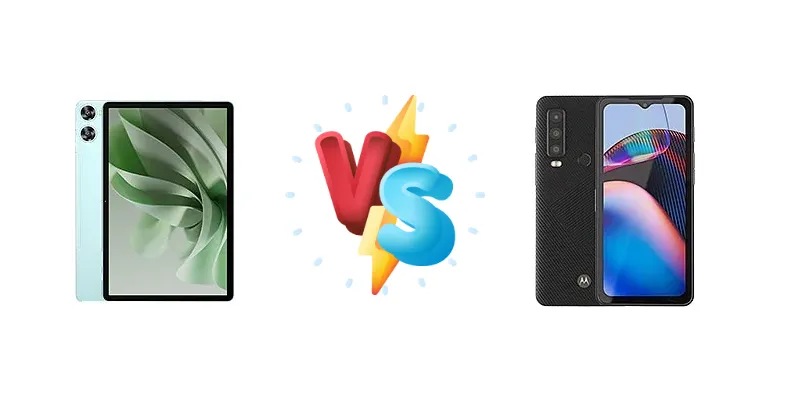
The rugged smartphone market caters to a specific need: durability. However, within this niche, priorities diverge. The Oukitel OT9 prioritizes extreme battery longevity and affordability, while the Motorola Defy 2 aims for a balance of robustness and modern processing power. This comparison dissects these two devices to determine which best suits your needs.
🏆 Quick Verdict
For users prioritizing multi-day battery life and a lower price point, the Oukitel OT9 is the clear winner. However, the Motorola Defy 2’s significantly more powerful Dimensity 930 chipset and wireless charging capabilities make it the better choice for those demanding performance and convenience.
| Network |
|---|
| 2G bands | N/A | GSM 850 / 900 / 1800 / 1900 |
| 3G bands | N/A | HSDPA 850 / 900 / 1700(AWS) / 1900 / 2100 |
| 4G bands | N/A | 1, 2, 3, 4, 5, 7, 8, 12, 13, 14, 17, 20, 25, 26, 28, 30, 38, 40, 41, 46, 48, 66, 71 |
| 5G bands | - | 2, 5, 23, 25, 26, 28, 38, 41, 48, 66, 70, 71, 77, 78, 255, 256 SA/NSA/Sub6/mmWave |
| EDGE | No | - |
| GPRS | No | - |
| Speed | - | HSPA, LTE, 5G |
| Technology | No cellular connectivity | GSM / HSPA / LTE / 5G |
| Launch |
|---|
| Announced | 2024, November 01 | 2023, February 24 |
| Status | Available. Released 2024, November 01 | Available. Released 2023, October |
| Body |
|---|
| Build | - | Glass front (Gorilla Glass Victus), plastic back, aluminum frame |
| Dimensions | 258.2 x 169.5 x 8.6 mm (10.17 x 6.67 x 0.34 in) | 171 x 80 x 11.9 mm (6.73 x 3.15 x 0.47 in) |
| SIM | No | Nano-SIM + Nano-SIM |
| Weight | 520 g (1.15 lb) | 268 g (9.45 oz) |
| | - | IP68/IP69 dust/water resistant (up to 5m for 35 min)
Drop-to-concrete resistance from up to 1.8m
MIL-STD-810H compliant |
| Display |
|---|
| Protection | Corning Gorilla Glass 5, Mohs level 5 | Corning Gorilla Glass Victus |
| Resolution | 800 x 1280 pixels, 16:10 ratio (~137 ppi density) | 1080 x 2408 pixels, 20:9 ratio (~400 ppi density) |
| Size | 11.0 inches, 350.9 cm2 (~80.2% screen-to-body ratio) | 6.6 inches, 104.9 cm2 (~76.7% screen-to-body ratio) |
| Type | IPS LCD, 400 nits | IPS LCD, 120Hz |
| Platform |
|---|
| CPU | Octa-core (2x1.6 GHz Cortex-A75 & 6x1.6 GHz Cortex-A55) | Octa-core (2x2.2 GHz Cortex-A78 & 6x2.0 GHz Cortex-A55) |
| Chipset | Unisoc T606 (12 nm) | Mediatek Dimensity 930 (6 nm) |
| GPU | Mali-G57 MP1 | IMG BXM-8-256 |
| OS | Android 14 | Android 12 |
| Memory |
|---|
| Card slot | Unspecified | microSDXC (uses shared SIM slot) |
| Internal | 128GB 4GB RAM | 128GB 6GB RAM |
| Main Camera |
|---|
| Features | LED flash, HDR, panorama | Dual-LED flash, HDR, panorama |
| Single | 13 MP, f/2.2, (wide), 1/3.06", AF | - |
| Triple | - | 50 MP, f/1.8, (wide), PDAF
8 MP, f/2.2, (ultrawide)
2 MP (macro) |
| Video | 1080p@30fps | 1080p@30fps |
| Selfie camera |
|---|
| Single | 5 MP, f/2.6, (wide), 1/5.0" | 8 MP, f/2.0, (wide) |
| Video | 720p@30fps | 1080p@30fps |
| Sound |
|---|
| 3.5mm jack | - | No |
| 35mm jack | Yes | No |
| Loudspeaker | Yes, with stereo speakers | Yes |
| Comms |
|---|
| Bluetooth | 5.0, A2DP, LE | 5.1, A2DP, LE |
| NFC | No | Yes |
| Positioning | No | GPS (L1+L5), GLONASS, GALILEO, BDS |
| Radio | No | Unspecified |
| USB | USB Type-C, OTG | USB Type-C 2.0, OTG |
| WLAN | Wi-Fi 802.11 a/b/g/n/ac, dual-band | Wi-Fi 802.11 a/b/g/n/ac, dual-band |
| Features |
|---|
| Sensors | Accelerometer | Fingerprint (rear-mounted), accelerometer, gyro, proximity, compass |
| | - | Emergency SOS via satellite (Bullitt Satellite Connect service) |
| Battery |
|---|
| Charging | 10W wired | 15W wireless |
| Type | 8000 mAh | Li-Po 5000 mAh |
| Misc |
|---|
| Colors | Green, Gray, Purple | Black |
| Models | - | BM1S1B |
| Price | About 180 EUR | About 570 EUR |
| EU LABEL |
|---|
| Battery | 110:00h endurance, 1000 cycles | - |
| Energy | Class E | - |
| Free fall | Class E (52 falls) | - |
| Repairability | Class C | - |
Oukitel OT9
- Exceptional battery life (110h endurance)
- Long battery lifespan (1000 cycles)
- More affordable price point
- Significantly weaker processor
- Slow 10W wired charging
- Likely lower display quality
Motorola Defy 2
- Powerful Mediatek Dimensity 930 chipset
- 15W wireless charging
- Superior performance for gaming and multitasking
- Likely shorter battery life
- Higher price point
- Potentially more heat generation under load
Display Comparison
Neither device provides display specifications, but given the market positioning, we can infer differences. The Motorola Defy 2, with its more powerful chipset, likely features a higher resolution and refresh rate display. The Oukitel OT9 will likely focus on durability and cost-effectiveness, potentially sacrificing display quality. The Defy 2’s chipset could also support features like HDR10, absent on the OT9.
Camera Comparison
Without detailed camera specs, a direct comparison is difficult. However, the chipset difference suggests the Motorola Defy 2 will have a more advanced image signal processor (ISP), leading to better image quality, especially in low-light conditions. The Defy 2’s processor is capable of handling more complex computational photography algorithms. The Oukitel OT9 will likely rely on software processing to compensate for a less capable ISP, potentially resulting in less natural-looking images. We anticipate the Defy 2 will also support higher resolution video recording.
Performance
The performance gap between these two is substantial. The Motorola Defy 2’s Mediatek Dimensity 930 (6nm) is a significant leap ahead of the Oukitel OT9’s Unisoc T606 (12nm). The Dimensity 930’s Cortex-A78 cores, clocked at 2.2 GHz, offer considerably more single-core performance than the OT9’s Cortex-A75 cores at 1.6 GHz. This translates to faster app loading times, smoother multitasking, and a more enjoyable gaming experience on the Defy 2. The 6nm process node of the Dimensity 930 also provides better power efficiency, despite the higher performance, meaning less heat generation under load. The OT9’s T606 is adequate for basic tasks, but will struggle with demanding applications.
Battery Life
The Oukitel OT9 boasts an impressive 110-hour endurance rating and a 1000-cycle battery lifespan, indicating a focus on longevity. While the Defy 2’s battery capacity is unknown, the more power-hungry Dimensity 930 chipset will likely result in shorter battery life. However, the Defy 2 compensates with 15W wireless charging, a feature absent on the OT9, offering convenient top-ups. The OT9’s 10W wired charging is comparatively slow, requiring significantly longer to reach a full charge.
Buying Guide
Buy the Oukitel OT9 if you need a phone that can genuinely last for days on a single charge, are frequently away from power outlets, and prioritize affordability above all else. Buy the Motorola Defy 2 if you prefer a smoother, more responsive user experience, enjoy the convenience of wireless charging, and require a phone capable of handling demanding applications and games.
Frequently Asked Questions
❓ Is the Unisoc T606 in the Oukitel OT9 sufficient for running popular social media apps like TikTok and Instagram?
Yes, the Unisoc T606 is capable of running social media apps without major issues. However, expect some lag when switching between apps or when the phone is performing other tasks simultaneously. It's not designed for intensive multitasking.
❓ Does the Motorola Defy 2’s Dimensity 930 chipset tend to overheat during prolonged gaming sessions?
The Dimensity 930 is a relatively efficient chipset, but it can generate heat under sustained load. Motorola likely implemented thermal management solutions to mitigate overheating, but some throttling may occur during extended gaming. The 6nm process node helps to manage heat better than the 12nm node in the Oukitel OT9.
❓ How does the 15W wireless charging on the Motorola Defy 2 compare to the 10W wired charging on the Oukitel OT9 in terms of charging speed?
15W wireless charging is generally slower than 15W wired charging, but it's still faster than the Oukitel OT9's 10W wired charging. The Defy 2 offers the convenience of wireless charging, while the OT9 requires a cable and takes significantly longer to fully charge.
❓ What level of water and dust resistance can I expect from both the Oukitel OT9 and Motorola Defy 2?
Both phones are marketed as rugged devices, but specific IP ratings are not provided in the context data. Typically, rugged phones aim for at least IP68, meaning dust-tight and capable of surviving immersion in 1.5 meters of freshwater for up to 30 minutes. Further research into each model's official specifications is recommended to confirm their exact resistance levels.