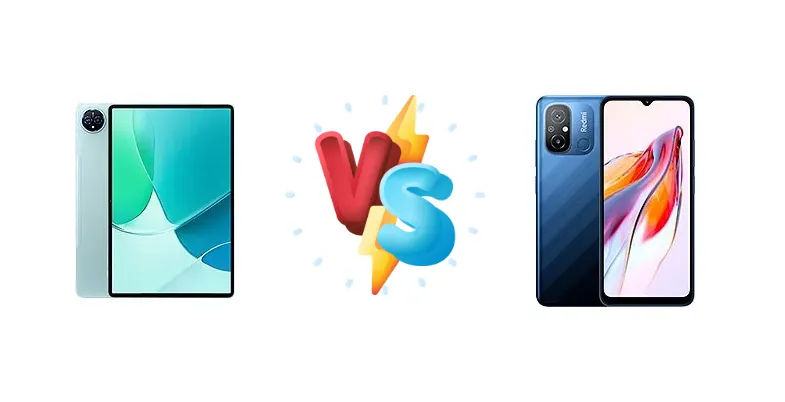
The sub-$150 smartphone market is fiercely competitive. Both the Oukitel OT12 and Xiaomi Redmi 12C aim to deliver essential smartphone functionality at an incredibly accessible price point. However, they take different approaches to achieving this, primarily through their choice of chipset. This comparison will dissect the key differences to determine which device offers the best value for your money.
🏆 Quick Verdict
For most users, the Xiaomi Redmi 12C emerges as the better choice. Its Helio G85 chipset provides a noticeable performance edge over the Oukitel OT12’s Unisoc T606, translating to smoother multitasking and a more responsive user experience. While both offer similar battery capacity and charging speeds, the Redmi 12C’s superior processing power makes it the more versatile option.
| Network |
|---|
| 2G bands | GSM 850 / 900 / 1800 / 1900 | GSM 850 / 900 / 1800 / 1900 |
| 3G bands | HSDPA 900 / 2100 | HSDPA 850 / 900 / 2100 |
| 4G bands | 1, 3, 5, 7, 8, 19, 20, 38, 39, 40, 41 | 1, 3, 5, 7, 8, 20, 28, 38, 40, 41 - International |
| Speed | HSPA, LTE | HSPA, LTE |
| Technology | GSM / HSPA / LTE | GSM / CDMA / HSPA / EVDO / LTE |
| | - | CDMA2000 1xEV-DO |
| Launch |
|---|
| Announced | 2024, September | 2022, December 31 |
| Status | Available. Released 2024, September | Available. Released 2023, January 01 |
| Body |
|---|
| Dimensions | 258.2 x 169.5 x 8.6 mm (10.17 x 6.67 x 0.34 in) | 168.8 x 76.4 x 8.8 mm (6.65 x 3.01 x 0.35 in) |
| SIM | Nano-SIM + Nano-SIM | Nano-SIM + Nano-SIM |
| Weight | 535 g (1.18 lb) | 192 g (6.77 oz) |
| Display |
|---|
| Protection | Corning Gorilla Glass 5 | - |
| Resolution | 800 x 1280 pixels, 16:10 ratio (~137 ppi density) | 720 x 1650 pixels (~268 ppi density) |
| Size | 11.0 inches, 350.9 cm2 (~80.2% screen-to-body ratio) | 6.71 inches, 106.5 cm2 (~82.6% screen-to-body ratio) |
| Type | IPS LCD, 400 nits | IPS LCD, 500 nits (typ) |
| Platform |
|---|
| CPU | Octa-core (2x1.6 GHz Cortex-A75 & 6x1.6 GHz Cortex-A55) | Octa-core (2x2.0 GHz Cortex-A75 & 6x1.8 GHz Cortex-A55) |
| Chipset | Unisoc T606 (12 nm) | Mediatek MT6769Z Helio G85 (12 nm) |
| GPU | Mali-G57 MP1 | Mali-G52 MC2 |
| OS | Android 14 | Android 12, MIUI 13 |
| Memory |
|---|
| Card slot | microSDXC (uses shared SIM slot) | microSDXC (dedicated slot) |
| Internal | 256GB 4GB RAM | 32GB 2GB RAM, 32GB 3GB RAM, 32GB 4GB RAM, 64GB 3GB RAM, 64GB 4GB RAM, 128GB 3GB RAM, 128GB 4GB RAM, 128GB 6GB RAM |
| | - | eMMC 5.1 |
| Main Camera |
|---|
| Dual | 13 MP, f/2.2, (wide), 1/3.06", PDAF
other unspecified camera | 50 MP, (wide), PDAF
0.08 MP (depth) |
| Features | LED flash | LED flash, HDR |
| Single | - | 50 MP, f/1.8, (wide), 1/2.76", PDAF
Auxiliary lens |
| Video | 1080p@30fps | 1080p@30fps |
| Selfie camera |
|---|
| Single | 5 MP, f/2.2, (wide), 1/5.0" | 5 MP, f/2.2, (wide) |
| Video | 720p@30fps | 1080p@30fps |
| Sound |
|---|
| 3.5mm jack | - | Yes |
| 35mm jack | Yes | Yes |
| Loudspeaker | Yes, with stereo speakers | Yes |
| Comms |
|---|
| Bluetooth | 5.0, A2DP, LE | 5.1, A2DP, LE |
| NFC | No | Yes (market/region dependent) |
| Positioning | GPS, GLONASS, GALILEO, BDS | GPS, GLONASS, BDS, GALILEO |
| Radio | FM radio | FM radio |
| USB | USB Type-C 2.0, OTG | microUSB 2.0 |
| WLAN | Wi-Fi 802.11 a/b/g/n/ac, dual-band | Wi-Fi 802.11 a/b/g/n/ac, dual-band, Wi-Fi Direct |
| Features |
|---|
| Sensors | Accelerometer | Fingerprint (rear-mounted), accelerometer |
| | - | Virtual proximity sensing |
| Battery |
|---|
| Charging | 10W wired | 10W wired |
| Type | Li-Po 8000 mAh | Li-Po 5000 mAh |
| Misc |
|---|
| Colors | Gray, Green, Purple | Graphite Gray, Ocean Blue, Mint Green, Lavender Purple |
| Models | - | 22120RN86G, 22120RN86I, 22126RN91Y, 2212ARNC4L |
| Price | About 180 EUR | £ 132.99 / € 107.41 |
| SAR | - | 1.08 W/kg (head) 0.64 W/kg (body) |
| SAR EU | - | 0.98 W/kg (head) 0.99 W/kg (body) |
Oukitel OT12
- Potentially lower price point
- Acceptable for basic smartphone tasks
- Likely similar battery life to Redmi 12C
- Slower processor than Redmi 12C
- Less capable GPU for gaming
- Potentially lower camera image quality
Xiaomi Redmi 12C
- More powerful Helio G85 chipset
- Smoother multitasking and app performance
- Better GPU for light gaming
- Potentially improved camera image processing
- Slightly higher price than Oukitel OT12
- Slow 10W charging
- May not be significantly better in battery life
Display Comparison
Neither Oukitel nor Xiaomi provide detailed display specifications beyond resolution. Both likely utilize IPS LCD panels, common in this price bracket. The real difference lies in the processing power driving the display. A faster chipset, like the Redmi 12C’s Helio G85, can contribute to smoother animations and faster response times, even on an identical panel. Without knowing peak brightness or color gamut coverage, it’s difficult to definitively declare a winner, but the Redmi 12C’s overall system performance suggests a better visual experience.
Camera Comparison
Both phones likely feature a primary camera alongside auxiliary lenses, but detailed sensor information is lacking. Given the price point, expecting flagship-level camera performance is unrealistic. The focus should be on the image signal processor (ISP) within the chipset. The Helio G85’s ISP is generally more capable than the Unisoc T606’s, potentially resulting in better image processing, particularly in challenging lighting conditions. The Redmi 12C is likely to produce more detailed and vibrant photos, even if the megapixel count is similar. The presence of a 2MP macro lens on both devices is largely a marketing tactic and offers limited practical benefit.
Performance
The core differentiator between these two devices is their chipset. The Xiaomi Redmi 12C’s MediaTek Helio G85 (12nm) boasts a slightly higher CPU clock speed (2.0 GHz vs 1.6 GHz on the Oukitel’s Unisoc T606) for its Cortex-A75 cores. More importantly, the Helio G85 features a more powerful GPU, making it better suited for light gaming. While both chipsets utilize the same Cortex-A55 efficiency cores, the G85’s overall architecture provides a performance advantage. This translates to faster app loading times and smoother multitasking on the Redmi 12C, benefiting users who frequently switch between applications.
Battery Life
Both the Oukitel OT12 and Xiaomi Redmi 12C are equipped with 10W wired charging, indicating a similar charging experience – expect around 2-3 hours for a full charge. While battery capacity isn’t specified, both likely fall in the 5000mAh range, typical for this segment. The Redmi 12C’s more efficient chipset may contribute to slightly longer battery life during moderate usage, but the difference will likely be marginal. The limiting factor is the slow charging speed, making overnight charging the preferred method.
Buying Guide
Buy the Oukitel OT12 if you prioritize a slightly less expensive entry point and your usage is limited to basic tasks like calls, texts, and light social media. Buy the Xiaomi Redmi 12C if you want a more capable device for occasional gaming, smoother app switching, and a generally more responsive experience, even if it means spending a little more.
Frequently Asked Questions
❓ Will the Redmi 12C handle popular games like PUBG Mobile or Call of Duty Mobile?
The Helio G85 in the Redmi 12C can run PUBG Mobile and Call of Duty Mobile, but you’ll likely need to lower the graphics settings to medium or low to achieve a playable frame rate. Don't expect a flagship gaming experience, but it's capable of casual gaming sessions. The Oukitel OT12 will struggle more with these titles.
❓ Is the 10W charging speed a significant drawback on either phone?
Yes, 10W charging is quite slow by today's standards. Both the Oukitel OT12 and Redmi 12C will take approximately 2-3 hours to fully charge from 0%. It's best to charge these phones overnight to ensure they're ready for the next day.
❓ How much storage do these phones typically offer, and can it be expanded?
Both phones typically come with 32GB or 64GB of internal storage, which can be expanded via a microSD card slot. This is crucial, as the base storage fills up quickly with apps and media. Check the specific model you're purchasing to confirm the storage capacity.
❓ Which phone is better for someone who primarily uses their phone for social media and web browsing?
The Xiaomi Redmi 12C is the better choice for social media and web browsing. The Helio G85 chipset provides a smoother and more responsive experience when scrolling through feeds and loading web pages compared to the Oukitel OT12’s Unisoc T606.