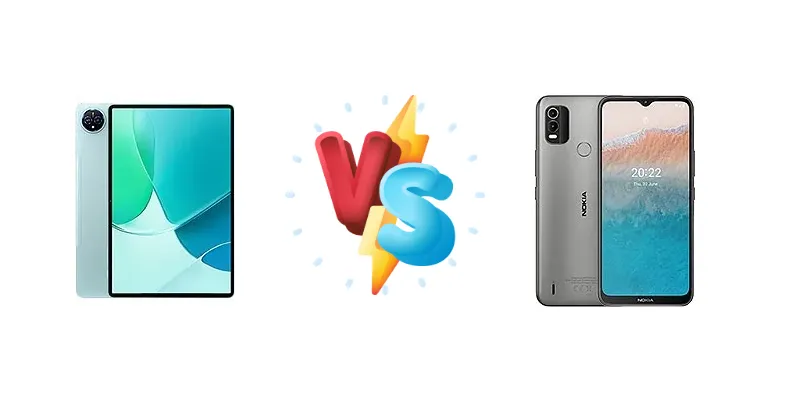
The Oukitel OT12 and Nokia C21 Plus represent the ultra-budget end of the Android spectrum. Both aim to deliver smartphone functionality at the lowest possible price point, but they take different approaches to achieving this. The key differentiator lies in their chipsets, with the Oukitel leveraging a newer, more efficient architecture, while the Nokia opts for a more established, albeit older, design. This comparison will dissect these differences and determine which device offers the best value.
🏆 Quick Verdict
For the average user prioritizing responsiveness and future-proofing, the Oukitel OT12 is the better choice. Its Unisoc T606 chipset, built on a 12nm process, provides a noticeable performance advantage over the Nokia C21 Plus’s older 28nm Unisoc SC9863A. While both offer similar battery capacity and charging speeds, the OT12’s more efficient processor translates to better real-world usage.
| Network |
|---|
| 2G bands | GSM 850 / 900 / 1800 / 1900 | GSM 850 / 900 / 1800 / 1900 |
| 3G bands | HSDPA 900 / 2100 | HSDPA 850 / 900 / 2100 |
| 4G bands | 1, 3, 5, 7, 8, 19, 20, 38, 39, 40, 41 | LTE |
| Speed | HSPA, LTE | HSPA 42.2/5.76 Mbps, LTE Cat4 150/50 Mbps |
| Technology | GSM / HSPA / LTE | GSM / HSPA / LTE |
| | - | HSDPA 850 / 900 / 1700(AWS) / 1900 / 2100 |
| Launch |
|---|
| Announced | 2024, September | 2022, February 28 |
| Status | Available. Released 2024, September | Available. Released 2022, April 29 |
| Body |
|---|
| Build | - | Glass front, aluminum frame, plastic back |
| Dimensions | 258.2 x 169.5 x 8.6 mm (10.17 x 6.67 x 0.34 in) | 164.8 x 75.9 x 8.6 mm (6.49 x 2.99 x 0.34 in) |
| SIM | Nano-SIM + Nano-SIM | · Nano-SIM· Nano-SIM + Nano-SIM |
| Weight | 535 g (1.18 lb) | 178 g or 191 g (6.28 oz) |
| | - | Splash protection |
| Display |
|---|
| Protection | Corning Gorilla Glass 5 | Scratch-resistant glass |
| Resolution | 800 x 1280 pixels, 16:10 ratio (~137 ppi density) | 720 x 1600 pixels, 20:9 ratio (~269 ppi density) |
| Size | 11.0 inches, 350.9 cm2 (~80.2% screen-to-body ratio) | 6.52 inches, 102.6 cm2 (~82.1% screen-to-body ratio) |
| Type | IPS LCD, 400 nits | IPS LCD |
| Platform |
|---|
| CPU | Octa-core (2x1.6 GHz Cortex-A75 & 6x1.6 GHz Cortex-A55) | Octa-core (4x1.6 GHz Cortex-A55 & 4x1.2 GHz Cortex-A55) |
| Chipset | Unisoc T606 (12 nm) | Unisoc SC9863A (28 nm) |
| GPU | Mali-G57 MP1 | IMG8322 |
| OS | Android 14 | Android 11 (Go edition) |
| Memory |
|---|
| Card slot | microSDXC (uses shared SIM slot) | microSDXC (dedicated slot) |
| Internal | 256GB 4GB RAM | 32GB 2GB RAM, 32GB 3GB RAM, 64GB 2GB RAM, 64GB 3GB RAM, 64GB 4GB RAM |
| | - | eMMC 5.1 |
| Main Camera |
|---|
| Dual | 13 MP, f/2.2, (wide), 1/3.06", PDAF
other unspecified camera | 13 MP, (wide), AF
Auxiliary lens |
| Features | LED flash | LED flash, HDR, panorama |
| Single | - | 5 MP |
| Video | 1080p@30fps | 1080p@30fps |
| Selfie camera |
|---|
| Features | - | LED flash |
| Single | 5 MP, f/2.2, (wide), 1/5.0" | 5 MP |
| Video | 720p@30fps | 720p |
| Sound |
|---|
| 3.5mm jack | - | Yes |
| 35mm jack | Yes | Yes |
| Loudspeaker | Yes, with stereo speakers | Yes |
| Comms |
|---|
| Bluetooth | 5.0, A2DP, LE | 4.2, A2DP |
| NFC | No | No |
| Positioning | GPS, GLONASS, GALILEO, BDS | GPS |
| Radio | FM radio | FM radio |
| USB | USB Type-C 2.0, OTG | microUSB 2.0 |
| WLAN | Wi-Fi 802.11 a/b/g/n/ac, dual-band | Wi-Fi 802.11 b/g/n |
| Features |
|---|
| Sensors | Accelerometer | Fingerprint (rear-mounted), accelerometer, proximity |
| Battery |
|---|
| Charging | 10W wired | 10W wired |
| Type | Li-Po 8000 mAh | Li-Ion 4000/5050 mAh |
| Misc |
|---|
| Colors | Gray, Green, Purple | Dark Cyan, Warm Gray |
| Models | - | TA-1433, TA-1431, TA-1426, TA-1424 |
| Price | About 180 EUR | About 120 EUR |
| SAR | - | 0.57 W/kg (head) 0.65 W/kg (body) |
| SAR EU | - | 0.40 W/kg (head) 0.99 W/kg (body) |
Oukitel OT12
- More powerful and efficient Unisoc T606 chipset
- Modern CPU architecture with Cortex-A75 cores
- Potentially longer battery life due to 12nm process
- Oukitel is a less established brand than Nokia
- Likely limited software update support
Nokia C21 Plus
- Nokia’s reputation for reliability and build quality
- Clean Android experience (potentially)
- May receive more consistent software updates (though limited)
- Significantly weaker Unisoc SC9863A chipset
- Older 28nm fabrication process leads to lower efficiency
- Slower performance for everyday tasks
Display Comparison
Neither device boasts a standout display. Given the price point, details like panel type and resolution are not provided. However, the focus should be on usability. Both likely feature LCD panels, and the experience will be adequate for basic tasks. The absence of high refresh rates or advanced features like LTPO is expected. Bezels are likely to be substantial on both devices, maximizing screen real estate within a compact form factor.
Camera Comparison
Camera performance is unlikely to be a strong suit for either device. Details are limited, but both will likely feature basic camera setups. The focus should be on capturing acceptable photos in good lighting conditions. The absence of Optical Image Stabilization (OIS) is almost certain. Image processing will likely be minimal, relying heavily on software algorithms to enhance image quality. Any 2MP macro or depth sensors included are unlikely to provide significant value.
Performance
The core difference lies in the chipsets. The Oukitel OT12’s Unisoc T606 (12nm) features a more modern CPU configuration: two Cortex-A75 cores for performance and six Cortex-A55 cores for efficiency. This contrasts with the Nokia C21 Plus’s Unisoc SC9863A (28nm), which utilizes four Cortex-A55 cores at 1.6GHz and another four at 1.2GHz. The 12nm fabrication process of the T606 is significantly more efficient than the 28nm process of the SC9863A, resulting in lower power consumption and potentially less thermal throttling. The Cortex-A75 cores in the OT12 provide a substantial performance boost for tasks requiring more processing power. The Nokia’s reliance solely on Cortex-A55 cores will result in a noticeably slower experience, especially when multitasking.
Battery Life
Both devices feature 10W wired charging, indicating a similar charging experience – expect several hours to reach a full charge. While battery capacity isn’t specified, the more efficient Unisoc T606 in the Oukitel OT12 will likely translate to longer battery life in real-world usage. The 12nm process consumes less power, allowing the OT12 to operate for a longer duration on a single charge, even with similar battery capacity to the Nokia C21 Plus.
Buying Guide
Buy the Oukitel OT12 if you need a smartphone capable of handling more than just basic tasks like calls and messaging. It’s suitable for light social media browsing, occasional gaming, and running multiple apps simultaneously. Buy the Nokia C21 Plus if you prioritize brand reliability and are looking for a device solely for essential communication – calls, texts, and perhaps very light web browsing – and are willing to accept slower performance.
Frequently Asked Questions
❓ Will the Oukitel OT12 struggle with popular apps like Facebook or WhatsApp?
While the Oukitel OT12 won't offer a flagship-level experience, its Unisoc T606 chipset is capable of running apps like Facebook and WhatsApp without significant lag. However, expect slower loading times and occasional stutters when multitasking. The Nokia C21 Plus will likely exhibit more pronounced performance issues with these apps.
❓ How long will it take to fully charge both phones from 0%?
Given the 10W charging on both devices, a full charge from 0% will likely take between 3 to 5 hours. The actual time will depend on usage during charging and the battery capacity, which isn't specified. The OT12's more efficient processor might slightly reduce the overall charging time due to lower power draw during the process.
❓ Is the Nokia C21 Plus a good option for elderly users who primarily make calls and send texts?
Yes, the Nokia C21 Plus is a reasonable option for elderly users with basic needs. Its simplicity and Nokia’s reputation for reliability are appealing. However, the slower processor may still cause occasional delays, even with simple tasks. If responsiveness is crucial, the Oukitel OT12 is still preferable.