
Oukitel OT11 vs. Ulefone Armor 9E: A Deep Dive into Rugged Phone Trade-offs
| Phones Images | |||||
|---|---|---|---|---|---|
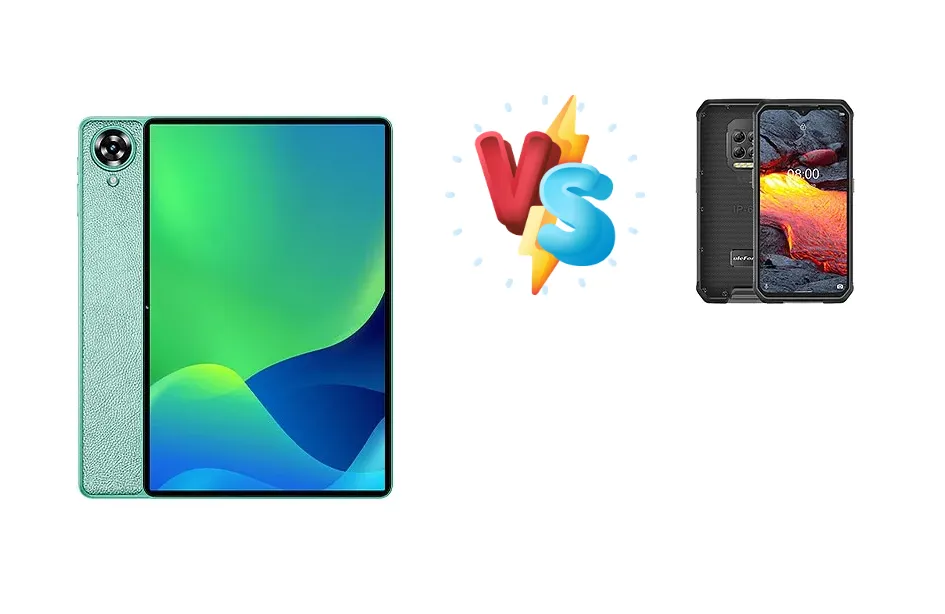
|
🏆 Quick Verdict
For the average user prioritizing longevity and minimizing charging frequency, the Oukitel OT11 is the clear winner. Its 114-hour endurance and 1000 charge cycles offer peace of mind unmatched by the Armor 9E. However, users needing more processing power for demanding apps or gaming will find the Ulefone Armor 9E a better fit.
| PHONES | ||
|---|---|---|
| Phone Names | Oukitel OT11 | Ulefone Armor 9E |
| Network | ||
|---|---|---|
| 2G bands | GSM 850 / 900 / 1800 / 1900 | GSM 850 / 900 / 1800 / 1900 |
| 3G bands | HSDPA 900 / 2100 | HSDPA 850 / 900 / 1700(AWS) / 1900 / 2100 |
| 4G bands | 1, 3, 5, 7, 8, 19, 20, 38, 39, 40, 41 | 1, 2, 3, 4, 5, 7, 8, 12, 13, 17, 18, 19, 20, 25, 26, 28, 34, 38, 39, 40, 41, 66 |
| Speed | HSPA, LTE | HSPA 42.2/11.5 Mbps, LTE Cat12 600/150 Mbps |
| Technology | GSM / HSPA / LTE | GSM / CDMA / HSPA / EVDO / LTE |
| - | CDMA2000 1xEV-DO | |
| Launch | ||
|---|---|---|
| Announced | 2024, May | 2020, September 08. Released 2020, September 08 |
| Status | Available. Released 2024, May | Discontinued |
| Body | ||
|---|---|---|
| Build | - | Front glass, aluminum back with rubber, aluminum frame |
| Dimensions | 259 x 170.6 x 8.7 mm (10.20 x 6.72 x 0.34 in) | 168.2 x 82 x 15 mm (6.62 x 3.23 x 0.59 in) |
| SIM | Nano-SIM + Nano-SIM | Nano-SIM + Nano-SIM |
| Weight | 524 g (1.16 lb) | 324 g (11.43 oz) |
| - | IP68/IP69K dust/water resistant (up to 1.5m for 30 min) Drop-to-concrete resistance from up to 1.2m MIL-STD-810G compliant | |
| Display | ||
|---|---|---|
| Protection | Corning Gorilla Glass 5, Mohs level 4 | Scratch-resistant glass, oleophobic coating |
| Resolution | 800 x 1280 pixels, 16:10 ratio (~137 ppi density) | 1080 x 2340 pixels, 19.5:9 ratio (~409 ppi density) |
| Size | 11.0 inches, 350.9 cm2 (~79.4% screen-to-body ratio) | 6.3 inches, 97.4 cm2 (~70.6% screen-to-body ratio) |
| Type | IPS LCD, 400 nits | IPS LCD |
| Platform | ||
|---|---|---|
| CPU | Octa-core (2x1.6 GHz Cortex-A75 & 6x1.6 GHz Cortex-A55) | Octa-core (2x2.2 GHz Cortex-A75 & 6x2.0 GHz Cortex-A55) |
| Chipset | Unisoc T606 (12 nm) | Mediatek MT6779 Helio P90 (12 nm) |
| GPU | Mali-G57 MP1 | PowerVR GM9446 |
| OS | Android 14 | Android 10 |
| Memory | ||
|---|---|---|
| Card slot | microSDXC (uses shared SIM slot) | microSDXC (uses shared SIM slot) |
| Internal | 128GB 4GB RAM | 128GB 8GB RAM |
| - | UFS 2.1 | |
| Main Camera | ||
|---|---|---|
| Features | LED flash, HDR | Quad-LED flash, HDR, panorama |
| Quad | - | 64 MP, f/1.9, 26mm (wide), 1/1.72", 0.8µm, PDAF 8 MP, f/2.4, 100˚ (ultrawide), 1/4.0", 1.12µm 2 MP (macro) Auxiliary lens |
| Single | 13 MP, f/2.2, (wide), 1/3.06", AF | - |
| Video | 1080p@30fps | 4K@30fps, 1080p@30fps |
| Selfie camera | ||
|---|---|---|
| Features | - | HDR, panorama |
| Single | 5 MP, f/2.2, (wide), 1/5.0" | 8 MP, f/2.2 |
| Video | 720p@30fps | 1080p@30fps |
| Sound | ||
|---|---|---|
| 3.5mm jack | - | Yes |
| 35mm jack | Yes | Yes |
| Loudspeaker | Yes, with stereo speakers | Yes |
| Comms | ||
|---|---|---|
| Bluetooth | 5.2, A2DP, LE | 5.0, A2DP, LE |
| NFC | No | Yes |
| Positioning | GPS, GLONASS, GALILEO, BDS | GPS, GLONASS, GALILEO, BDS |
| Radio | FM radio | FM radio, RDS, recording |
| USB | USB Type-C 2.0, OTG | USB Type-C 2.0, OTG, accessory connector |
| WLAN | Wi-Fi 802.11 a/b/g/n/ac, dual-band | Wi-Fi 802.11 a/b/g/n/ac, Wi-Fi Direct |
| Features | ||
|---|---|---|
| Sensors | Accelerometer | Fingerprint (side-mounted), accelerometer, gyro, proximity, compass, coulombmeter |
| - | Endoscope mount (camera sold separately) | |
| Battery | ||
|---|---|---|
| Charging | 10W wired | 18W wired |
| Type | Li-Po 8000 mAh | Li-Po 6600 mAh |
| Misc | ||
|---|---|---|
| Colors | Gray, Green, Blue | Black |
| Price | - | About 290 EUR |
| EU LABEL | ||
|---|---|---|
| Battery | 114:00h endurance, 1000 cycles | - |
| Energy | Class E | - |
| Free fall | Class E (104 falls) | - |
| Repairability | Class B | - |
Oukitel OT11
- Exceptional 114-hour battery endurance
- 1000 charge cycle battery longevity
- More affordable price point (likely)
- Less powerful processor for demanding tasks
- Slower 10W charging speed
Ulefone Armor 9E
- Faster Mediatek Helio P90 processor
- 18W fast charging support
- Potentially better image processing
- Shorter battery life compared to the OT11
- Likely a higher price tag
Display Comparison
Neither device's display specifications are provided, so a direct comparison is limited. However, given the price points, we can assume both utilize IPS LCD panels. The Armor 9E's more powerful chipset *could* support a higher refresh rate display, offering smoother scrolling, but this is speculative. The OT11's focus on endurance suggests a conservative display configuration to minimize power draw.
Camera Comparison
Without detailed camera specifications, a comprehensive comparison is impossible. However, the chipset difference hints at superior image processing capabilities within the Ulefone Armor 9E. The Helio P90 includes a dedicated AI processing unit, which can enhance image quality through scene recognition and optimization. While both phones likely feature multiple rear cameras, the Armor 9E’s chipset is better equipped to handle complex computational photography tasks. We anticipate the OT11 will rely more on software processing, potentially leading to less refined results.
Performance
The Ulefone Armor 9E boasts the Mediatek Helio P90, featuring a dual-core Cortex-A75 cluster clocked at 2.2 GHz, paired with a hexa-core Cortex-A55 cluster at 2.0 GHz. This is a significant step up from the Oukitel OT11’s Unisoc T606, which has a dual-core Cortex-A75 at 1.6 GHz and a hexa-core Cortex-A55 at 1.6 GHz. The higher clock speeds and more efficient architecture of the P90 translate to noticeably faster application loading times and smoother multitasking. The Unisoc T606 is adequate for basic tasks, but the P90 provides a more fluid experience, particularly with graphically demanding applications. The 12nm process node is shared between both chipsets, suggesting similar thermal characteristics, but the P90 will likely generate more heat under sustained load.
Battery Life
The Oukitel OT11’s standout feature is its exceptional battery endurance, rated at 114 hours. This is likely achieved through a combination of a large battery capacity (unspecified) and the power-efficient Unisoc T606 chipset. The Armor 9E, while offering 18W wired charging – significantly faster than the OT11’s 10W – will likely have a shorter battery life due to the more power-hungry Helio P90. The OT11’s advertised 1000 charge cycles also suggest a focus on long-term battery health, a crucial consideration for users who rely on their phones for extended periods. The faster charging of the Armor 9E is convenient, but the OT11’s longevity is a compelling advantage.
Buying Guide
Buy the Oukitel OT11 if you need a phone that can genuinely last for days on a single charge, are frequently away from power sources, or prioritize long-term battery health. Buy the Ulefone Armor 9E if you prefer a smoother, more responsive user experience, frequently use resource-intensive applications, or occasionally engage in mobile gaming.