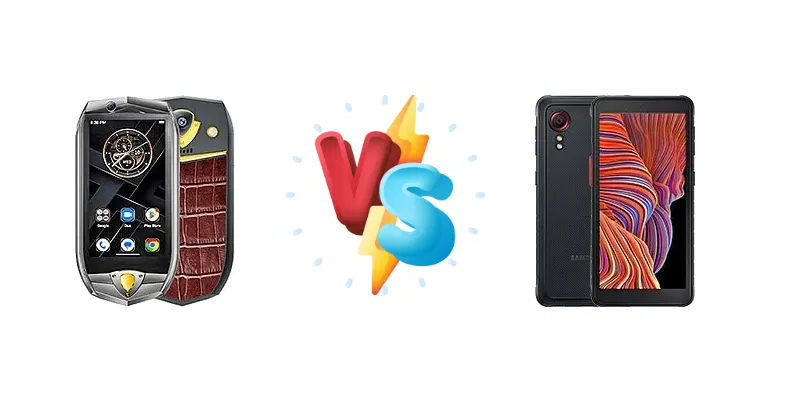
The rugged smartphone market caters to a specific need: durability. Both the Oukitel K16 and Samsung Galaxy XCover 5 aim to deliver on that promise, but they take different approaches. The K16 focuses on offering a compelling feature set at a lower price point, while the XCover 5 leverages Samsung’s brand recognition and optimized software. This comparison dissects their core components to determine which device provides the best balance of performance, features, and longevity.
🏆 Quick Verdict
For the average user prioritizing a balance of performance and brand reliability, the Samsung Galaxy XCover 5 is the better choice. While the Oukitel K16 offers a lower entry price, the Exynos 850’s more efficient 8nm process and Samsung’s software optimization translate to a smoother, more responsive user experience and potentially longer software support.
| Network |
|---|
| 2G bands | GSM 850 / 900 / 1800 / 1900 | GSM 850 / 900 / 1800 / 1900 |
| 3G bands | HSDPA 850 / 1900 / 2100 | HSDPA 850 / 900 / 1700(AWS) / 1900 / 2100 |
| 4G bands | LTE | 1, 2, 3, 4, 5, 7, 8, 12, 17, 20, 26, 28, 38, 40, 41, 66 |
| Speed | HSPA, LTE | HSPA, LTE |
| Technology | GSM / HSPA / LTE | GSM / HSPA / LTE |
| Launch |
|---|
| Announced | 2023, March | 2021, March 04 |
| Status | Available. Released 2023, March | Available. Released 2021, March 12 |
| Body |
|---|
| Build | Leather back | - |
| Dimensions | - | 147.1 x 71.6 x 9.2 mm (5.79 x 2.82 x 0.36 in) |
| SIM | Nano-SIM + Nano-SIM | · Nano-SIM· Nano-SIM + Nano-SIM |
| Weight | - | 172 g (6.07 oz) |
| | - | IP68 dust/water resistant (up to 1.5m for 30 min)
MIL-STD-810H compliant |
| Display |
|---|
| Resolution | 720 x 1280 pixels, 16:9 ratio (~420 ppi density) | 720 x 1480 pixels, 18.5:9 ratio (~311 ppi density) |
| Size | 3.5 inches, 33.8 cm2 | 5.3 inches, 71.3 cm2 (~67.7% screen-to-body ratio) |
| Type | IPS LCD, 400 nits | PLS LCD |
| Platform |
|---|
| CPU | Octa-core (4x2.0 GHz Cortex-A73 & 4x2.0 GHz Cortex-A53) | Octa-core (4x2.0 GHz Cortex-A55 & 4x2.0 GHz Cortex-A55) |
| Chipset | Mediatek MT8788 (12 nm) | Exynos 850 (8 nm) |
| GPU | - | Mali-G52 |
| OS | Android 13 | Android 11, upgradable to Android 14, One UI 6.1 |
| Memory |
|---|
| Card slot | microSDXC | microSDXC (dedicated slot) |
| Internal | 128GB 8GB RAM | 64GB 4GB RAM |
| | - | eMMC 5.1 |
| Main Camera |
|---|
| Features | LED flash | Dual LED flash, HDR, panorama |
| Single | 48 MP, f/1.8, (wide), AF | 16 MP, f/1.8, PDAF |
| Video | 1080p@30fps | 1080p@30fps |
| Selfie camera |
|---|
| Single | 8 MP, f/2.0 | 5 MP, f/2.2 |
| Video | Yes | - |
| Sound |
|---|
| 3.5mm jack | - | Yes |
| 35mm jack | Unspecified | Yes |
| Loudspeaker | Yes | Yes |
| Comms |
|---|
| Bluetooth | Yes | 5.0, A2DP, LE |
| NFC | No | Yes |
| Positioning | GPS, GLONASS, GALILEO | GPS, GLONASS, GALILEO, BDS |
| Radio | Unspecified | Unspecified |
| USB | Yes | USB Type-C 2.0, charging connector pins |
| WLAN | Yes | Wi-Fi 802.11 a/b/g/n/ac, dual-band, Wi-Fi Direct |
| Features |
|---|
| Sensors | Unspecified | Accelerometer, gyro, proximity, compass |
| Battery |
|---|
| Charging | - | 15W wired |
| Type | Li-Ion 3050 mAh | Li-Ion 3000 mAh, removable |
| Misc |
|---|
| Colors | Black, Brown | Black |
| Models | - | SM-G525F, SM-G525F/DS, SM-G525N |
| Price | About 140 EUR | £ 61.49 / € 74.89 |
| SAR EU | - | 0.70 W/kg (head) 1.27 W/kg (body) |
Oukitel K16
- Lower price point makes it accessible.
- Rugged design offers good protection.
- Potentially larger battery capacity (speculation)
- Less efficient chipset (MT8788).
- Likely slower software updates.
- Potentially lower build quality.
Samsung Galaxy XCover 5
- More efficient chipset (Exynos 850).
- Samsung’s software optimization and support.
- Better sustained performance.
- Higher price point.
- Slower 15W charging.
- May not be as overtly rugged as some competitors.
Display Comparison
Neither device boasts a cutting-edge display. Details on panel type and resolution are missing for the K16, but given its price point, it likely utilizes an IPS LCD. The XCover 5 also uses an IPS LCD. The key difference lies in processing power; the K16’s Mediatek MT8788 will have to work harder to render the same visuals, potentially impacting battery life. While neither phone is geared towards media consumption, the XCover 5’s optimized software and more efficient chipset will likely deliver a slightly smoother visual experience.
Camera Comparison
Detailed camera specs are limited, but both phones likely prioritize functionality over photographic excellence. The Oukitel K16’s camera configuration is unknown, but it’s reasonable to assume it features a basic sensor setup. The Samsung Galaxy XCover 5’s camera details are also sparse, but Samsung’s image processing algorithms generally provide more consistent results, even with modest hardware. The absence of high-resolution sensors or advanced features suggests neither phone is intended for serious photography. Focusing on durability likely took precedence over camera capabilities.
Performance
The chipset is where the most significant difference lies. The Oukitel K16’s Mediatek MT8788, built on a 12nm process, features a Cortex-A73/A53 core configuration. While offering decent multi-core performance, the older architecture and larger node size are less efficient than the Samsung Galaxy XCover 5’s Exynos 850 (8nm). The Exynos 850 utilizes only Cortex-A55 cores, but the smaller fabrication process and architectural improvements result in better sustained performance and thermal management. This means the XCover 5 is more likely to maintain consistent performance during prolonged use, such as navigating GPS or running multiple apps. The K16 may experience more throttling under heavy load.
Battery Life
Battery capacity details are missing for the Oukitel K16, but given its focus on affordability, it likely features a moderate-sized battery. The Samsung Galaxy XCover 5 supports 15W wired charging, a relatively slow charging speed by today’s standards. However, the Exynos 850’s superior power efficiency means the XCover 5 will likely achieve comparable or better battery life despite potentially having a similar capacity to the K16. The 8nm process allows for more efficient power usage, extending the time between charges.
Buying Guide
Buy the Oukitel K16 if you need a highly affordable rugged phone for basic tasks like communication, navigation, and light media consumption, and are comfortable with potentially less frequent software updates. Buy the Samsung Galaxy XCover 5 if you prefer a more refined user experience, better performance for multitasking and moderate gaming, and the peace of mind that comes with Samsung’s established software support and ecosystem.
Frequently Asked Questions
❓ Does the Mediatek MT8788 in the Oukitel K16 struggle with demanding apps?
Yes, the MT8788, while capable for basic tasks, is likely to exhibit slowdowns and throttling when running resource-intensive applications like modern games or video editing software. The 12nm process and older core architecture aren't as efficient as the Exynos 850.
❓ Is the 15W charging on the Samsung Galaxy XCover 5 noticeably slow in 2024?
Compared to the fast charging capabilities of many modern smartphones, 15W charging is relatively slow. Expect a full charge to take around 2-3 hours. However, the Exynos 850’s efficiency means you won’t be constantly needing to top up the battery.
❓ How does the software support compare between these two devices?
Samsung typically provides longer software support for its devices, including security updates and potentially OS upgrades. Oukitel’s software support track record is less consistent, meaning the K16 may receive fewer updates over its lifespan.
❓ Are either of these phones suitable for mobile gaming?
The Samsung Galaxy XCover 5 is the better choice for mobile gaming, albeit with limitations. The Exynos 850 can handle less demanding games at medium settings. The Oukitel K16 will struggle with most modern titles due to its less powerful chipset.