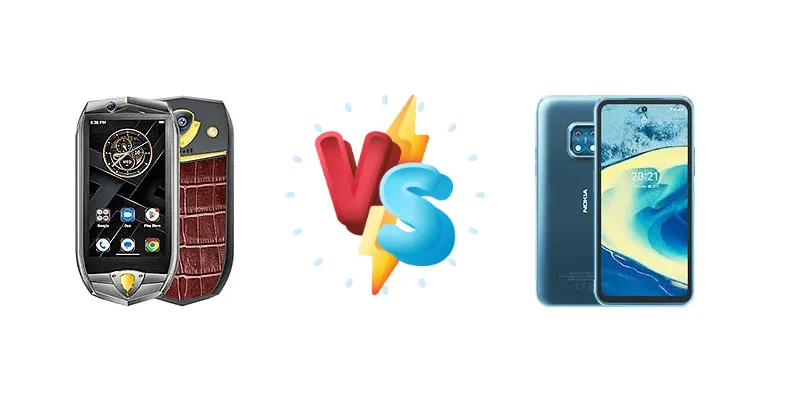
The Oukitel K16 and Nokia XR20 represent distinct approaches to the budget 5G smartphone market. The K16 aims for raw processing power at a low price, while the XR20 prioritizes durability and a more refined software experience. This comparison dissects their core components to determine which device delivers the best value for your money.
🏆 Quick Verdict
For users prioritizing raw performance and aren't concerned with ruggedization, the Oukitel K16 offers a compelling value. However, the Nokia XR20’s more efficient Snapdragon 480, coupled with its wireless charging and robust build, makes it the better all-around choice for most users.
| Network |
|---|
| 2G bands | GSM 850 / 900 / 1800 / 1900 | GSM 850 / 900 / 1800 / 1900 |
| 3G bands | HSDPA 850 / 1900 / 2100 | HSDPA 850 / 900 / 1700(AWS) / 1900 / 2100 |
| 4G bands | LTE | 1, 2, 3, 4, 5, 7, 8, 12, 13, 14, 20, 25, 26, 28, 30, 38, 40, 41, 48, 66, 71 |
| 5G bands | - | 2, 5, 25, 38, 41, 48, 66, 77, 78 SA/NSA |
| Speed | HSPA, LTE | HSPA, LTE, 5G |
| Technology | GSM / HSPA / LTE | GSM / CDMA / HSPA / EVDO / LTE / 5G |
| | - | CDMA2000 1xEV-DO |
| Launch |
|---|
| Announced | 2023, March | 2021, July 27 |
| Status | Available. Released 2023, March | Available. Released 2021, August 04 |
| Body |
|---|
| Build | Leather back | - |
| Dimensions | - | 171.6 x 81.5 x 10.6 mm (6.76 x 3.21 x 0.42 in) |
| SIM | Nano-SIM + Nano-SIM | · Nano-SIM· Nano-SIM + Nano-SIM |
| Weight | - | 248 g (8.75 oz) |
| | - | IP68 dust/water resistant (up to 1.5m for 60 min)
Drop-to-concrete resistance from up to 1.8m
MIL-STD-810H compliant |
| Display |
|---|
| Protection | - | Corning Gorilla Glass Victus |
| Resolution | 720 x 1280 pixels, 16:9 ratio (~420 ppi density) | 1080 x 2400 pixels, 20:9 ratio (~395 ppi density) |
| Size | 3.5 inches, 33.8 cm2 | 6.67 inches, 107.4 cm2 (~76.8% screen-to-body ratio) |
| Type | IPS LCD, 400 nits | IPS LCD, 550 nits |
| Platform |
|---|
| CPU | Octa-core (4x2.0 GHz Cortex-A73 & 4x2.0 GHz Cortex-A53) | Octa-core (2x2.0 GHz Kryo 460 & 6x1.8 GHz Kryo 460) |
| Chipset | Mediatek MT8788 (12 nm) | Qualcomm SM4350 Snapdragon 480 5G (8 nm) |
| GPU | - | Adreno 619 |
| OS | Android 13 | Android 11, upgradable to Android 13 |
| Memory |
|---|
| Card slot | microSDXC | microSDXC (uses shared SIM slot) |
| Internal | 128GB 8GB RAM | 64GB 4GB RAM, 128GB 6GB RAM |
| Main Camera |
|---|
| Dual | - | 48 MP, f/1.8, (wide), 1/2.25", 0.8µm, PDAF
13 MP, f/2.4, 123˚ (ultrawide), 1/3.0", 1.12µm |
| Features | LED flash | Zeiss optics, Dual-LED dual-tone flash, second LED flash, HDR, panorama |
| Single | 48 MP, f/1.8, (wide), AF | 8 MP, f/2.0 (wide), 1/4.0", 1.12µm |
| Video | 1080p@30fps | 1080p@30fps |
| Selfie camera |
|---|
| Single | 8 MP, f/2.0 | 8 MP, f/2.0 (wide), 1/4.0", 1.12µm |
| Video | Yes | 1080p@30fps |
| Sound |
|---|
| 3.5mm jack | - | Yes |
| 35mm jack | Unspecified | Yes |
| Loudspeaker | Yes | Yes, with stereo speakers |
| Comms |
|---|
| Bluetooth | Yes | 5.1, A2DP, LE, aptX Adaptive |
| NFC | No | Yes |
| Positioning | GPS, GLONASS, GALILEO | GPS (L1+L5), GLONASS, BDS, GALILEO, QZSS, NavIC |
| Radio | Unspecified | Unspecified |
| USB | Yes | USB Type-C 3.0 |
| WLAN | Yes | Wi-Fi 802.11 a/b/g/n/ac/6, dual-band, Wi-Fi Direct |
| Features |
|---|
| Sensors | Unspecified | Fingerprint (side-mounted), accelerometer, gyro, proximity, compass, barometer |
| Battery |
|---|
| Charging | - | 18W wired
15W wireless |
| Type | Li-Ion 3050 mAh | Li-Po 4630 mAh |
| Misc |
|---|
| Colors | Black, Brown | Ultra Blue, Granite Gray |
| Models | - | TA-1368, TA-1362 |
| Price | About 140 EUR | About 270 EUR |
| SAR EU | - | 1.13 W/kg (head) 1.43 W/kg (body) |
Oukitel K16
- Potentially higher CPU performance for multitasking.
- Lower price point for budget-conscious buyers.
- May offer more RAM for the price.
- Less efficient chipset leading to shorter battery life.
- Likely lacks ruggedization and wireless charging.
- Potentially lower camera quality.
Nokia XR20
- More efficient Snapdragon 480 processor.
- Rugged design for enhanced durability.
- Wireless charging for added convenience.
- Potentially lower peak CPU performance compared to K16.
- Higher price point.
- May have less RAM for the price.
Display Comparison
Neither device boasts a standout display. Details are missing for the K16, but given its price point, we can expect a standard LCD panel. The Nokia XR20 likely features a similar LCD, prioritizing durability over visual fidelity. The absence of high refresh rates or advanced panel technologies on both suggests a focus on cost reduction. Color accuracy and peak brightness are likely comparable, leaning towards the adequate rather than exceptional.
Camera Comparison
Camera details are sparse for both devices. Assuming typical budget phone configurations, the Nokia XR20 likely has a slight edge due to Qualcomm’s image signal processing (ISP) capabilities within the Snapdragon 480. While sensor size and aperture are unknown, Qualcomm’s ISP generally delivers better dynamic range and noise reduction. The Oukitel K16’s camera performance will likely be adequate for casual snapshots, but will struggle in low-light conditions. We anticipate both phones will include a 2MP macro lens, which offers limited practical benefit due to its low resolution.
Performance
The core difference lies in the chipsets. The Oukitel K16’s Mediatek MT8788 (12nm) utilizes a Cortex-A73/A53 configuration, offering strong multi-core performance but suffering from lower efficiency compared to the Nokia XR20’s Qualcomm Snapdragon 480 (8nm). The 8nm process node of the Snapdragon 480 translates to better thermal management and improved battery life. While the K16’s Cortex-A73 cores have a higher clock speed (2.0 GHz vs 2.0 GHz Kryo 460), the Snapdragon 480’s Kryo cores are architecturally more advanced, providing better performance-per-watt. This means the XR20 will likely sustain performance for longer periods without throttling, benefiting gamers and heavy app users.
Battery Life
Battery capacity is not specified for the Oukitel K16, but given its focus on performance, it may have a smaller battery to keep costs down. The Nokia XR20’s efficiency advantage with the Snapdragon 480 will translate to longer battery life, even with a comparable capacity. Furthermore, the XR20’s inclusion of 18W wired and 15W wireless charging provides significant convenience, a feature absent on the K16. The XR20’s wireless charging is a key differentiator for users who prefer cable-free power-ups.
Buying Guide
Buy the Oukitel K16 if you need maximum CPU performance for multitasking and light gaming on a strict budget, and don't require water resistance or wireless charging. Buy the Nokia XR20 if you value a more efficient processor, 5G connectivity, wireless charging, and a rugged design that can withstand drops and splashes – making it ideal for outdoor workers or clumsy users.
Frequently Asked Questions
❓ Will the Mediatek MT8788 in the Oukitel K16 struggle with demanding games like PUBG Mobile?
The MT8788 can run PUBG Mobile, but expect lower graphics settings and potential frame rate drops during intense scenes. The chipset’s thermal limitations will likely cause throttling, reducing sustained performance. The Snapdragon 480 in the XR20 will offer a smoother, more consistent gaming experience.
❓ How durable is the Nokia XR20, and what kind of protection does it offer against drops and water?
The Nokia XR20 is built to withstand harsh conditions. It boasts an IP68 rating for dust and water resistance, and is advertised as being drop-tested to survive falls from up to 1.8 meters. This makes it a significantly more durable option than the Oukitel K16, which likely lacks any formal ruggedization.
❓ Does the Nokia XR20 support software updates and security patches for an extended period?
Nokia is known for its commitment to software support. The XR20 is guaranteed to receive at least three years of security updates and two major Android OS upgrades, ensuring long-term security and functionality. Oukitel’s update policy is less predictable.