
Oukitel G3 vs. Ulefone Armor X16 Pro: A Deep Dive into Rugged Phone Trade-offs
| Phones Images | |||||
|---|---|---|---|---|---|
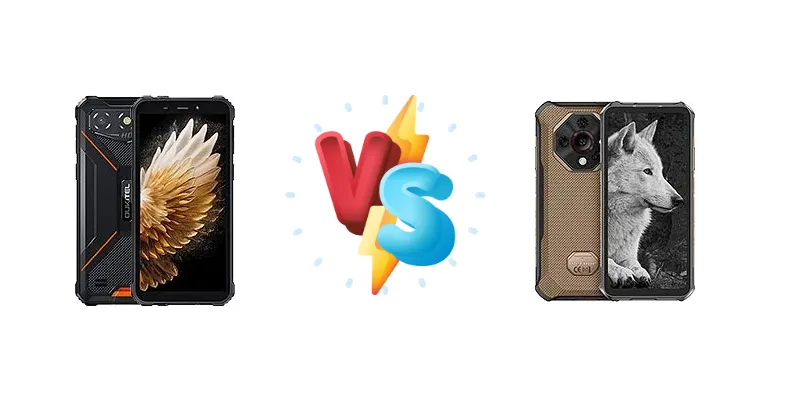
|
🏆 Quick Verdict
For the average user prioritizing all-day (and multi-day) battery life, the Oukitel G3 is the clear winner. However, if you demand smoother performance for demanding apps and faster charging, the Ulefone Armor X16 Pro justifies its higher price with a significantly more capable chipset.
| PHONES | ||
|---|---|---|
| Phone Names | Oukitel G3 | Ulefone Armor X16 Pro |
| Network | ||
|---|---|---|
| 2G bands | GSM 850 / 900 / 1800 / 1900 | GSM 850 / 900 / 1800 / 1900 |
| 3G bands | HSDPA 850 / 900 / 1700(AWS) / 1900 / 2100 | HSDPA 800 / 850 / 900 / 1700(AWS) / 1900 / 2100 |
| 4G bands | 1, 2, 3, 4, 5, 7, 8, 12, 17, 19, 20, 25, 26, 28, 34, 38, 39, 40, 41, 66 | 1, 2, 3, 4, 5, 7, 8, 12, 13, 17, 18, 19, 20, 25, 26, 28, 32, 34, 38, 39, 40, 41, 66, 71 |
| 5G bands | - | 1, 2, 3, 5, 7, 8, 20, 25, 28, 38, 40, 41, 66, 71, 77, 78, 79 SA/NSA/Sub6 |
| Speed | HSPA, LTE | HSPA, LTE, 5G |
| Technology | GSM / HSPA / LTE | GSM / CDMA / HSPA / LTE / 5G |
| Launch | ||
|---|---|---|
| Announced | 2025, May | 2025, July |
| Status | Available. Released 2025, May | Available. Released 2025, July |
| Body | ||
|---|---|---|
| Dimensions | 166 x 81.1 x 15 mm (6.54 x 3.19 x 0.59 in) | 173.8 x 83.4 x 18 mm (6.84 x 3.28 x 0.71 in) |
| SIM | Nano-SIM + Nano-SIM | Nano-SIM + Nano-SIM |
| Weight | 300 g (10.58 oz) | 395.4 g (13.93 oz) |
| Display | ||
|---|---|---|
| Protection | Corning Gorilla Glass 5, Mohs level 4 | Corning Gorilla Glass 5, Mohs level 5 |
| Resolution | 576 x 1152 pixels, 18:9 ratio (~215 ppi density) | 720 x 1612 pixels, 20:9 ratio (~269 ppi density) |
| Size | 6.0 inches, 92.9 cm2 (~69.0% screen-to-body ratio) | 6.56 inches, 103.4 cm2 (~71.3% screen-to-body ratio) |
| Type | IPS LCD, 450 nits | IPS LCD, 120Hz, 910 nits (peak) |
| Platform | ||
|---|---|---|
| CPU | Quad-core (1x2.0 GHz Cortex-A75 & 3x1.8 GHz Cortex-A55) | Octa-core (2x2.4 GHz Cortex-A76 & 6x2.0 GHz Cortex-A55) |
| Chipset | Unisoc T310 (12 nm) | Mediatek Dimensity 6300 (6 nm) |
| GPU | PowerVR GE8300 | Mali-G57 MC2 |
| OS | Android 14 | Android 15 |
| Memory | ||
|---|---|---|
| Card slot | microSDXC (uses shared SIM slot) | microSDXC (dedicated slot) |
| Internal | 64GB 4GB RAM | 256GB 8GB RAM |
| Main Camera | ||
|---|---|---|
| Features | LED flash | LED flash, HDR, panorama |
| Single | 13 MP, f/2.2, (wide), 1/3.06", AF | - |
| Triple | - | 64 MP, f/1.9, (wide), 1/1.73", 0.8µm, PDAF 25 MP, f/1.8, (night vision), 2 infrared lights 2 MP (macro) |
| Video | Yes | 1440p@30fps, 1080p@30fps |
| Selfie camera | ||
|---|---|---|
| Single | 5 MP, f/2.2, (wide) | 16 MP, f/2.2, (wide), 1.0µm |
| Video | 720p@30fps | 1080p@30fps |
| Sound | ||
|---|---|---|
| 35mm jack | Yes | Yes |
| Loudspeaker | Yes | Yes |
| Comms | ||
|---|---|---|
| Bluetooth | 5.0, A2DP, LE | 5.2, A2DP, LE |
| Infrared port | - | Yes |
| NFC | No | Yes |
| Positioning | GPS, GALILEO, GLONASS, BDS | GPS, GALILEO, GLONASS, BDS, QZSS |
| Radio | FM radio | Wireless FM radio |
| USB | USB Type-C 2.0 | USB Type-C 2.0, OTG |
| WLAN | Wi-Fi 802.11 a/b/g/n/ac, dual-band | Wi-Fi 802.11 a/b/g/n/ac, dual-band |
| Features | ||
|---|---|---|
| Sensors | Accelerometer, proximity, compass | Fingerprint (side-mounted), accelerometer, gyro, proximity, compass, barometer |
| Battery | ||
|---|---|---|
| Charging | 10W wired | 33W wired 5W reverse wired |
| Type | Li-Po 6300 mAh | Li-Ion 10360 mAh |
| Misc | ||
|---|---|---|
| Colors | Black, Orange, Green | Wasteland Shadow/Sand Dune |
| Price | - | $ 199.99 / C$ 399.99 / £ 215.99 / € 249.99 |
| EU LABEL | ||
|---|---|---|
| Battery | 61:12h endurance, 1000 cycles | 114:48h endurance, 1000 cycles |
| Energy | Class B | Class A |
| Free fall | Class A (270 falls) | Class A (270 falls) |
| Repairability | Class C | Class C |
Oukitel G3
- Exceptional battery life (61:12h endurance)
- More affordable price point
- Rugged design for durability
- Slower processor (Unisoc T310)
- Slow charging speed (10W)
Ulefone Armor X16 Pro
- Significantly faster processor (Dimensity 6300)
- Faster charging (33W wired + 5W reverse)
- Long battery life (114:48h endurance)
- Higher price compared to the Oukitel G3
- Potentially more heat generation under load
Display Comparison
Display specifications are not provided, so a direct comparison is limited. However, given the price points, both devices likely utilize LCD panels. The X16 Pro's more powerful chipset *could* support a higher refresh rate, offering smoother scrolling, but this is speculative. Bezels are likely comparable, focusing on durability rather than minimizing size. Color accuracy is expected to be standard for this segment.
Camera Comparison
Camera details are limited. Without sensor size or aperture information, a definitive comparison is impossible. However, the X16 Pro’s more powerful ISP (Image Signal Processor) within the Dimensity 6300 chipset suggests superior image processing capabilities, potentially resulting in better dynamic range and low-light performance. The presence of a 2MP macro camera on both devices is likely a marketing feature with limited practical value. Focus should be on the main sensor's quality, which is unknown for both.
Performance
The Ulefone Armor X16 Pro’s Mediatek Dimensity 6300, built on a 6nm process, represents a substantial leap in performance over the Oukitel G3’s Unisoc T310 (12nm). The Dimensity 6300’s octa-core configuration (2x2.4 GHz Cortex-A76 & 6x2.0 GHz Cortex-A55) significantly outperforms the G3’s quad-core setup (1x2.0 GHz Cortex-A75 & 3x1.8 GHz Cortex-A55). This translates to faster app loading times, smoother multitasking, and a more responsive user experience. The 6nm node also implies better thermal efficiency, reducing the likelihood of throttling under sustained load. Users who frequently use demanding apps or play mobile games will greatly benefit from the X16 Pro’s superior processing power.
Battery Life
The Ulefone Armor X16 Pro boasts a significantly higher battery endurance rating of 114:48h compared to the Oukitel G3’s 61:12h. While both offer 1000 charge cycles, the X16 Pro’s advantage is compounded by its 33W wired charging, a substantial upgrade over the G3’s 10W charging. This means the X16 Pro can replenish its battery much faster, minimizing downtime. The G3’s strength lies in its sheer longevity – it will simply last longer between charges, even if it takes considerably longer to refill.
Buying Guide
Buy the Oukitel G3 if you need a phone that can reliably last for days on a single charge, and your primary use cases are communication, basic navigation, and light media consumption. Buy the Ulefone Armor X16 Pro if you prefer a more responsive experience for multitasking, gaming, or running resource-intensive applications, and value the convenience of 33W fast charging.